


-2f66765b52eb349e19809f607a4ef17dd.jpg?sfvrsn=e60ce332_0 "artcover2016b")

-new-infections-by-country-2017.jpg?sfvrsn=f9ae2ce3_0 "prev1")
-plhiv-2017.jpg?sfvrsn=2a07de1_0 "plhiv2016a")
HIV in the Western Pacific
Health topic
In the Western Pacific, the estimated number of people living with HIV (PLHIV) reached 1.9 million in 2018, up from 1.4 million in 2010. While the Region is making progress in treatment of HIV, challenges remain in relation to stigma and discrimination and ensuring access to both prevention and treatment services, especially for key populations at the heart of the epidemic.
China, Viet Nam, the Philippines, Malaysia and Papua New Guinea make up the majority of the Regional HIV burden.
Prevalence and rates of infection remain low
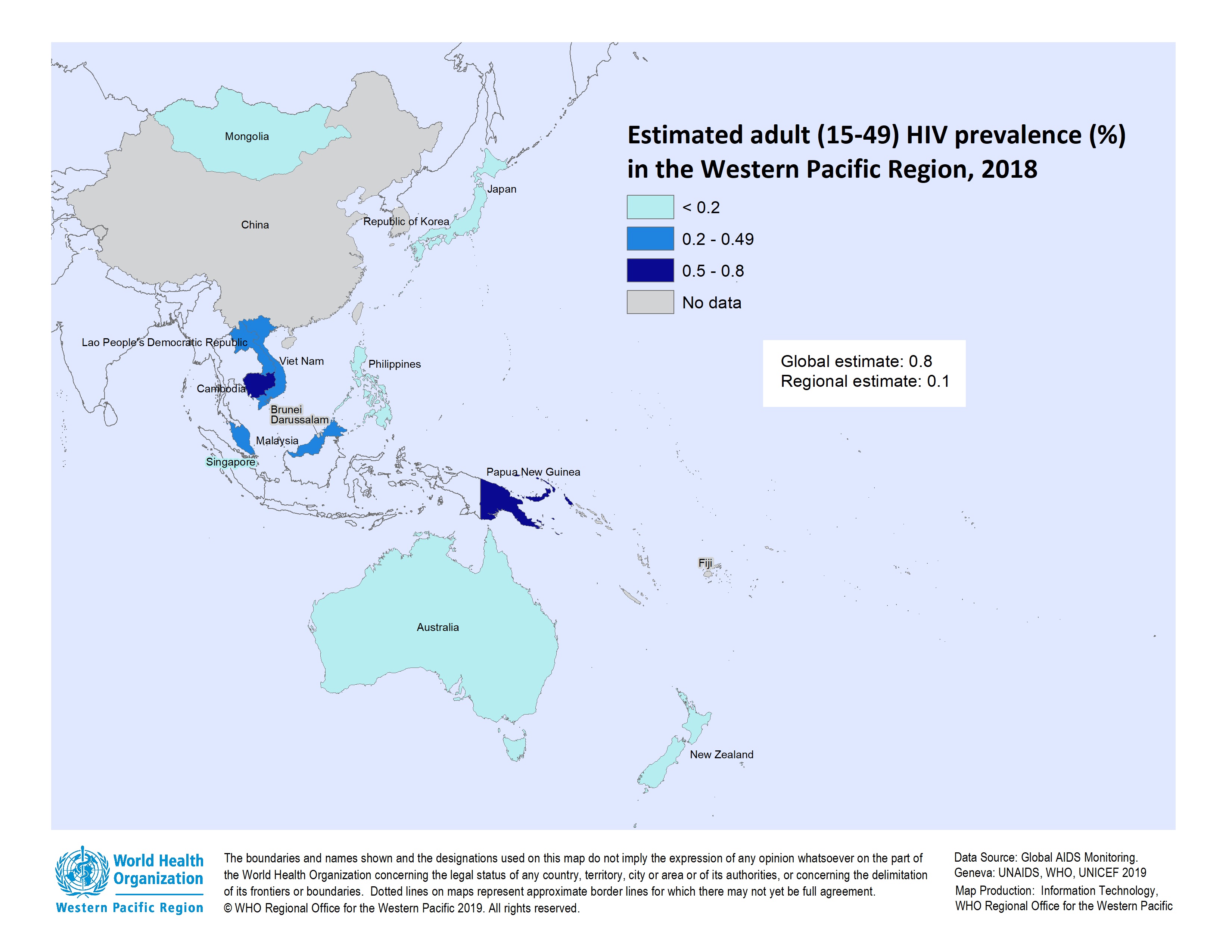
HIV prevalence in the Western Pacific remains low at 0.1%. However, the low prevalence in the general population masks high rates of HIV infection in key populations. There were an estimated 120 000 new infections in the Region in 2018, a number which has not declined significantly since 2010. An estimated 2 000 children aged 0-14 years were newly infected with HIV in 2018.
Key populations continue to be most affected by HIV transmission in the Region. Seven out of 10 PLHIV are male. The predominance of male infections is largely attributed to continued high-risk behaviours such as unprotected sex and sharing of injecting equipment.
Prevention efforts must be accelerated and focused more efficiently and effectively. There have been efforts to increase the number of people living with HIV who know their status by improving access to testing through community-based testing and self-testing. Use of antiretroviral medicines for prevention through pre-exposure prophylaxis (PrEP) for people at high risk of HIV infection is expanding as countries begin to build on pilot projects.
Improving antiretroviral therapy coverage
The estimated number of deaths related to AIDS declined in the Region from 66 000 in 2010 to 48 000 in 2018. This is due to the growing number of PLHIV on life-saving antiretroviral therapy (ART). Data from 2018 show that 59% of PLHIV are receiving ART.