

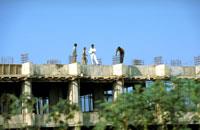
Recovery in environmental health emergencies
The aim of emergency recovery is to re-establish the economic, social and cultural life of the people affected and to rebuild damaged areas.
As a disaster situation is brought under control, the affected populations participate in activities to restore community life and rebuild the environmental health infrastructure (shelter, water supply, sanitation facilities). There is great emphasis on supporting people to rebuild and recover by their own efforts after a disaster. This may be a slow process and the capacity for such efforts must be carefully nurtured and built up over a period of time.
There is no distinct point at which immediate response activities change into recovery and then into long-term sustainable development. Progress in some areas is quicker than in others. Physical rehabilitation and reconstruction can sometimes happen more quickly than social or psychological rehabilitation. Both are necessary for a full recovery.
The recovery phase is also an opportunity to enhance prevention and increase preparedness, thus reducing the potential consequences of another event.
Environmental health activities carried out in the recovery phase can also increase people’s capacity to cope with, and recover from, future disasters. Examples include:
- the reconstruction of housing with improved local drainage and built-in roof water-catchment systems;
- the reconstruction of markets with adequate facilities for personal and food hygiene, and the repair and deepening of rural wells and boreholes.