

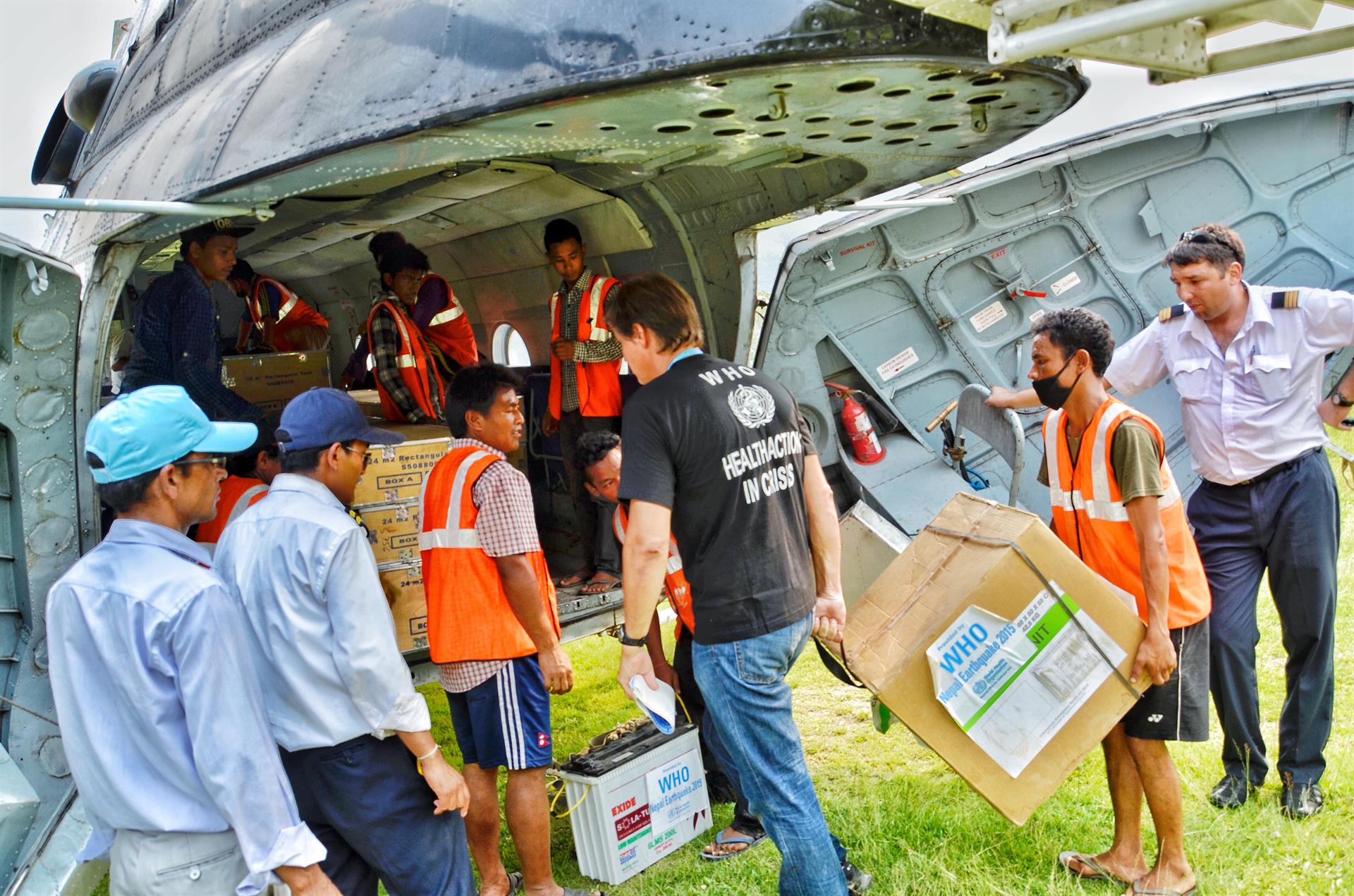
Emergency Services in Nepal
Strengthening capacities for the public health management of chemical incidents
Chemical releases arising from technological incidents, natural disasters, conflicts and terrorism are common and can have international implications. Between 2009 and 2018, there were nearly 2 000 technological disasters with approximately 65 000 people killed, and more than 600 000 people affected.
Since 2005, chemical events of international public health concern are regulated under the new International Health Regulations (IHR 2005) and countries are requested to put in place core capacities for the public health management of chemical incidents.
WHO provides guidance for the strengthening the role of public health in chemical incident and emergency prevention, preparedness, detection, alert, response and recovery, particularly for developing countries and those with economies in transition.
WHO maintains functions to rapidly detect, verify/assess, alert and respond to chemical events of international public health concern as part of the revised International Health Regulations.