

Mother and child at hospital
Improving childhood cancer cure rate
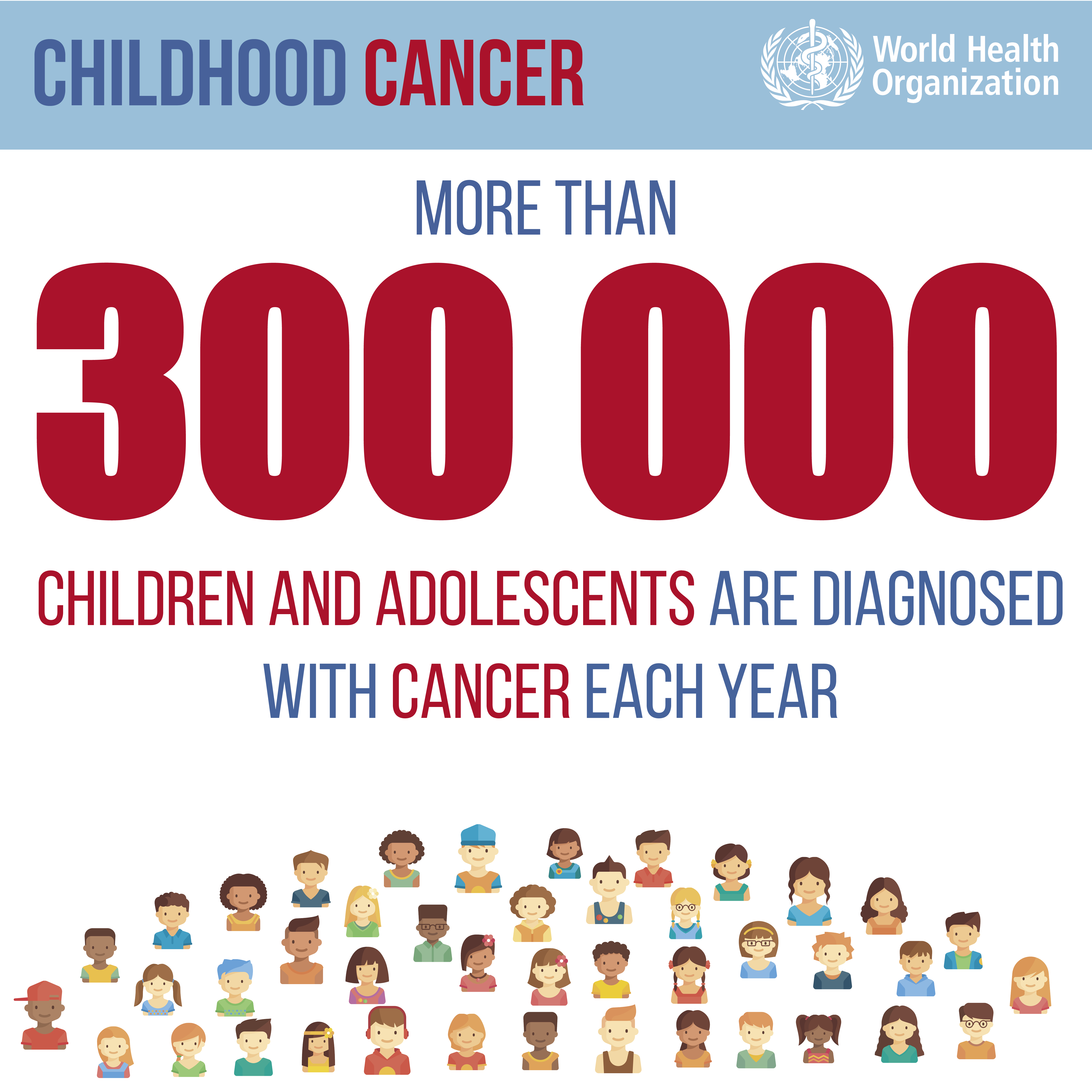
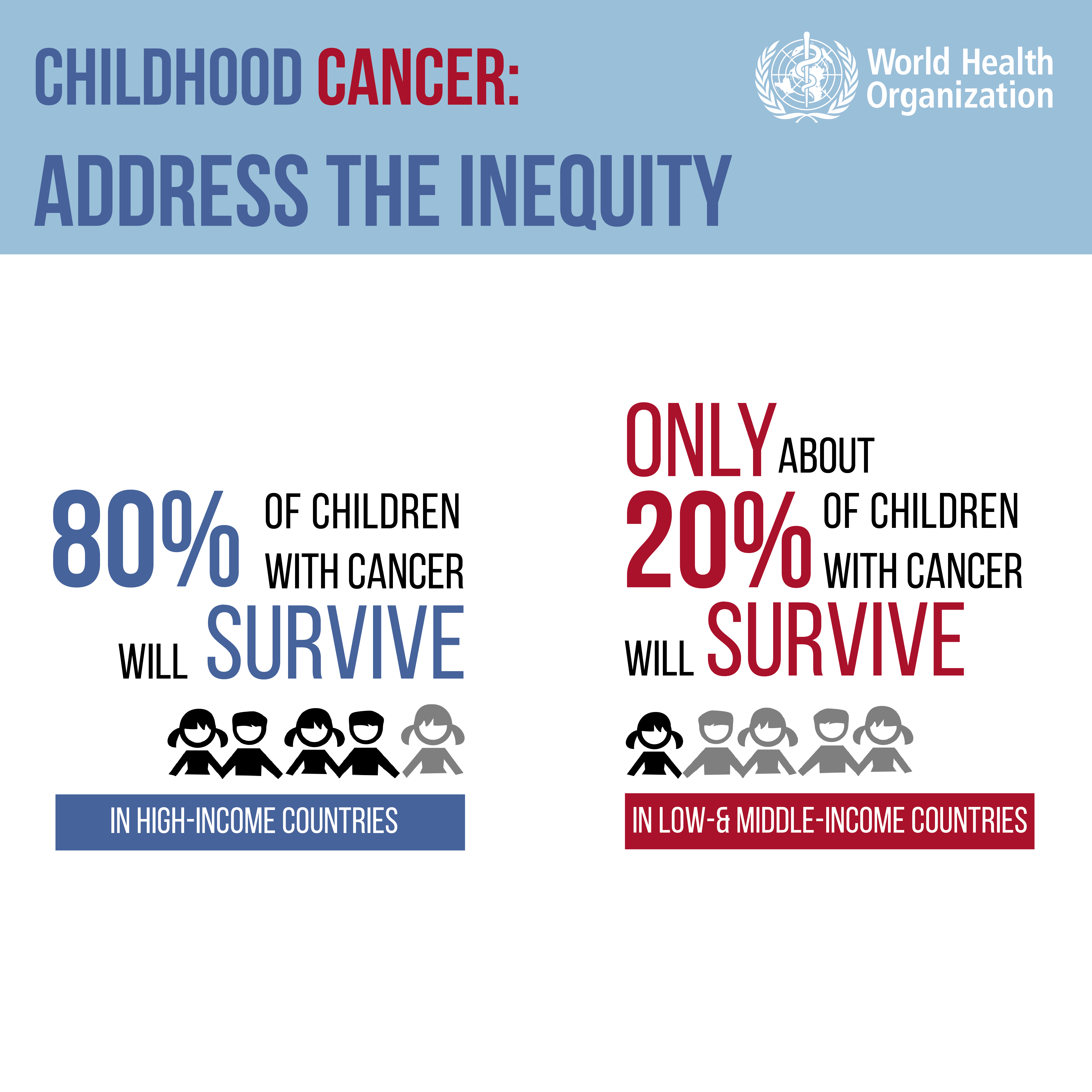
Cancer is a leading cause of death for children, with at least 300,000 new cases diagnosed each year among children aged 0-19 years. Children with cancer in low- and middle-income countries are about 4 times more likely to die of the disease than children in high-income countries. Some of the reasons include not having their illnesses diagnosed, not having access to affordable treatment and supportive care, or to, health professionals with specialized training.
In September 2018,the WHO Global Initiative for Childhood Cancer was launched with the aim increasing child cancer survival rates to at least 60% and alleviating suffering of all children by 2030, which will save an additional 1 million children, while also improving quality of life for all.The target approximately doubles the global cure rate for children with cancer.
The Initiative has two aims:
- Increase the capacity of countries to deliver quality services for children with cancer
- Increase the prioritization of childhood cancer at global, regional and national levels
WHO is supporting governments to assess current capacities in cancer diagnosis and treatment including the availability of medicines and technologies; set and cost priority cancer diagnosis and treatment programmes; and integrate childhood cancer into national strategies, health benefits packages and social insurance schemes.
The WHO Global Initiative for Childhood Cancer,is supported by partners, including. St. Jude Children’s Research Hospital in the United States of America, the first WHO Collaborating Centre for childhood cancer. St. Jude, committed US$ 15 million and technical support towards implementation of the Initiative.
“Too many children have their lives cut short by cancer, and survival rates in poor countries are scandalously lower than those in wealthy countries,” said Dr Tedros Adhanom Ghebreyesus, WHO Director-General. “We hope our partnership with St Jude will be a step towards redressing that injustice.”