


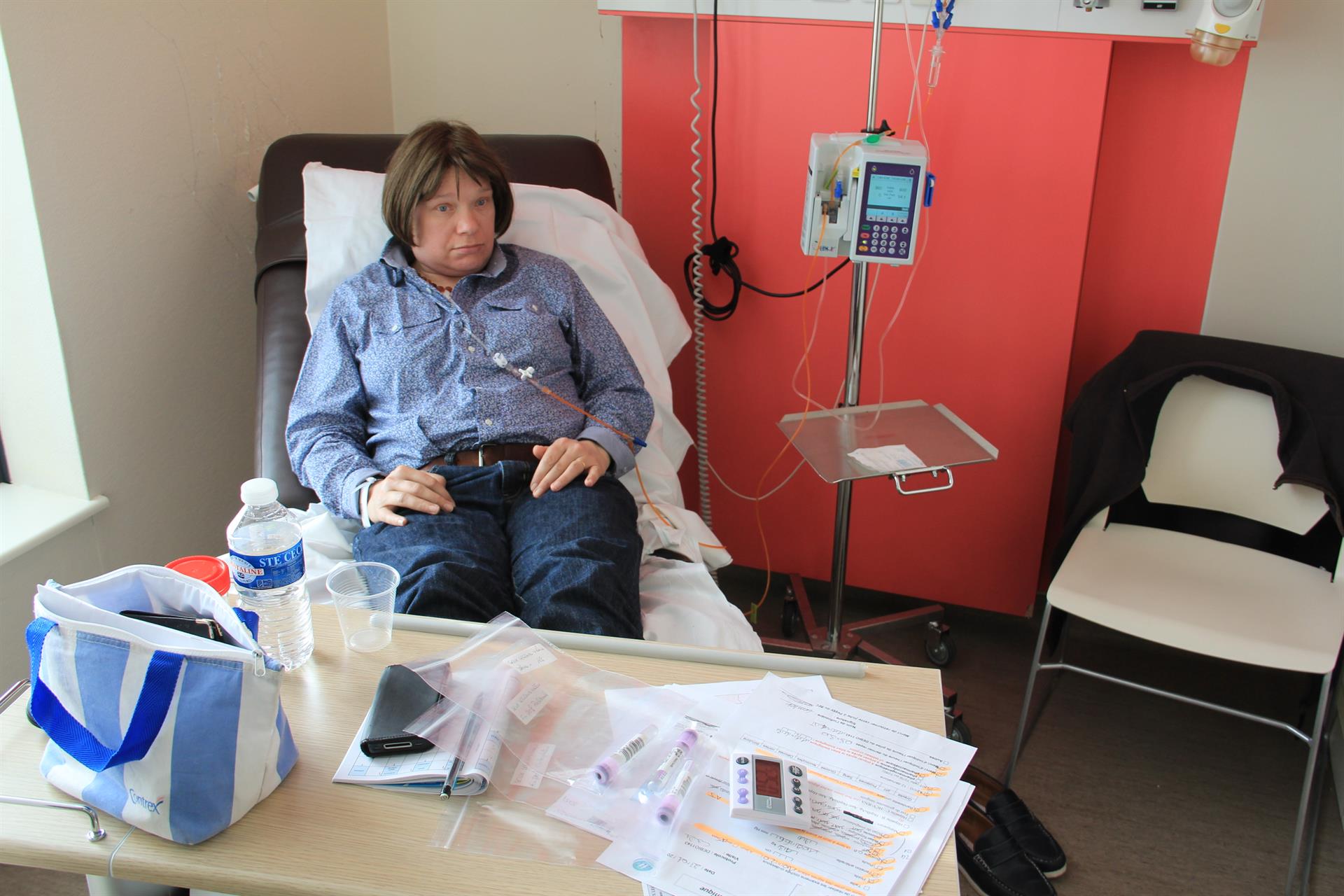
Ensuring quality cancer treatment
Cancer diagnosis and treatment programmes aim to cure or considerably prolong the life of patients and to ensure the best possible quality of life for cancer survivors. The most effective treatment programmes are those that:
- are linked to early detection and accurate diagnosis and staging
- adhere to evidence-based standards of care
- are provided in an equitable and sustainable way.
WHO works with governments to ensure quality cancer treatment is available and to promote the availability and affordability of quality, safe and effective medicines, vaccines and diagnostics for cancer. This work is essential to achieving Sustainable Development Goal 3, target 3.4, to reduce, by 2030, premature mortality from cancer and other noncommunicable diseases by one third.
Through the WHA70.12 resolution, WHO is working with Member States to strengthen health systems at national and local levels to cure and care for cancer patients in a high-quality, safe and effective manner. This includes supporting governments to set national priorities, formulate and cost cancer strategies, augment the capacity of fit-for-purpose workforce, address barriers in access to safe, quality, effective and affordable medicines, medical products and appropriate technology for cancer treatment.
WHO routinely updates the Essential Medicines List and List of Essential Diagnostics to inform Member States and additional stakeholders on priority health products to support high quality cancer treatment as part of proven clinically effective treatment regimens. Treatment programmes should focus on high impact interventions that are feasible in a particular setting while maximizing coverage and achieving value for money.
Timely and equitable access to effective therapy for cancer types focuses on treatment of early stage disease that have high rates likelihood of cure while also minimizing costs. Additionally, treatment for advanced cancer types can still offer significant value while offering high potential for being cured and improving quality of life, such as metastatic testicular cancer (seminoma) and acute lymphatic leukaemia in children. National priorities should be established based on the local disease burden, capacity and multisectoral inputs that manage potential conflicts of interest.