

Accelerated Reduction Effort on Anaemia (AREA) Community of Practice (CoP) webinar
Right in the middle of the UN Decade of Action on Nutrition (2016-2025), and as countries make commitments towards achieving UHC, all policy-makers will be confronted with the same question: which interventions should be included in the national health system?
This requires careful prioritization across all potential health interventions and maximizing health outcomes within the available budget. Countries are encouraged to prioritize health interventions that are both cost-effective and serve the poorest and most vulnerable groups first so that no one is left behind.
Many nutrition interventions, including supplementation in pregnancy and food fortification, are highly cost-effective to prevent disease and mortality.
Speakers
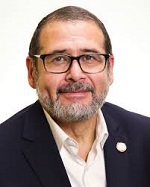
Erick Boy – HarvestPlus
Dr Erick Boy obtained his medical degree from the University of San Carlos in Guatemala (1987) and his M.Sc. and Ph.D. in nutrition at the University of California at Davis. Before joining HarvestPlus, Erick worked for 10 years at the Institute of Nutrition of Central America and Panama (INCAP/PAHO) where he pursued his research interests in perinatal public health focusing on prevention of low birth weight, iodine and iron deficiency control and prevention. Demonstration of the impact of indoor smoke on birth weight and standardization of iodine deficiency assessment were highlights of his enriching passage through INCAP.
From 1999 until 2008 he led the iron and zinc research agenda at the Micronutrient Initiative (MI) where he also managed Latin American projects and the vitamin A supplements procurement project. One of his achievements at MI was the introduction of zinc supplementation for diarrhea treatment and of multiple micronutrient powders for point-of-use fortification of complementary foods in several Latin American countries.
As head of nutrition of the HarvestPlus Program, he directs research on population food intake, nutrient retention, nutrient bioavailability, and efficacy of biofortified crops (namely, high iron beans and pearl millet, high zinc rice and wheat, and provitamin A cassava, maize and sweet potato) in Rwanda, Zambia, Nigeria, India, Bangladesh, and recently back in Guatemala.
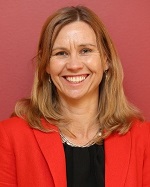
Jennifer Busch-Hallen – Nutrition International
Jennifer Busch-Hallen joined Nutrition International in 2015 and is the Senior Technical Advisor for Maternal and Neonatal Health and Nutrition.
In her role, Jenny provides leadership and strategic direction to Nutrition International’s programs that support governments in Asia and Africa to scale up integrated nutrition and health interventions for pregnant women and newborns. Jenny
spearheads NI’s efforts to advance maternal nutrition with particular emphasis on translating evidence to action, quality programming and gender equality and women’s empowerment. Recently she has been working alongside health economists
to assess the cost effectiveness of maternal nutrition interventions. Committed to working with partners across the globe, Jenny hopes to see accelerated progress towards global nutrition targets and universal quality health care.
Jenny has over 21 years of experience in international and Australian indigenous public health nutrition and has worked extensively to improve maternal, infant and child nutrition throughout the Africa, Asia and Pacific regions.
She brings experience from managing, developing and delivering programs for UN agencies, research institutes and the Australian government. She has a Bachelor of Science and Masters in Nutrition and Dietetics.
Moderator
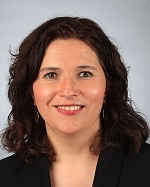
Luz Maria De-Regil – AREA CoP Moderator
The Community of Practice (CoP) aims to support members of the global community dedicated to improving and scaling up existing methods and strategies for anaemia reduction in a holistic and cohesive manner; to build consensus for engagement in AREA at the global, regional and national level and commit to the achievement of the Global Nutrition Targets 2025 endorsed by the 65th World Health Assembly.