

CC/Lex Guerra
© Credits

Tobacco

    Overview

    Overview

    Every year, more than 8 million people die from tobacco use. Most tobacco-related deaths occur in low- and middle-income countries, areas that are targets of intensive tobacco industry interference and marketing.

    Tobacco can also be deadly for non-smokers. Second-hand tobacco smoke contributes to heart disease, cancer, and other diseases, causing an additional 1.2 million deaths annually. In addition to the detrimental impact of tobacco on health, the total economic cost of smoking (from health expenditures and productivity losses together) are estimated to be around 1.4 trillion USD per year, equivalent in magnitude to 1.8% of the world's annual gross domestic product (GDP). Almost 40% of this cost occurred in developing countries, highlighting the substantial burden these countries suffer.

    The scale of this human and economic tragedy is shocking, but it’s also preventable. Big Tobacco — along with all manufacturers of tobacco products — is fighting to ensure the dangers of their products are concealed, but we are fighting back: In 2003, WHO Member States unanimously adopted the WHO Framework Convention on Tobacco Control (WHO FCTC), the only public health treaty under the auspices of WHO. In force since 2005, it has currently 181 Parties.

    To help countries implement the WHO FCTC, WHO introduced MPOWER, a package of technical measures and resources, each of which corresponds to at least one provision of the WHO FCTC. MPOWER builds the capacity of countries to implement certain provisions of the WHO FCTC.
     

    Publications

    All →
    How to make your campus smoke-free

    This step-by-step guide was prepared by the World Health Organization (WHO), the WHO Framework Convention on Tobacco Control (WHO FCTC) Secretariat, and...

    WHO tobacco knowledge summaries: tobacco and postsurgical outcomes

    This document is the fourth in a series of Tobacco Knowledge Summaries. This document was prepared with the objective to summarize the association between...

    WHO global report on trends in prevalence of tobacco use 2000-2025, third edition

    Progress in reducing tobacco use is a key indicator for measuring countries’ efforts to implement the WHO Framework Convention on Tobacco Control....

    WHO Study Group on Tobacco Product Regulation. Report on the scientific basis of tobacco product regulation: seventh report of a WHO study group

    This report presents the conclusions and recommendations of the WHO Study Group on Tobacco Product Regulation from its ninth meeting in December 2017. ...

    The tobacco body
    31 May 2019

    The tobacco body

    Tobacco is deadly in any form. Smoked tobacco products, including waterpipes, contain over 7000 chemicals, including at least 250 chemicals known to be...

    Tobacco product regulation: basic handbook

    WHO has launched a handbook on tobacco product regulation in response to the need for clear, practical guidance on tobacco product regulation.Although...

    Heated tobacco products: market monitoring information sheet

    The information sheet on the marketing of heated tobacco products (HTPs) provides information on what HTPs are, how HTPs are marketed in the countries...

    Heated tobacco products: information sheet

    The information sheet on heated tobacco products provides information on what HTPs are, what they contain, examples of HTPs, how they work or are operated...

    World No Tobacco Day

    31 May 2019

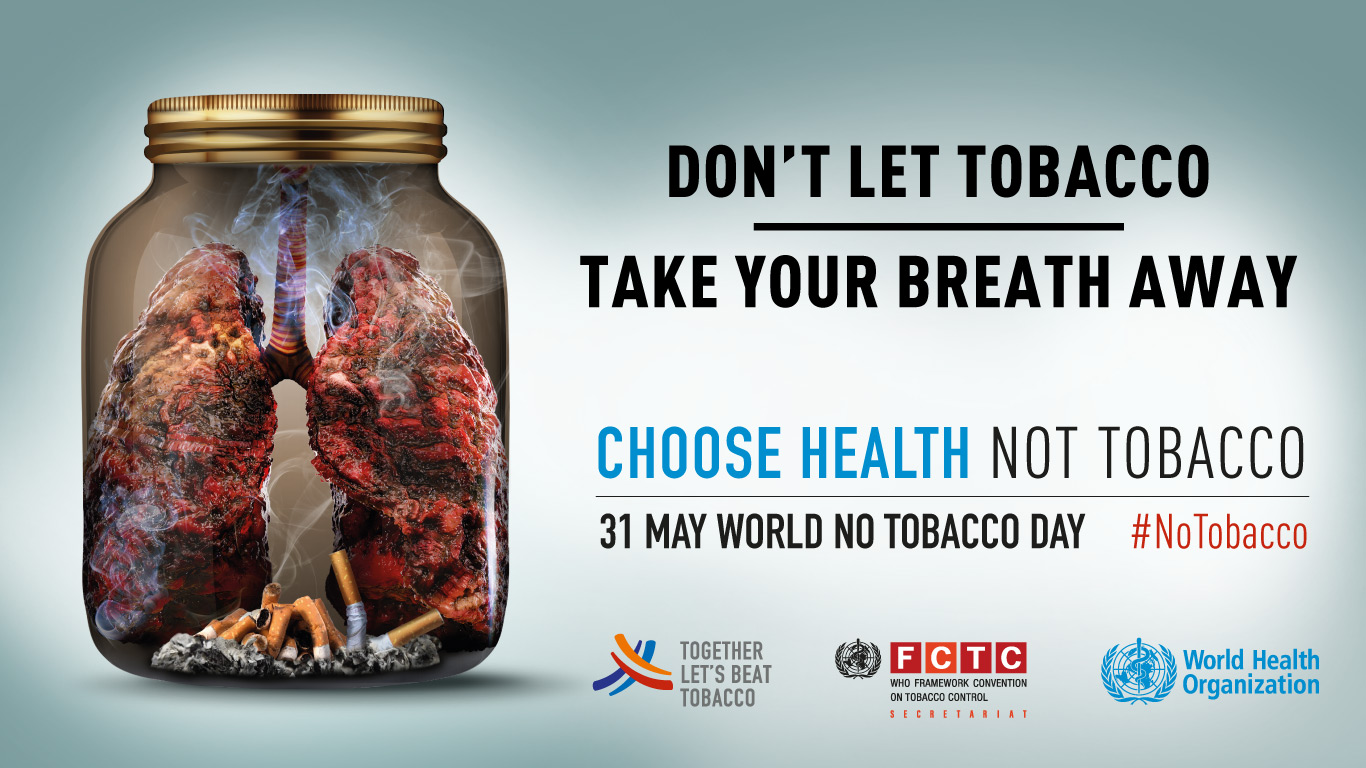
    Every year the World Health Organization and global partners celebrate World No Tobacco Day (WNTD). The annual campaign is an opportunity to raise awareness on the harmful and deadly effects of tobacco use and second-hand smoke exposure, and to discourage the use of tobacco in any form.

    Multimedia

    Related health topics