

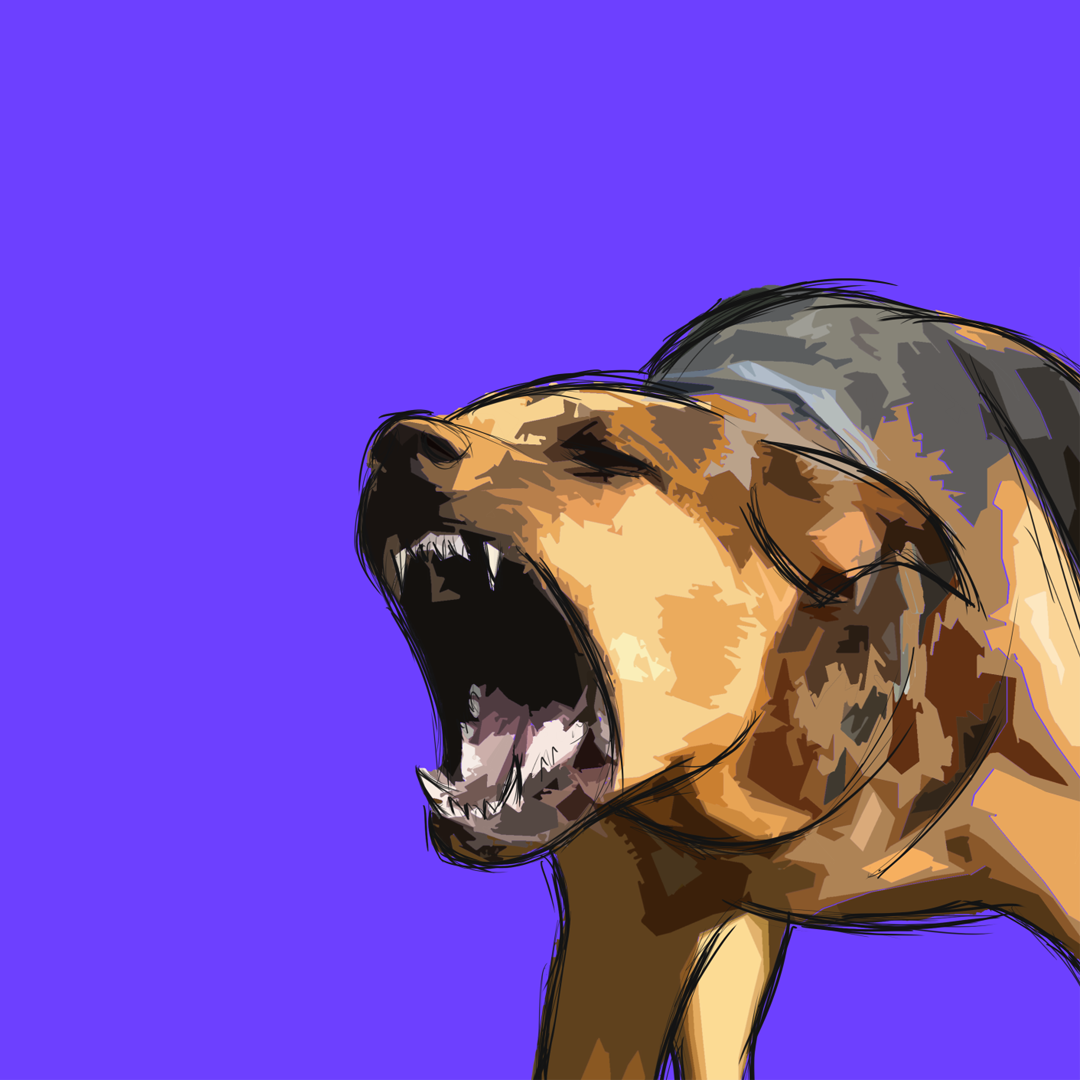
Human rabies prevention and management

Rabies is preventable through three proven, effective interventions:

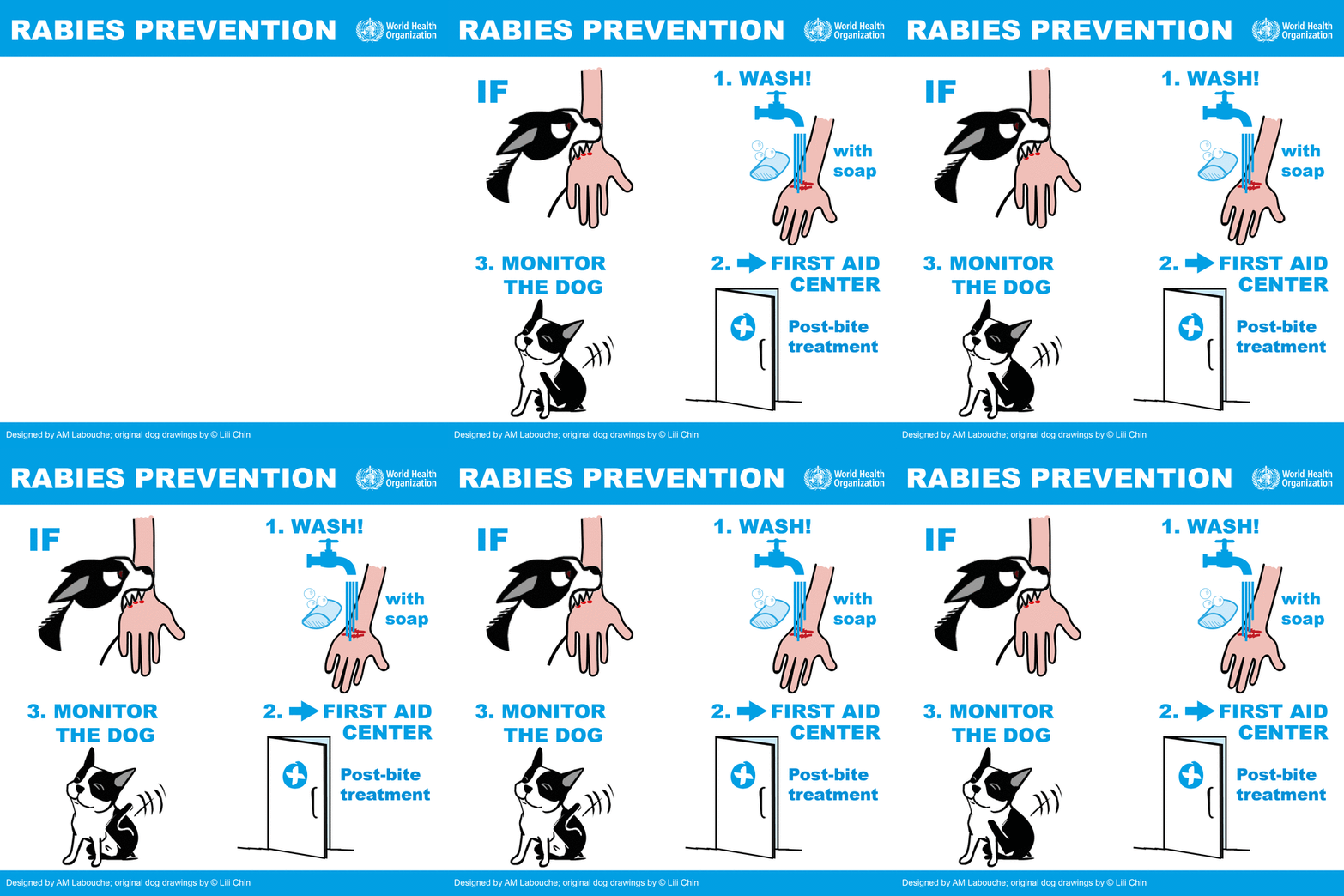
  1. Awareness of rabies disease engages communities and empowers people to save themselves by seeking the care they need. This includes an understanding of how to prevent rabies in animals, when to suspect rabies, and what to do in case of a bite.
  2. Post-exposure prophylaxis (PEP) consists of a series of rabies vaccines and, in some cases, rabies immunoglobulin (RIG), administered after a suspected exposure to rabies. Appropriate wound management and prompt access to quality-assured PEP is almost 100% effective in preventing human rabies deaths.
  3. Mass dog vaccination is a proven, cost–effective way to save human lives by stopping transmission of rabies at its source. While a variety of animal species can host rabies, dogs are responsible for 99% of human cases. Eliminating rabies in dogs is therefore key to sustainably preventing human disease.

Engaging communities to build awareness of rabies, and vaccinate dogs to prevent human disease, requires close One Health collaboration between the human and veterinary health sectors. National and regional elimination plans will increase preparedness and surveillance and mobilize domestic resources. This coordinated response between animal and human health systems not only has a positive impact on the livelihood of communities but also strengthens surveillance of rabies and other diseases in the human health system.
3 interventions

1. Awareness; 2. Post-exposure prophylaxis (PEP); 3. Mass dog vaccination

Educational material for children

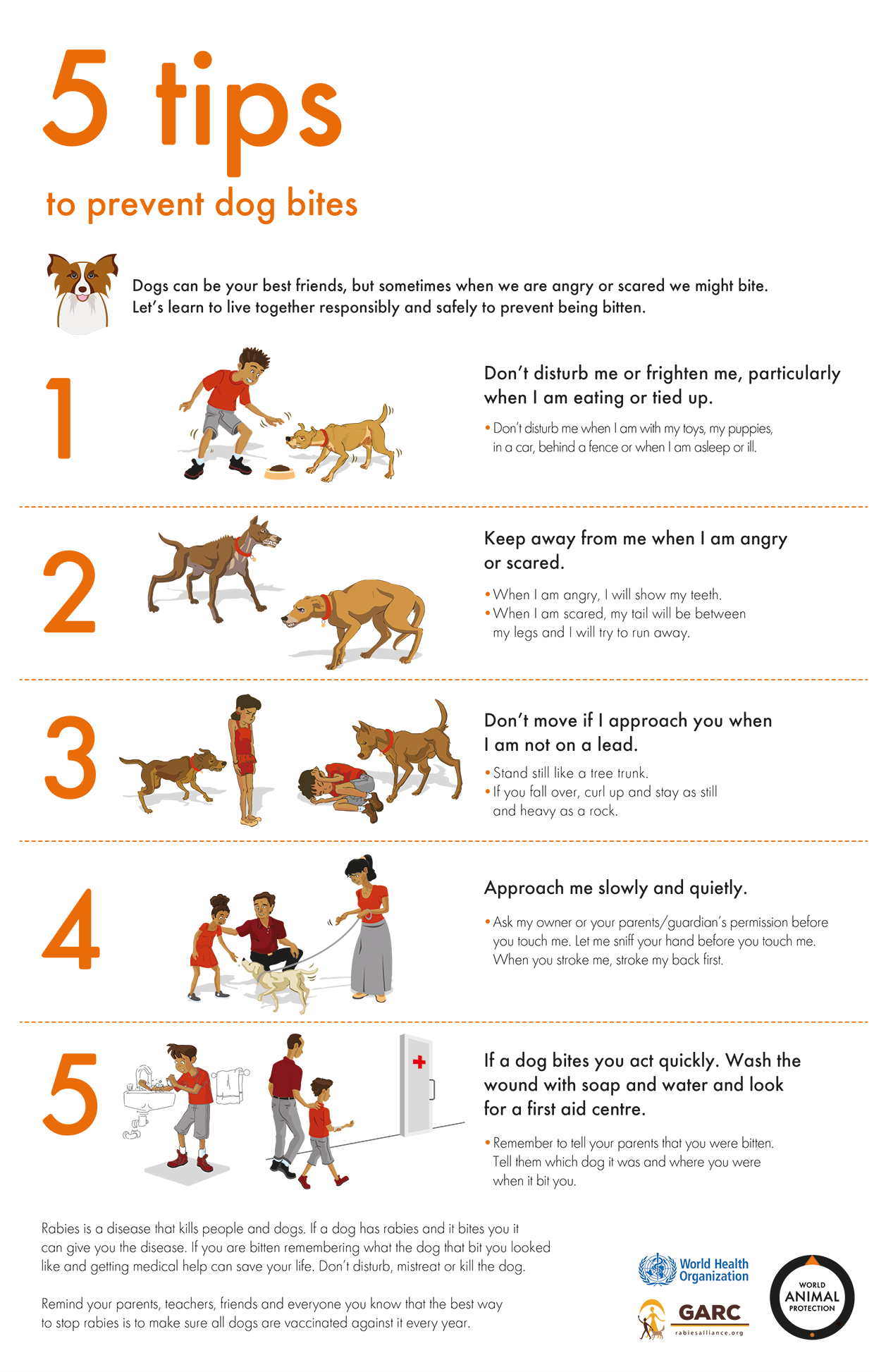
FIVE TIPS TO PREVENT DOG BITES 

Dogs are an important part of our lives.They are our best friends and guardians, they offer us their company and we think of them as part of the family.

But, why would a dog bite us?
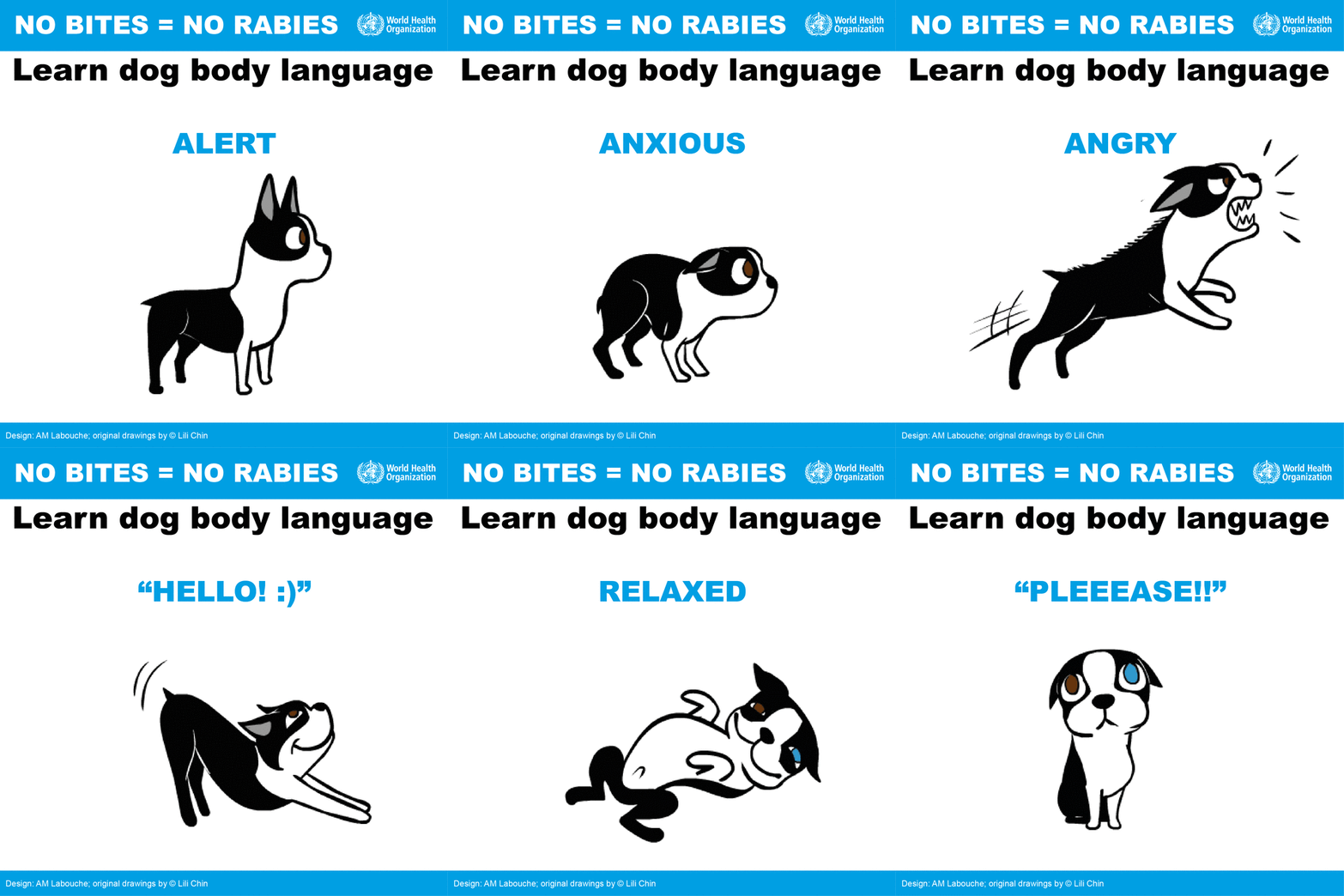
It’s usually because dogs and humans communicate in different languages. Because we don’t understand dog language, we can create situations that may lead a dog to bite us. But if we learn to behave responsibly around dogs, we can avoid situations that result in being bitten. Dogs don’t bite without a reason. They might bite because they feel scared, pain or frustration.
They might also bite when they want to defend their territory or when they have not been socialised with people or other animals.

Reducing rabies risk

By preventing bites, we will not only reduce the incidences of unpleasant and painful attacks, we will also reduce the risk of contracting rabies.

Because children are the most vulnerable to bites we have written a guide featuring five basic tips on behaving properly with dogs. You will also find suggestions for activities you can carry out in class.

Want a friend? Be a friend!
The guide to pet care and bite prevention
Friends don't bite!
3 December 2015

Friends don't bite!

Illustrated guide to pet care and bite prevention

Publications

All →
Driving progress towards rabies elimination: New WHO recommendations on human rabies immunization and results of Gavi’s learning agenda on rabies and 2nd international meeting of the Pan-African Rabies Control Network (‎PARACON)‎
Meeting report 12‒14 September 2018, Johannesburg, South Africa
Driving progress towards rabies elimination: results of Gavi’s learning agenda on rabies and new WHO position on rabies immunization

Rabies is one of the oldest and most terrifying diseases known to man and is still responsible for almost 60 000 deaths every year. Up to 99% of human...

Laboratory techniques in rabies Volume 1

Rabies has an enormous impact on both agriculture and conservation biology, but its greatest burden is undeniably on public health. As such, routine methods...

Our work

News

All →