

Thematic evaluations
Initial evaluation of the Framework of Engagement with Non-State Actors (2019)
Report
Executive Summary (document EB146/38 Add. 2)
Review of 40 years of primary health care implementation at country level (2019)
At the request of the 142nd session of the Executive Board, the Evaluation Office initiated a review of 40 years of primary health care implementation at country level. The purpose of the review was to: (a) document global progress towards primary health care implementation, identifying achievements and success stories, best practices and key challenges encountered; and (b) make recommendations on the way forward in order to accelerate national, regional and global health strategies and plans for universal health coverage/primary health care and the Sustainable Development Goals. The executive summary of the review report will be presented to the Executive Board at its 146th session in February 2020.
Review report
Executive Summary (document EB146/38 Add.1)
Evaluation of the utilization of National Professional Officers (2019)
The evaluation of the utilization of National Professional Officers (NPOs) assessed the role played by NPOs in the effective delivery of WHO’s mandate at country level in support of Member State efforts to achieve their national health targets. The evaluation specifically focused on the role NPOs play and how WHO has been utilizing them, and explored ways in which their skills and competencies could be utilized more effectively in the future. The evaluation also documented successes, challenges and best practices, and provided lessons learned and recommendations for future use by management to inform policy and decision-making.
Summative evaluation of the implementation of the WHO Geographical Mobility Policy during its voluntary phase (2019)
In January 2016, the Geographical Mobility Policy for WHO International Professionals (IPs) on continuing and fixed-term appointments came into effect. During the first three years (2016-2018), the Policy was implemented on a voluntary basis and was evaluated annually. It was envisaged that the lessons learned from these evaluations would inform the Organization on how to effectively implement the Policy during the next phase as of 1 January 2019. This current evaluation was therefore designed as a summative evaluation of the implementation of the Policy during the voluntary phase (2016-2018).
Evaluation of the election of the Director-General of the World Health Organization (2018)
In line with resolution WHA65.15 (2012) and decision EB141(1) (2017) an evaluation, open to all Member States, was conducted by the Executive Board to assess the efficacy of the revised process and methods for the election of the Director-General. The evaluation took place in an open meeting of the Executive Board held during its 142nd session (January 2018). The report of the evaluation management group served to facilitate an informed discussion during the open meeting. The Secretariat was subsequently requested to bring forward a proposal for adjustments to the election process for the Director-General, and any necessary revisions to the code of conduct, to be presented for consideration by the Board at its 144th session in January 2019.
Report of the evaluation management group EB142/26
Decision EB142(8)
Report by the Secretariat to the 144th session of the Executive Board, January 2019 (EB144/35)
Leadership and management at WHO: evaluation of WHO reform, third stage (2017)
The objective of the evaluation of WHO reform, third stage, was to assess: the status of actions taken on the stage 1 and stage 2 evaluation recommendations; progress made on implementation; and the effectiveness of the WHO implementation approach across the three levels of the Organization. It also aimed to provide recommendations on the way forward.
Independent review of the implementation of the WHO evaluation policy and the framework for strengthening evaluation and organizational learning (2017)
The objective of this independent review of the evaluation function at WHO was twofold: (i) to assess the implementation of the WHO evaluation policy and inform its update to ensure that WHO meets its evaluation-related reform objectives; and (ii) to assess the implementation of the WHO framework for strengthening evaluation and organizational learning in order to identify areas in need of strengthening.
Evaluation of the WHO Secretariat’s contribution to the health-related Millennium Development Goals (2017)
The evaluation of the WHO Secretariat’s contribution to the Millennium Development Goals (MDGs) aims to inform WHO’s strategy for the 2030 Agenda on Sustainable Development Goals based on organizational learning drawn from past experience. The evaluation covers the entire life span of the MDGs (2000-2015) and assesses the Secretariat’s contribution to the health-related MDGs at the global, regional and country levels.
Evaluation of WHO’s normative function (2017)
This evaluation was conducted in two phases. The first phase focused on defining normative work at WHO and proposed a framework for its evaluation. The second phase drew on this framework to evaluate a selection of representative types of normative work (10 normative products) and, based on the findings, make recommendations in relation to WHO’s normative role and function.
Impact of WHO publications (2016)
The overall purpose of the evaluation of the impact of WHO publications was to assess the impact of WHO publications by considering the reach, usefulness and use of a representative sample of WHO information products as estimates for their impact. Specifically, it addressed the following high-level questions:
- To what extent do WHO publications reach their intended audiences and what are their major gaps in reach and why did the latter arise
- What is the perceived usefulness of WHO publications (by information product type)?
- To what extent are WHO publications used as references and as authoritative sources of information for decision-making in clinical, public health and policy-making contexts?
- What is the extent of implementation of WHO’s publications policy and its influence in the impact of WHO publications?
WHO Presence in countries (2016)
The aim of the evaluation of WHO’s presence in countries was to assess the Secretariat’s contribution to the delivery of Organization-wide outcomes and the attainment of country-level goals. This evaluation addressed the following high-level questions:
- What does WHO’s presence in countries mean and does it respond to Member States’ and other relevant partners’ expectations?
- What is the contribution of WHO’s presence in countries to addressing global and individual countries’ health priorities and needs?
- What is WHO’s added value at country level in the light of its level of investment?
- What are the modalities for strengthening or reducing WHO’s presence in countries based on the different health status and needs of individual countries?
- To what extent does WHO exert effective leadership and convening capacity at country level to mobilize different stakeholders and act as a broker of partnerships in support of the national health and development agenda?
Ebola Interim Assessment (2015)
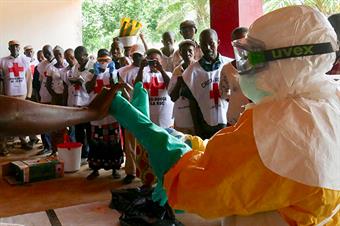
In 2015, a major focus of the work of the Evaluation Office was to support the work of the Ebola Interim Assessment Panel established in response to resolution EBSS3.R1, adopted during the special session of the Executive Board in January 2015. The Panel submitted its first report to the Sixty-eighth World Health Assembly, and the final report was delivered in July 2015. The Secretariat issued its response to the Panel’s report in August 2015. The Panel’s recommendations further informed the work of the United Nations Secretary General’s High-Level Panel on the Global Response to Health Crises, the deliberations of the Review Committee on the Role of the International Health Regulations (2005) in the Ebola Outbreak and Response and the Director-General’s Advisory Group on Reform of WHO’s work in Outbreaks and Emergencies with Health and Humanitarian Consequences.
The Report of the Ebola Interim Assessment Panel
Ebola lessons learned
Information session on studies undertaken in response to the Ebola outbreak – 24 January 2016
The WHO Financing Dialogue Evaluation (2014)
The evaluation of the financing dialogue was requested at the 66th World Health Assembly by Member States and the evaluation was completed between February and April 2014. The main objective of the evaluation was to assess whether the financing dialogue and related resource mobilization experiences improved the five principles, namely alignment, predictability, flexibility and transparency of WHO’s financing and whether it broadened WHO’s contributor base.
WHO Reform - Stage 2 (2013)
The second stage evaluation of WHO reform was endorsed by the Executive Board at its 132nd session in January 2013. It assessed the status of action taken on the recommendations of the stage one evaluation, modalities of implementing the reform proposals, the adequacy of the implementation plan and the change management strategy.
WHO Reform - Stage 1 (2011)
The first stage evaluation of WHO reform was entrusted to the Comptroller and Auditor General of India, the then external auditor of WHO. The evaluation was conducted during the period 26 February to 30 March 2012. The scope of this evaluation was to assess the completeness, comprehensiveness and relevance of the reform proposals formulated by the WHO Secretariat in the areas of finance, human resources and governance as contained in the relevant documents.