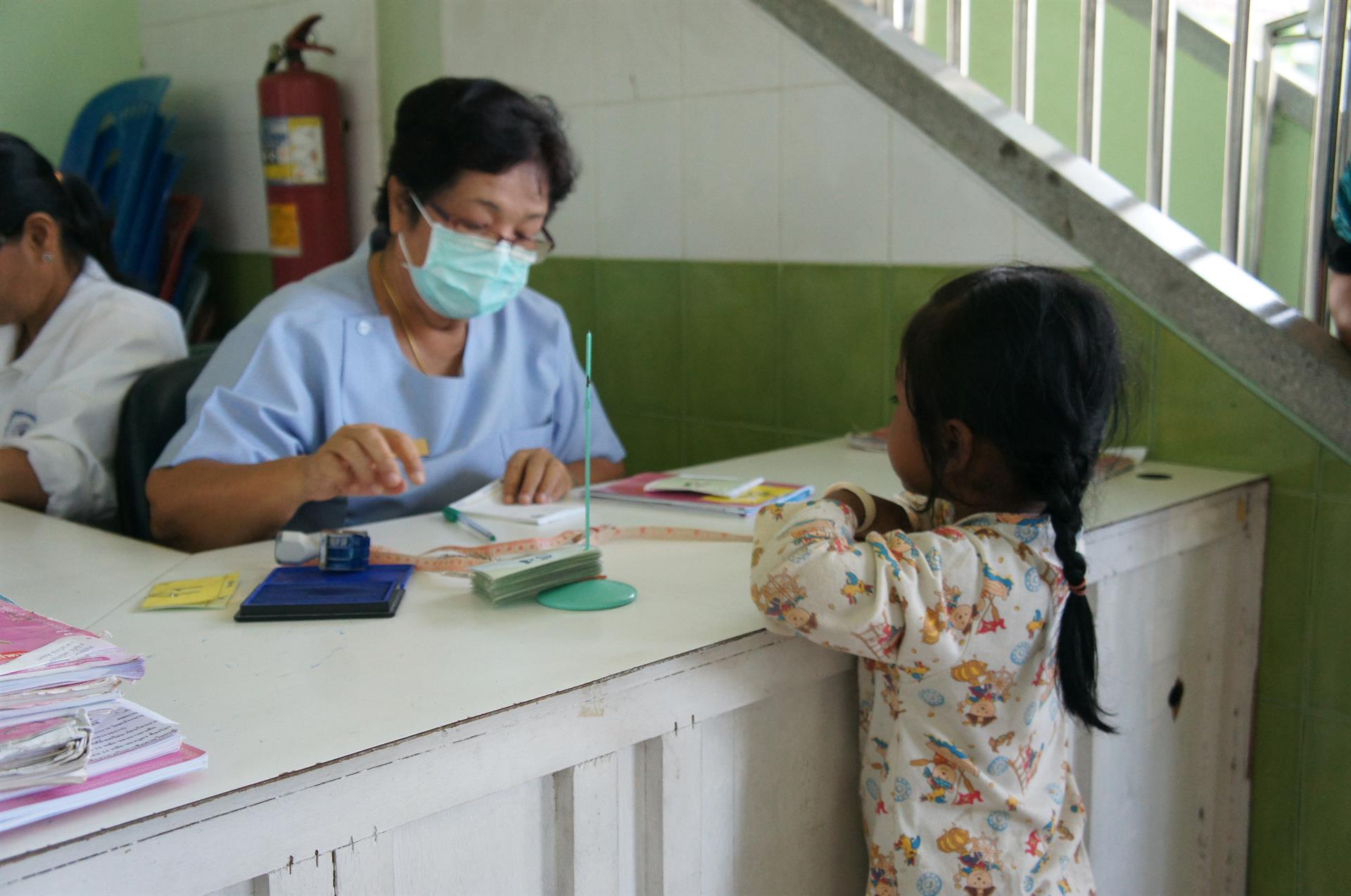
Migrant health
Thailand has an estimated 3-4 million migrants who are believed to contribute more than 6% of national GDP. In Thailand, the provision of health services to migrants can be viewed as building on the success of providing universal health coverage for the Thai population. Important drivers for this work include human rights and health security concerns, as well as the need to maintain a healthy workforce.
Key issues
- Linkage of health insurance eligibility to documentation status, with cumbersome administrative procedures, resulting in incomplete coverage and inadequate baseline data to inform policy
- Multiple stakeholders with high requirement for coordination
- Sociocultural barriers compounded by limited information on health seeking behaviour
- Limited human resources for migrant health
Focus areas
- To identify and/or generate strategic information on border and migrant health to facilitate/advocate for evidence-based policy recommendations
- Strengthen individual and institutional capacities, as well as domestic and international partnerships for border and migrant health
- Further define and expand/improve access to health services for vulnerable border and migrant populations
CCS deliverables
- Timely strategic information is generated to guide policy decisions related to the health security of border and migrant populations
- Clear administrative structure established to respond to the health needs of border and migrant population at national and subnational levels
- Increased health and insurance coverage among migrant and vulnerable populations
- Migrant friendly health services promoted
Impact
Improved health service delivery and health status of migrants in Thailand
Lead agencies
Health Systems Research Institute / Bureau of Policy and Strategy, Office of the Permanent Secretary
WHO will contribute and add value by:
- Providing direct financial and technical input for programme implementation, including normative support, technical consultations and generation of evidence to inform policy
- Supporting governance of the Migrant Health programme
- Facilitating engagement with Migrant Health stakeholders, including IOM, other concerned UN agencies, development partners, NGOs and CSOs
- Facilitating intercountry dialogue on migration and health, including through existing platforms such as the Mekong WHO Representatives Group and ASEAN