Overview
In its Emergency Response Framework, the World Health Organization (WHO) has defined an emergency as a situation that has an impact on the lives and well-being of a large number of people or a significant percentage of a population and requires substantial multisectoral assistance. For a WHO response, there must be clear public health consequences. In addition, under the International Health Regulations (IHR), adopted by the World Health Assembly in 2005, a public health emergency of international concern is defined as “an extraordinary event which is determined, as provided in these Regulations: (i) to constitute a public health risk to other States through the international spread of disease and (ii) to potentially require a coordinated international response”. Such events may include, inter alia, outbreaks of infectious diseases, hazardous chemical spills or releases of radiation.
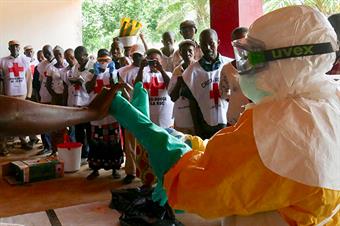
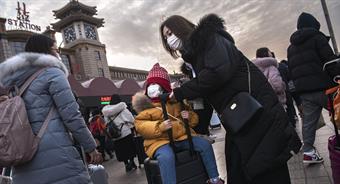
Many events in recent years have posed a high risk of injuries and infections, and in some cases have resulted in fatalities among emergency health and response workers. Incidence of infections among health workers were observed during outbreaks of SARS and Middle East Respiratory Syndrome – coronavirus (MERS-CoV). However, during Ebola virus disease outbreaks in West Africa, the high morbidity and mortality among health workers in the most affected countries led to serious negative impacts on the overall functioning of health services.
Further to these events, many countries are currently facing humanitarian crises and conflicts that increasingly involve the disturbing trend of attacks on health facilities. Such attacks not only affect the health and safety of health providers but also seriously affect the capacity of health systems to deal with humanitarian emergencies. According to a WHO report, during the two-year period from January 2014 to December 2015 there were 594 reported attacks on health-care workers that resulted in 959 deaths and 1561 injuries in 19 countries with emergencies.
In view of all these events, the need for better occupational safety and health (OSH) protection for emergency workers is increasingly being recognized as a major priority.