

Effective teaching: a guide for educating healthcare providers
17 May 2005
| Guidelines
Overview
Effective education offers a balance of theoretical and practical experiences to help learners develop competencies that are essential for their entering a healthcare profession and continuing to develop professionally throughout their careers. Education is intricately linked to social context. Broad social, cultural, historical, and political forces interrelate to form and shape teaching and learning, and thus the essential competencies that learners must develop.
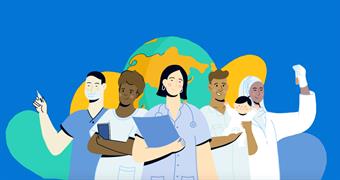
Research in the field of education has shown that learners need an appropriate environment and a variety of learning activities that include opportunities to practice and receive feedback on their performance. Education is known to be more effective when expected outcomes build on existing knowledge, skills, and attitudes, are relevant to the future tasks of the healthcare provider, correspond to the health needs of a society, and are supported by policies and practices in governments and at healthcare facilities. Because the needs of healthcare consumers are diverse, education should focus on preparing healthcare providers who can function in a variety of roles, including the key roles of clinician, communicator, educator, counselor, administrator, and manager.
There are a number of challenges in designing educational programs for healthcare providers. Although they vary from institution to institution, common challenges are large numbers of students, limited opportunities for relevant practical experiences, and a growing amount of information that needs to be covered. This manual recognizes these common challenges and proposes a variety of practical approaches that educators who plan and conduct courses can use to improve the effectiveness of their teaching.
WHO Team
WHO Global
Reference numbers
ISBN: 9241593806