

Communicating radiation risks in paediatric imaging
Information to support healthcare discussions about benefit and risk
22 June 2016
| Report
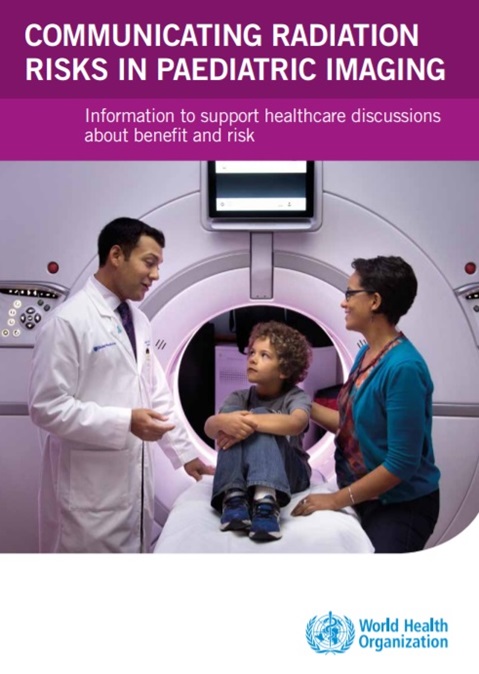
Overview
Advancing imaging technology has opened new horizons for clinical diagnostics and has greatly improved patient care. As a result, the use of medical imaging has increased rapidly worldwide during the past several decades and the spectrum of its applications in paediatric health care has expanded.
Paediatric computed tomography (CT) can provide fast and accurate information to help diagnosis; it saves lives and in many cases prevents the need for more invasive procedures. However, inappropriate use may result in unnecessary and preventable radiation risks, particularly in children. A balanced approach is needed that recognizes the multiple health benefits that can be obtained, while assuring that risks are minimized.
Paediatric computed tomography (CT) can provide fast and accurate information to help diagnosis; it saves lives and in many cases prevents the need for more invasive procedures. However, inappropriate use may result in unnecessary and preventable radiation risks, particularly in children. A balanced approach is needed that recognizes the multiple health benefits that can be obtained, while assuring that risks are minimized.
Patients and families should be part of risk–benefit discussions about paediatric imaging so they can best understand the information and use it for making informed choices. If they are not properly informed about risks and benefits of an imaging procedure, they may make choices that are not beneficial and may be even harmful (e.g. to refuse a CT that is needed or to demand a CT that is not justified). Radiation risk communication and risk–benefit dialogue is also necessary between health-care providers who request or perform radiological medical procedures in children.
Effective communication between referrers and imaging team members may prevent inappropriate referral. By enabling informed decision-making, effective radiation risk communication contributes to ensure the greatest possible benefit of paediatric imaging, at the lowest possible risk.
Effective communication between referrers and imaging team members may prevent inappropriate referral. By enabling informed decision-making, effective radiation risk communication contributes to ensure the greatest possible benefit of paediatric imaging, at the lowest possible risk.
In response to this need, the World Health Organization (WHO) convened a global collaboration to implement a project on radiation risk communication to support risk– benefit dialogue in paediatric imaging. This document has been developed by a group of recognized experts and extensive consultations with relevant stakeholders, including health-care providers, patient advocates, health authorities, radiation protection regulators, researchers and communication experts. Subsequent revisions of the document were made based on feedback collected through a number of workshops held in different regions of the world.
This document is intended to serve as a communication tool about known or potential radiation risks associated with paediatric imaging procedures, to support the risk– benefit dialogue during the process of paediatric healthcare delivery. It provides information and resources to support communication strategies including examples of key messages to use in different scenarios. This tool is primarily intended for health-care providers who refer children to perform imaging procedures involving ionizing radiation exposure. In addition to this target audience, this document may be a useful tool for other relevant stakeholders.
WHO Team
WHO Global
Reference numbers
ISBN: 978 92 4 151034