
Learn more about our work in Nepal
The World Health Organization (WHO)
The World Health Organization (WHO) was established on 7 April 1948 as the directing and coordinating authority in global public health within the United Nations system. Working at three levels in the Organization (global, regional and country), more than 7000 WHO staff worldwide collaborate with the governments of 194 Member States and other partners to achieve the WHO founding vision of the attainment of the highest possible level of health by all people. The World Health Organization (WHO) is one of the specialized agencies of the UN system. According to its constitution, the main goal of WHO is the attainment of the highest possible level of health by all people.
The South-East Asia Region
Home to a quarter of the world population, WHO SEARO provides leadership on health matters, articulates evidence-based policy options, provides technical support to countries and monitors health trends.
WHO in Nepal
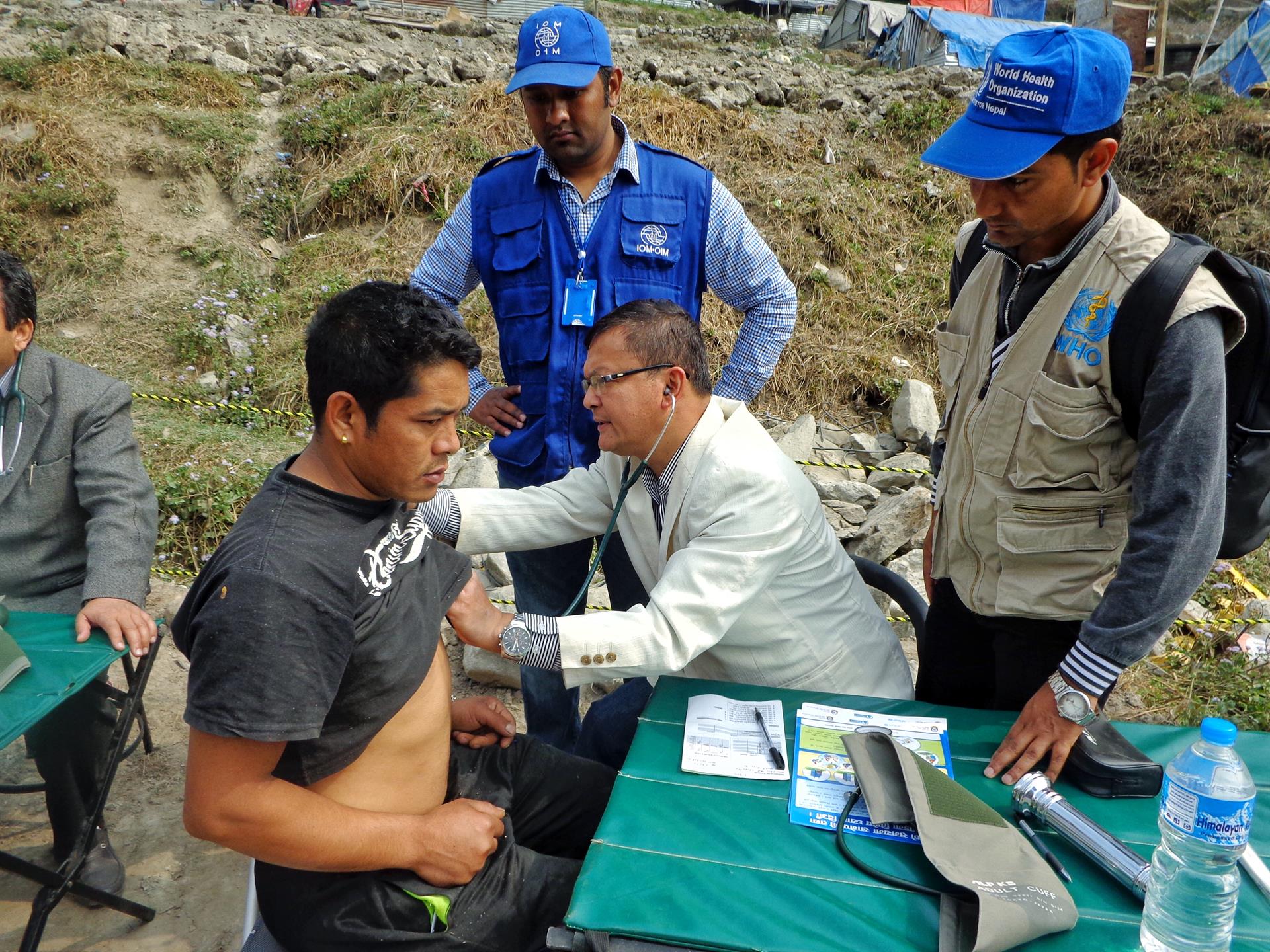
WHO – Nepal has been supporting the Government of Nepal for over 64 years towards achieving better health for all people in Nepal. WHO – Nepal will continue this support, with a stronger focus on technically assisting the government in achieving existing goals and targets.
WHO Nepal's strategy is informed by the aspirations of the National Health Policy (2014), Nepal Health Sector Strategy (2015–2020), Sustainable Development Goals (SDGs), WHO’s Regional Flagship Priorities, The Thirteenth General Programme of Work, and international commitments made by the Government of Nepal. It was developed in consultation with senior officials in the Ministry of Health and Population (MoHP), partners, and WHO - Nepal Country Office staff.
The strategy draws on the mandate, expertise, and comparative advantage of WHO as the world’s leading public health organization. It also elaborates on the recently endorsed UNDAF’s strategic priorities (2018-2022) related to health. As a Member State, this strategy presents an opportunity for Government of Nepal to identify and influence WHO’s global priorities which are relevant to Nepal.
Within the SDGs, addressing current health issues requires an ever more comprehensive approach, and WHO – Nepal intends to also work closely with other ministries and partners. WHO – Nepal will furthermore extend its support to subnational levels to accommodate changes being introduced under a federalized system, will focus on its competitive advantages, and define the scope of its support in alignment with government priorities and harmonized with development partners. The organization will be more accountable regarding its commitment to achieving agreed-upon targets and deliverables.
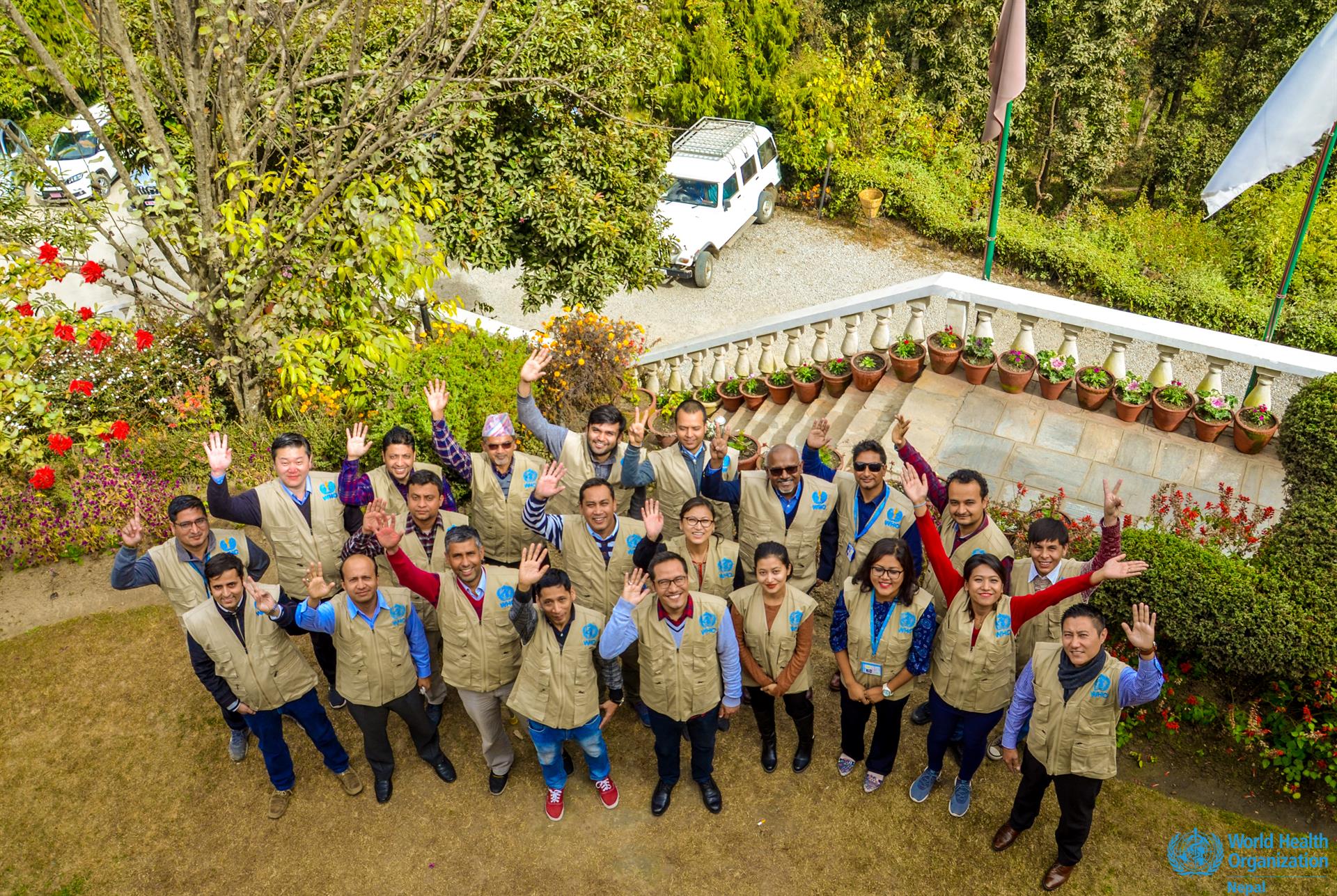
WHO – Nepal provides technical assistance to the MoHP which operates nationwide. In addition, WHO – Nepal has a central immunization and vaccine preventable disease office in Kathmandu and 11 field offices with 15 Surveillance Medical Officers (SMOs) that support active surveillance of polio, measles, rubella, neonatal tetanus, and AES (acute encephalitis syndrome). In addition, 8 field based WHO Emergency District Support Officers provide technical support to strengthen sub-national disaster preparedness capacity and support recovery activities in the affected areas.
Learn more about our work in Nepal

Office address:
WHO Nepal, United Nations House, Pulchowk, Lalitpur
Postal address:
Post Box No. 108
Telephone number:
+977-15523200
+977-15523993
Fax number:
+977-15527756
Office hours:
09.00 to 13.00 14.00 to 17.30 (Monday to Friday)
Email:
Address:
Ramshahpath, Kathmandu, Nepal
Telephone number:
+977-14262543
+977-14262802
Fax number:
+977-14262696
Website:
Media Contacts