
/banners/act-drug-resistance.tmb-1920v.jpg?sfvrsn=7baccb64_1 1920w)
International health regulations
While disease outbreaks are often unpredictable and require a range of responses, the International Health Regulations (IHR) provide an overarching legal framework that defines countries’ obligations in handling acute public health risks that have the potential to cross borders.
Now a legal agreement between 194 nations around the globe, the IHR (2005) grew out of the response to the cholera epidemics that once overran Europe, when countries used quarantine and other measures to respond to the spread of the disease.
Today, the IHR (2005) define when a country is required to report a disease outbreak to WHO and outlines the criteria for when a disease outbreak should be considered a “public health emergency of international concern”, which triggers a specific response.
At the same time, they contain provisions designed to limit the economic impact for governments that sound the alarm when they are facing a public health threat, so that other nations may not arbitrarily impose trade or travel embargoes without providing a clear public health justification.
The responsibility for implementing the IHR (2005) rests upon all Member States that are bound by the Regulations and WHO. Member States are responsible, including all of their sectors, ministries, levels, officials and personnel for implementing IHR at the national level.
WHO plays the coordinating role in IHR and, together with its partners, helps countries to build capacities.
IHR (2005) requires that all countries have the ability to do the following:
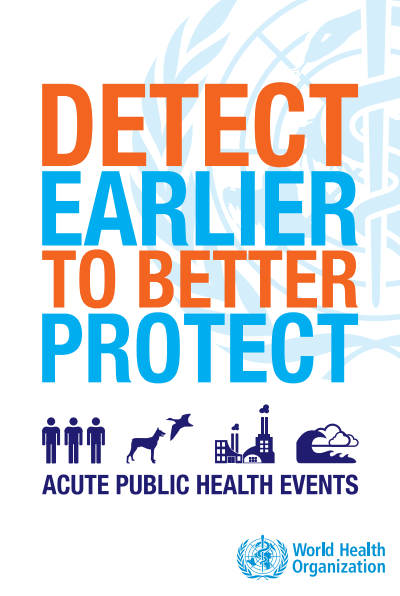
- Detect: Make sure surveillance systems and laboratories can detect potential threats
- Assess: Work together with other countries to make decisions in public health emergencies
- Report: Report specific diseases, plus any potential international public health emergencies, through participation in a network of National Focal Points
- Respond: Respond to public health events
The goal of country implementation is to limit the spread of health risks to neighboring countries and to prevent unwarranted travel and trade restrictions.
To support countries in strengthening and maintaining their capacities for ensuring rapid detection, verification and response to public health risks, WHO develops and provides tools, guidance and training.
WHO’s support focuses on the priority needs identified by the WHO Regional and Country Offices, in order to help each country meet its IHR commitment. This includes:
- designating WHO IHR Contact Points at the headquarters or the regional level;
- conducting global public health surveillance and assessment of significant public health events;
- disseminating public health information to Member States;
- offering technical assistance to Member States;
- supporting Member States in their efforts to assess their existing national public health structures and capacities for surveillance and response, including at designated points of entry;
- monitoring the implementation of IHR (2005) and updating guidelines; and
- if required, determining whether or not a particular event constitutes a public health emergency of international concern (PHEIC), with advice from external experts.
If a PHEIC is declared, WHO develops and recommends the critical health measures for implementation by Member States during such an emergency.