

Maternal, newborn, child & adolescent health
Data portal
Quality of Care Network - Resources and Data Related to Maternal, Newborn and Child Health Quality of Care Measurement
Background of the Network
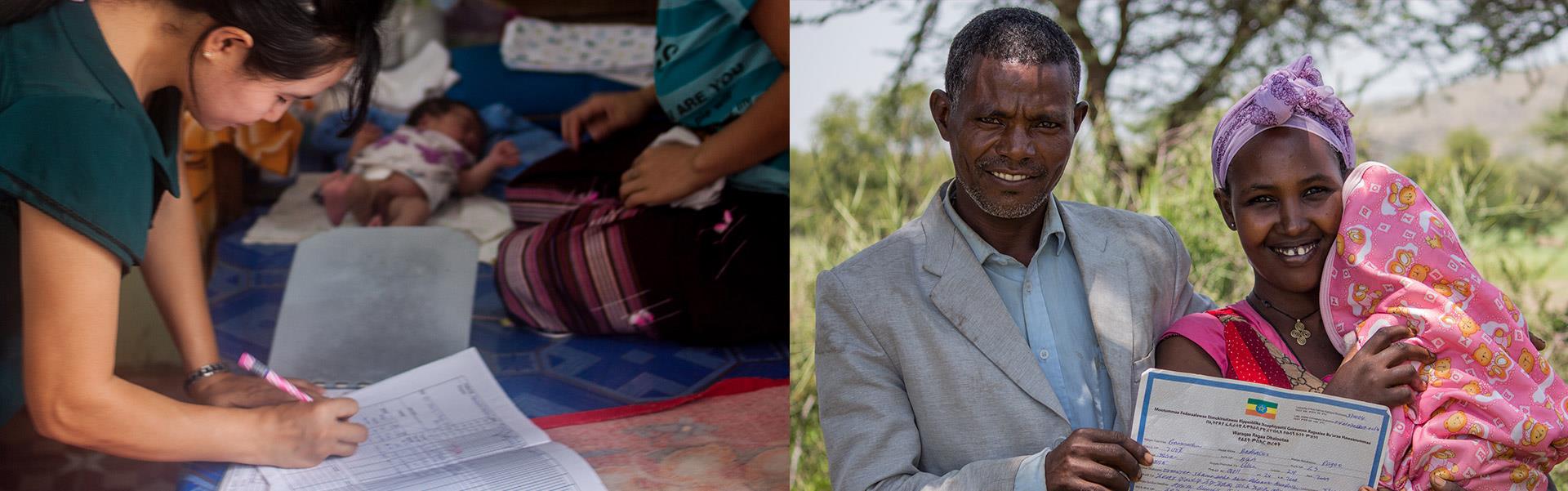
The Network for Improving Quality of Care (QoC) for Maternal, Newborn and Child Health (MNCH) works to ensure that every pregnant woman, newborn and child receives good quality care throughout pregnancy, childbirth and the postnatal period. The QoC Network (The Network) is underpinned by the values of Quality, Equity and Dignity (QED). Launched in February 2017, the Network is a country-led initiative jointly supported by the World Health Organization, UNICEF and UNFPA. It consists of 11 countries across two WHO regions which have demonstrated leadership in improving quality of care in health services. These countries include Bangladesh, Côte d’Ivoire, Ethiopia, Ghana, India, Malawi, Nigeria, Sierra Leone, Tanzania, Uganda, and more recently, Kenya. Several partner organizations, including non-governmental organizations, professional associations, as well as research and academic institutions are rallying around the Network and providing support to network countries across various network activities.
Network goals
To reduce maternal and newborn deaths and stillbirths in participating health facilities by 50% over five years.
To improve maternal and newborn experience of care in participating health facilities – enable measurable improvement in user satisfaction with the care received.
Network objectives

LEADERSHIP:
Build and strengthen national institutions and mechanisms for improving quality of care in the health sector.

ACTION:
Accelerate and sustain implementation of quality of care improvements for mothers and newborns.

LEARNING:
Facilitate learning, share knowledge and generate evidence on quality of care.

ACCOUNTABILITY:
Develop, strengthen and sustain institutions and mechanisms for accountability for quality of care.
MNCH QoC Measurement Framework
A measurement framework for MNCH QoC has been developed for adaptation in Network countries to support the implementation of MNCH QoC activities. Initially, the framework was designed to focus on Maternal and Newborn Health (MNH) QoC Measurement but can be adapted to Child Health QoC measurement as well. The Framework was developed through a multi-stakeholder consultative process with Network countries and partner organizations. It articulates the QoC measurement components that are necessary to demonstrate whether, and to what extent, the MNH QoC investments are producing the desired results, and makes some recommendations on the strategies and mechanisms needed to effectively implement the framework at country level.
The 4 measurement components are presented in the table below:
| Monitoring component | Description of the component | Facility manager and QI team | District managers | National MOH leadership |
|---|---|---|---|---|
| Quality improvement (QI) indicators | To support rapid improvements in quality of care led by facility-based QI teams supported by district/regional (or other sub-national administrative managerial unit) managers. These indicators are part of a catalogue of 120 indicators. | HIGH data collection and use | Moderate data collection and use | Moderate data use |
| District/regional performance monitoring indicators | To support district/regional managerial and leadership functions in improving and sustaining quality of care (QoC) in facilities. These indicators are also part of a catalogue of 120 indicators. | Moderate data collection and use | HIGH data collection and use | Moderate data use |
| Implementation milestones | To track implementation steps and progress against strategic objectives (leadership, action, learning and accountability), in line with global implementation guidance | Moderate data collection and use | Moderate data collection and use | HIGH data collection and use |
| Common indicators | Common set of standardized high-level indicators for monitoring in all learning sites in Network countries for use by all stakeholders at every level of the health system and to track performance across network countries | HIGH data collection and use | HIGH data use | HIGH data use |
MNCH QoC Data and Knowledge Management Platforms
To access the official Quality of Care Network Website, or the Data Analytics for the Network’s Common Quality of Care Indicators, or the network’s Knowledge Management and Learning Platform, please click on the relevant tab below:
QoC Metrics Technical Working Group for MNH (MNH QoC Metrics TWG)
MNH QoC Metrics TWG members
Working group members consist of experts from a wide range of institutions, including: WHO, UNICEF, UNFPA, MCSP/Jhpiego, USAID, ASSIST, LSHTM, LSTM, IHI, icddr, CDC, Bill and Melinda Gates Foundation, KEMRI, Engender Health, Makarere University, Johns Hopkins University, Harvard University, Northwestern University, University of Melbourne, and Save the Children, among others. Country representatives are in the process of being identified / nominated. Members work jointly with the secretariat to provide joint support to network countries in MNH QOC measurement, they contribute to the generation of knowledge products and knowledge management and are involved in supporting the alignment of the measurement agenda with implementation workstreams.
MNH QoC Metrics TWG Co-chairs
The Metrics TWG is co-chaired by three members from WHO HQ, UNICEF and JHPIEGO. Please find their profiles below

Moise Muzigaba
Epidemiology, Monitoring and Evaluation Unit
Department of Maternal Newborn and Adolescent Health
World Health Organization – HQ
Geneva, Switzerland

Kathleen Hill
Maternal and Child Survival Programme
Maternal and Child Survival Program
USAID Grantee
JHPIEGO
Washington, DC, USA

Debra Jackson
UNICEF New York USA
School of Public Health
University of the Western Cape
Cape Town, South Africa
Documents
- Guidance on country level holistic data quality assurance
- WHO's Data quality assessment tool - for adaptation
- Point of care quality improvement - coaching manual
- Point of care quality improvement - learner manual
- Quality of care for maternal and newborn health - a monitoring framework for network countries
- Standards for improving quality of maternal and newborn care in health facilities
- Strategies toward ending preventable maternal mortality (EPMM)
- Every new born action plan (ENAP)
- Common indicator list