


.tmb-1920v.jpg?sfvrsn=10558ba0_1 1920w)
Screening for cervical cancer
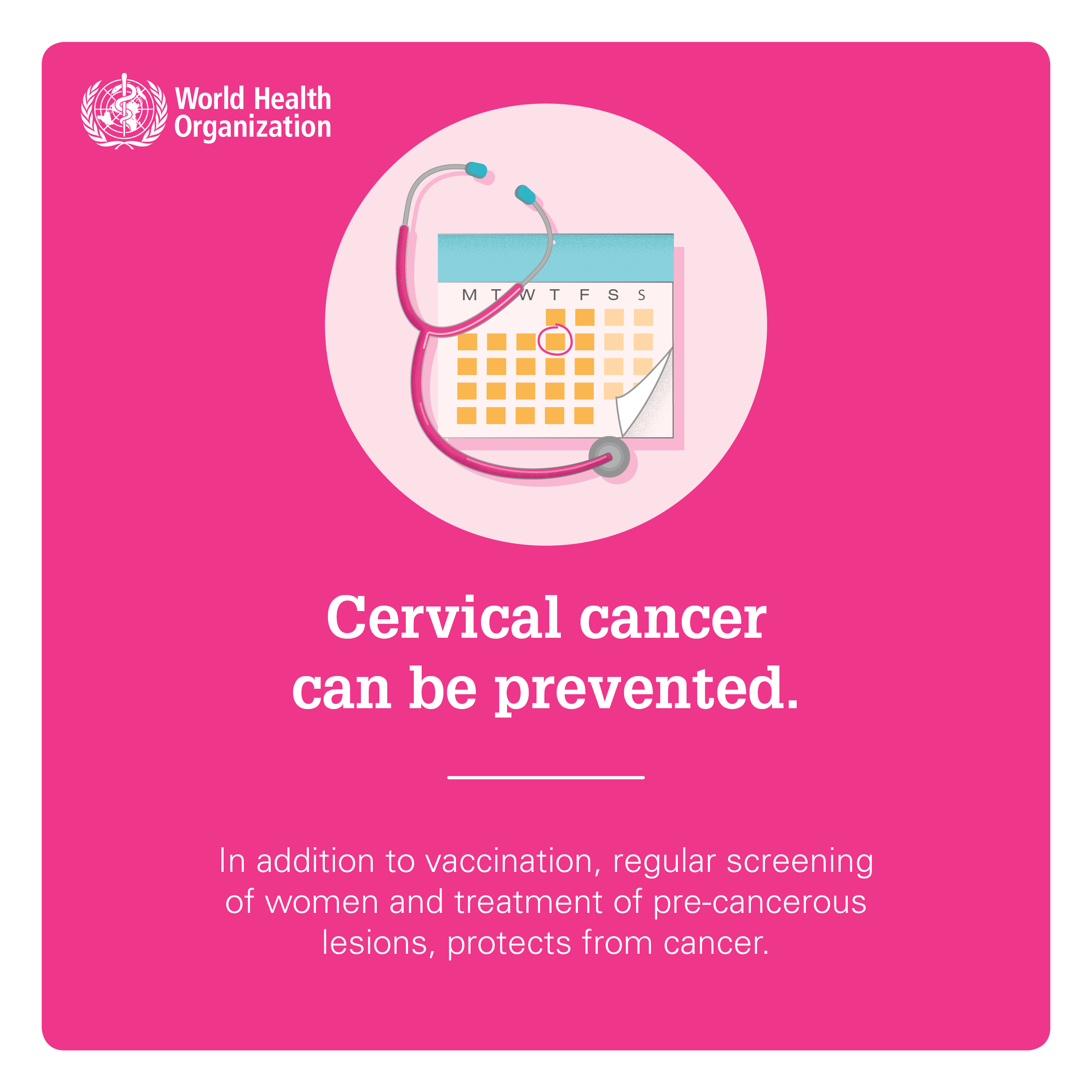
All adult women should undergo periodic cervical cancer screening. Screening aims to detect precancerous lesions, that is, abnormalities in the cells of the cervix, which, if left untreated, can develop into cervical cancer. When found, precancerous lesions must be treated.
Screening and treatment of precancerous lesions, also referred to as “secondary prevention” is the second pillar of the recommended WHO’s comprehensive approach to cervical cancer. There are a number of recommended screening and treatment options.
The Draft Global Strategy for the Elimination of Cervical Cancer as a Public Health Problem recommends that 70% of women are screened with high-performance tests by ages 35 and 45 years.
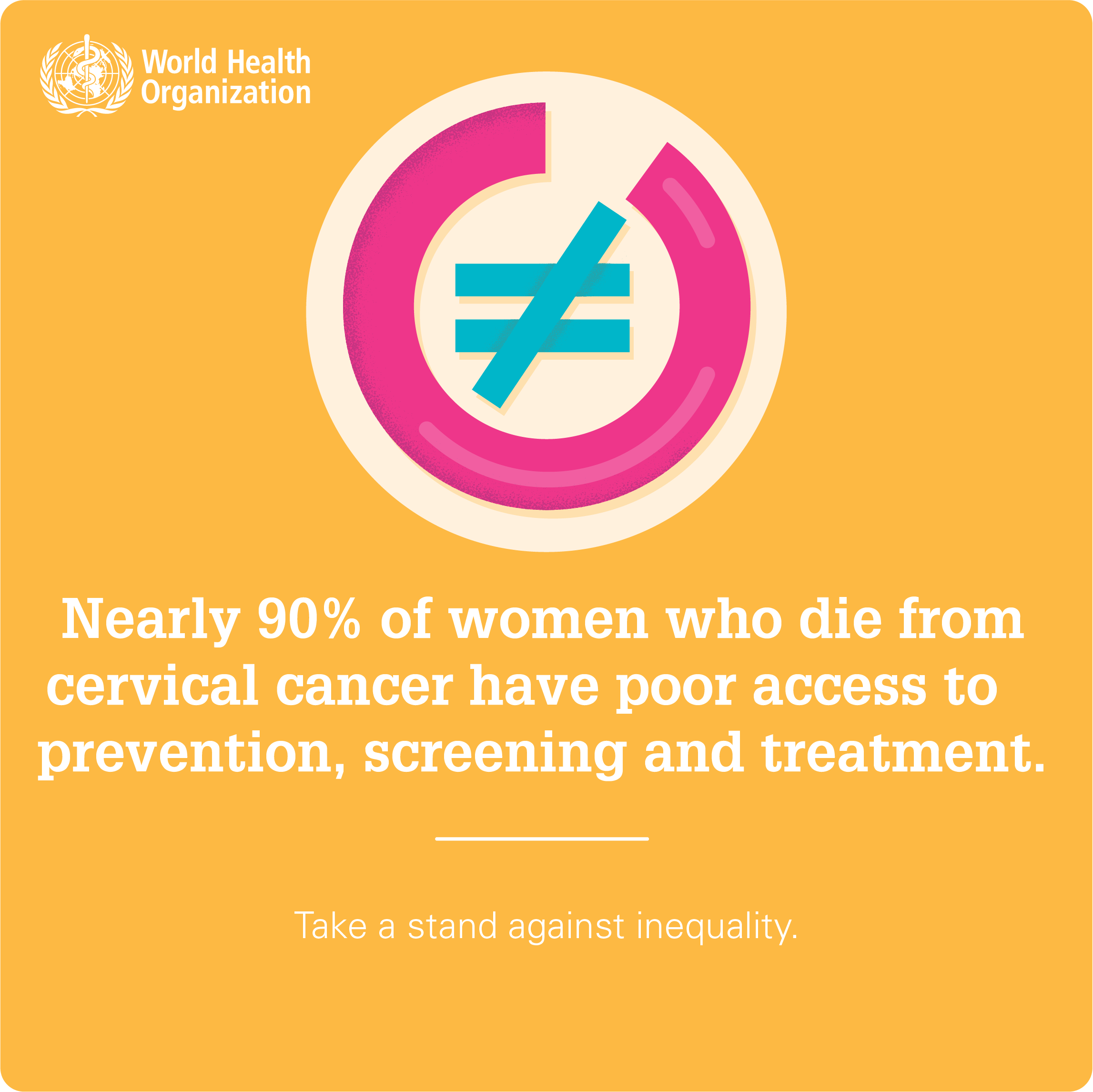
HPV vaccination (primary prevention) and cervical cancer screening, with treatment of precancerous lesions must be scaled up together in low- and middle-income countries.
Screening might also result in cervical cancer diagnosis. Detection of cancer and treatment must be done together (tertiary prevention), as cervical cancer can be treated effectively, particularly if detected early.