



Community representatives come to visit a family in the outskirts of Beni to raise awareness about Ebola.
Immunizing against HPV
Cervical cancer is caused by sexually acquired infection with certain types of human papillomavirus (HPV).
Most infections with HPV resolve spontaneously and cause no symptoms. However, persistent infection can cause cervical cancer in women. Virtually all cervical cancer cases (99%) are linked to genital infection with HPV, the most common viral infection of the reproductive tract. HPV can also cause other types of anogenital cancer, head and neck cancers, and genital warts in both men and women. HPV infections are transmitted through sexual contact.
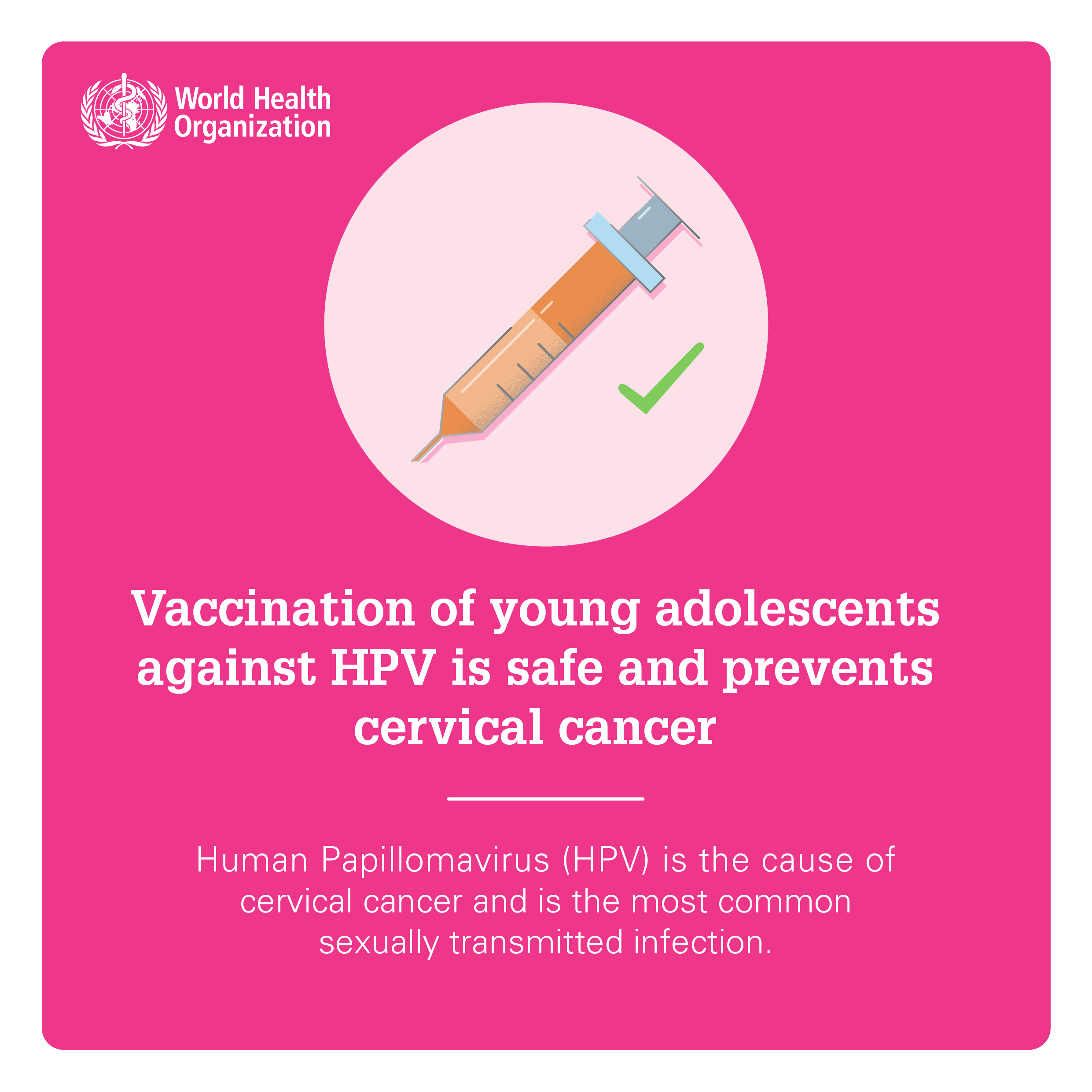
An effective and safe vaccine against the two cancer-causing types of HPV, the main cause of cervical cancer, exists. Being vaccinated against HPV types 16 and 18 significantly reduces the risk of developing cervical cancer.
HPV vaccination is the most cost-effective public health measure against cervical cancer. The Draft Global Strategy for the Elimination of Cervical Cancer as a public health problem recommends vaccination for girls before the age of 15.
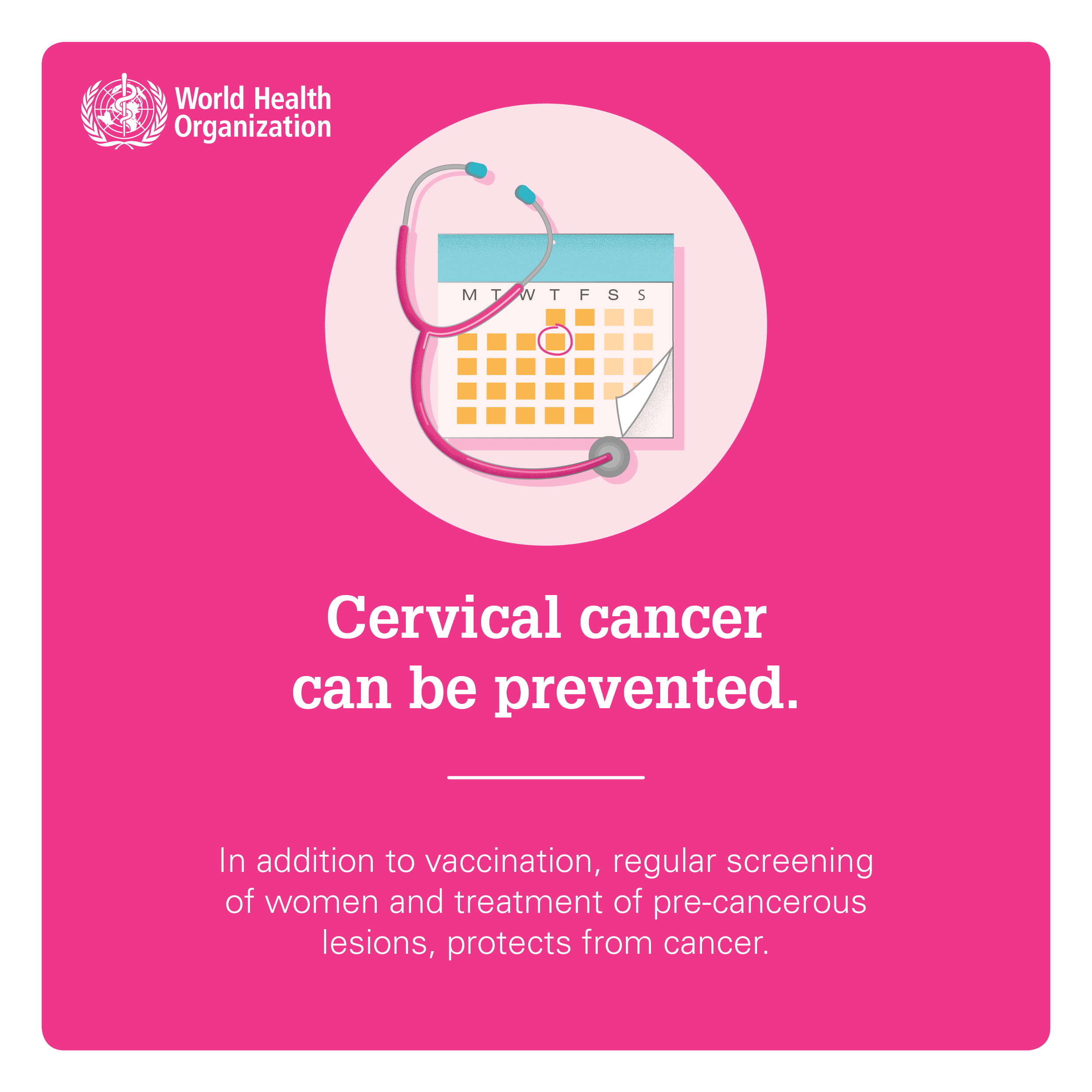
In addition to vaccination, WHO recommends screening for pre-cancerous lesions of the cervix, which if diagnosed and treated, also prevent cervical cancer. The WHO recommendation is for two screening tests, by age 35 and by age 45, with treatment to remove screen-detected precancerous lesions.