



Poliomyelitis (polio)
Poliomyelitis (polio) in the Western Pacific
Poliomyelitis is a highly infectious disease caused by a virus which, mainly affects children under five years of age.
It is transmitted through contaminated food and water. Most infected people have no symptoms, but can transmit infection to others by excreting the virus in their faeces. Initial symptoms of polio include fever, fatigue, headache, vomiting, stiffness in the neck, and pain in the limbs. One in 200 infections leads to irreversible paralysis. Among those paralysed, 5% to 10% die when their breathing muscles become immobilized.
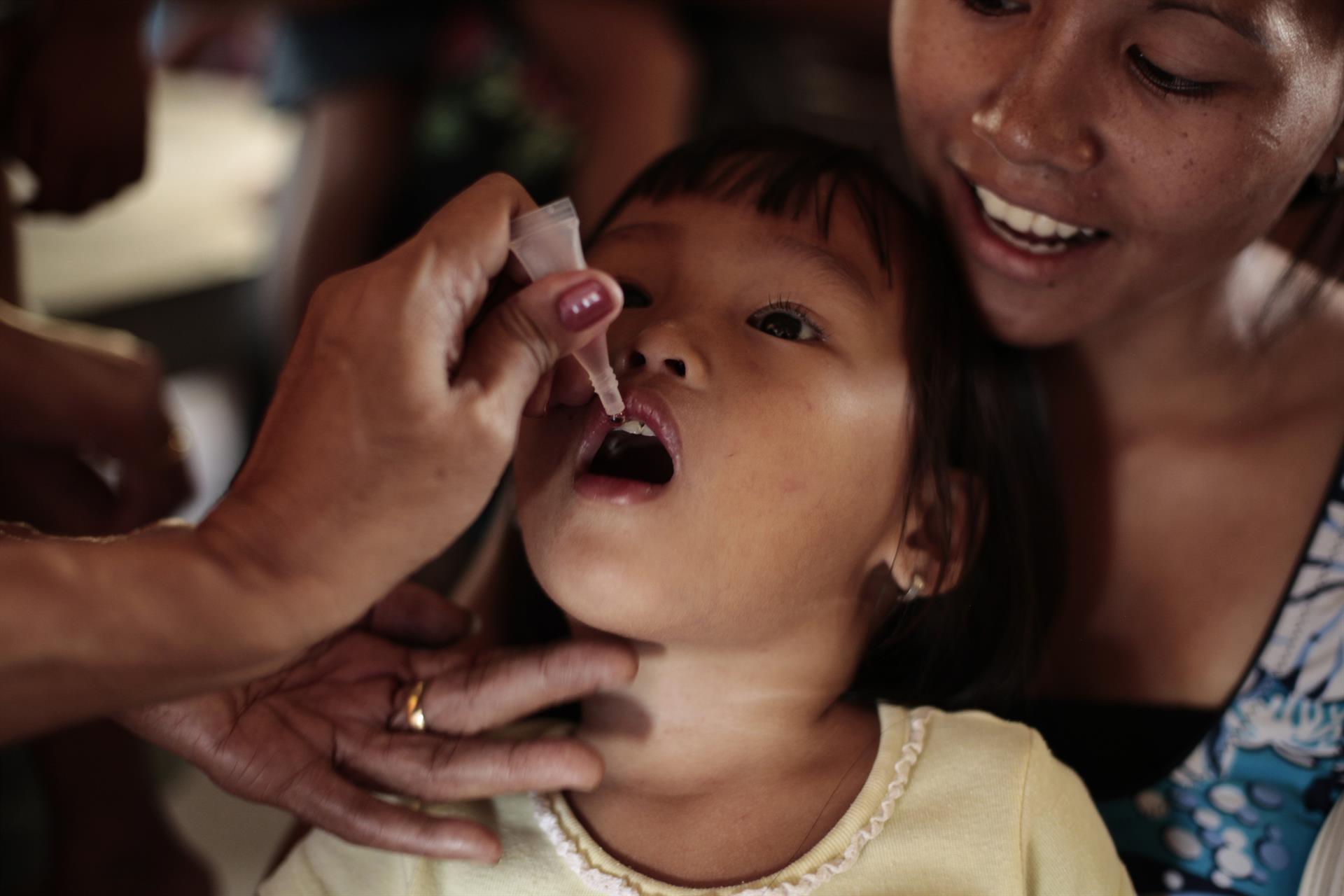
While there is no cure for polio, it can be prevented by vaccination.
Technical links
