
Dr Rabindra Abeyasinghe
The founding vision of WHO is a world in which all people attain the highest possible standard of health and well-being. The WHO mission is to promote health, keep the world safe and serve the vulnerable. WHO works with a commitment to human rights, universality
and equity, based on the principles espoused in the WHO Constitution.
Core functions of WHO include: providing leadership on matters crucial to health and engaging in partnerships where joint action is needed; shaping the research agenda
and stimulating the generation, translation and dissemination of valuable knowledge; setting norms and standards and promoting and monitoring their implementation; articulating ethical and evidence- based policy options; providing technical support
to catalyse changes; building sustainable institutional capacity; and monitoring the health situation and assessing health trends.
The mission of WHO in the Philippines is to support the Government to achieve universal health coverage with
all people having access to high-quality health services, within the context of the country’s needs and challenges in transitioning to middle-income status.
In order to provide effective support, the WHO country office leverages the
three levels of the Organization: to focus support where it can make a difference; to place the right people in the right places; to engage partners effectively; to enhance communications; and to improve operational intelligence.
Priorities of WHO
WHO’s general programme of work (GPW) sets medium-term priorities and strategies of the Organization. The World Health Assembly in May 2018 is expected to approve the 13th general programme of work, covering the period 2019–2023. It encompasses a set of three interconnected strategic priorities, strategic shifts and organizational shifts, as well as 10 outcomes to ensure healthy lives and promote well-being for all at all ages. The three strategic priorities are:- Universal health coverage: 1 billion more people benefitting from universal health coverage
- Health emergencies: 1 billion more people better protected from health emergencies
- Healthier populations: 1 billion more people enjoying better health and well-being
Priorities of WHO in the Philippines
The WHO Country Office works with the Philippines’ Department of Health in achieving good health for the citizenry and focus on 5 strategic priorities for WHO collaboration with the Philippines:
- Save lives
- Promote well-being
- Protect health
- Optimize the health system
- Use platforms for health
WHO Representative in the Philippines
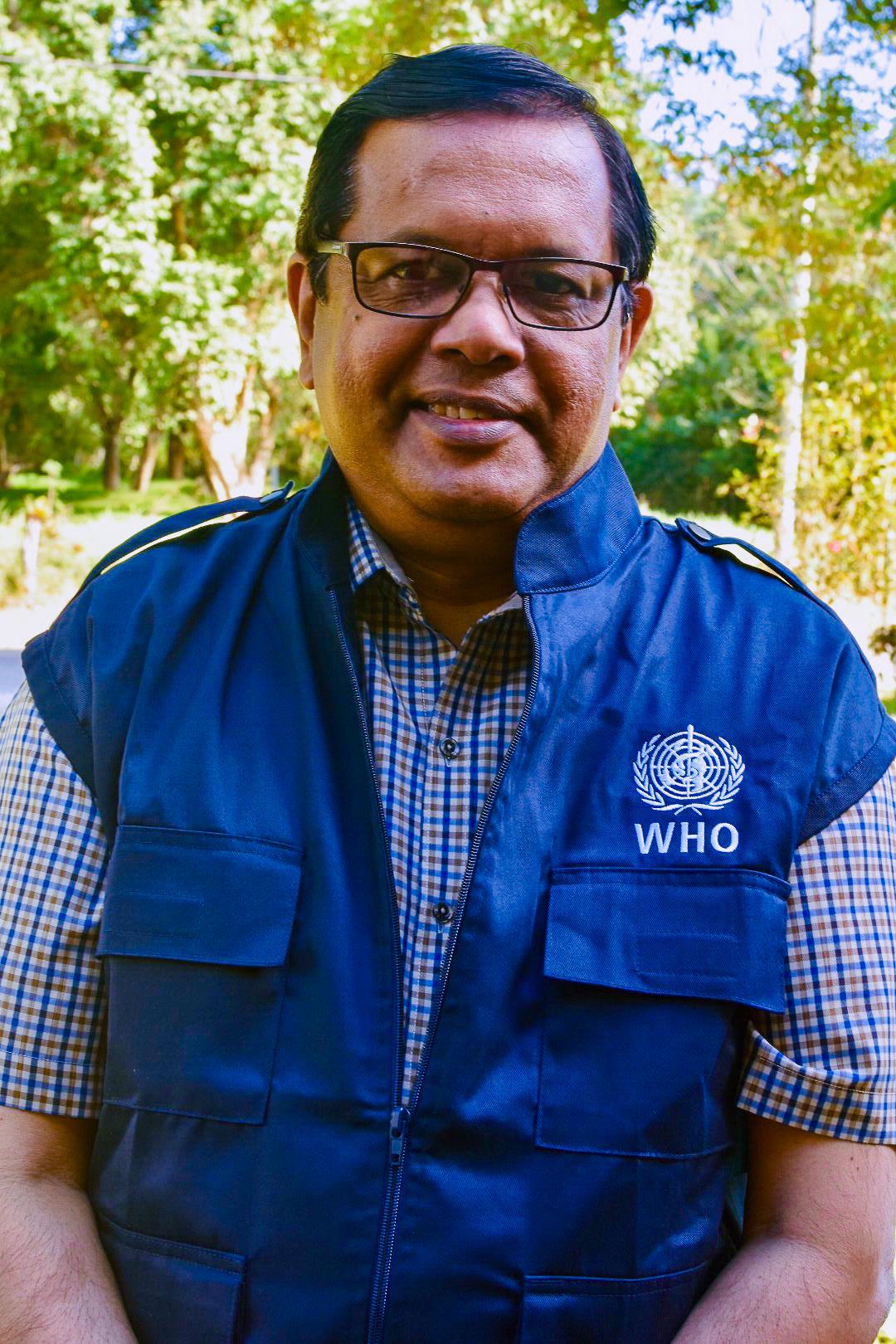
Dr Rabindra Abeyasinghe assumed the position of Officer in Charge and Acting WHO Representative in the Philippines on 26 August 2019. Prior to this, he was the Coordinator for Malaria, Other Vectorborne and Parasitic Diseases at the WHO Western Pacific Region based in Manila, Philippines. He has been with WHO since 2011 in various capacities including acting Director of Communicable Diseases and Regional Entomologist in WHO Western Pacific Region and Technical Officer Malaria in WHO Papua New Guinea.
Dr Abeyasinghe has a Doctorate in Community Medicine from the University of Colombo, Sri Lanka. Additionally he has a Master of Science in Biology and Control of Disease Vectors from the London School of Hygiene and Tropical Medicine, and a Diploma in Tropical Medicine and Hygiene from the Royal College of Physicians, London. He has nearly 30 years of experience in malaria control, and held several senior positions in the Ministry of Health Sri Lanka including Director National Malaria Control Programme and Project Director, Global Fund to Fight AIDS, Tuberculosis and Malaria (GFATM) Projects.
Dr Abeyasinghe is a Fellow of the College of Community Physicians of Sri Lanka and a past President of the College of Community Physicians of Sri Lanka. He was a Senior Fellow of the Postgraduate Institute of Medicine, University of Colombo, Sri Lanka and Advisory Board Chair of the Asia Pacific Malaria Elimination Network.
Dr Abeyasinghe is married and has two children.