
Questions and Answers Foodborne Disease HT
6 January 2020 | Q&A
What are the health risks associated with pesticide residues in food?
Pesticides are chemicals used in agriculture to protect crops against insects, fungi, weeds and other pests. In addition to their use in agriculture, pesticides are also used to protect public health in controlling the vectors of tropical diseases, such as mosquitoes.
But pesticides are also potentially toxic to humans. They may induce adverse health effects including cancer, effects on reproduction, immune or nervous systems. Before they can be authorized for use, pesticides should be tested for all possible health effects and the results should be analysed by experts to assess any risks to humans.
“Hazard” and “risk”: what is the difference?
Scientific studies of the potential health effects of hazardous chemicals, such as pesticides, allow them to be classified as carcinogenic (can cause cancer), neurotoxic (can cause damage to the brain), or teratogenic (can cause damage to a fetus). This process of classification, called “hazard identification,” is the first step of “risk assessment”. An example of hazard identification is the classification of substances according to their carcinogenicity to humans carried out by the International Agency for Research on Cancer (IARC), the specialized cancer agency of WHO.
The same chemical can have different effects at different doses, which depends on how much of the chemical a person is exposed to. It can also depend on the route by which the exposure occurs, e.g. ingestion, inhalation or injection.
Why does WHO have 2 distinct processes for “hazard identification” and “risk assessment”?
“Hazard identification”—in particular, the IARC classification of substances in terms of their carcinogenicity—is the first step of the “risk assessment” process. Classification of an agent as a carcinogenic hazard is an important indication that some level of exposure, for example from occupation, environment, food, etc., could result in an increased risk of cancer.
Risk assessment for pesticide residues in food, as conducted by the Joint FAO/WHO Meeting on Pesticide Residues (JMPR), establishes a safe intake level after assessing the level of risk. Acceptable daily intakes (ADIs) are used by governments and international risk managers, such as the Codex Alimentarius Commission, to establish maximum residue limits (MRLs) for pesticides in food. MRLs are enforced by national authorities to ensure that the amount of pesticide residues consumers are exposed to through eating food over a lifetime will not have adverse health effects.
IARC’s hazard identification can inform the JMPR’s risk assessment, and thus the two processes can be complementary. For example, IARC may identify new evidence from scientific studies on the carcinogenicity of a chemical and, when necessary, JMPR conducts an evaluation or a re-evaluation of the safety of that chemical as it is used in agriculture and occurs in food.
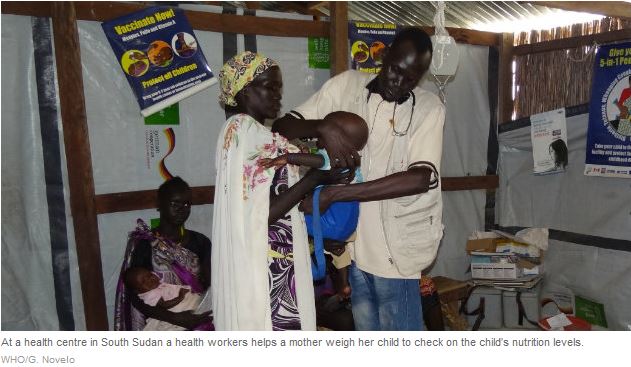
Malnutrition refers to deficiencies, excesses or imbalances in a person’s intake of energy and/or nutrients. The term malnutrition covers 2 broad groups of conditions. One is ‘undernutrition’—which includes stunting (low height for age), wasting (low weight for height), underweight (low weight for age) and micronutrient deficiencies or insufficiencies (a lack of important vitamins and minerals). The other is overweight, obesity and diet-related noncommunicable diseases (such as heart disease, stroke, diabetes and cancer).
What are the consequences of malnutrition?
Malnutrition affects people in every country. Around 1.9 billion adults worldwide are overweight, while 462 million are underweight. An estimated 41 million children under the age of 5 years are overweight or obese, while some 159 million are stunted and 50 million are wasted. Adding to this burden are the 528 million or 29% of women of reproductive age around the world affected by anaemia, for which approximately half would be amenable to iron supplementation.
Many families cannot afford or access enough nutritious foods like fresh fruit and vegetables, legumes, meat and milk, while foods and drinks high in fat, sugar and salt are cheaper and more readily available, leading to a rapid rise in the number of children and adults who are overweight and obese, in poor as well as rich countries. It is quite common to find undernutrition and overweight within the same community, household or even individual – it is possible to be both overweight and micronutrient deficient, for example.
What is being done to address malnutrition?
In April 2016, the United Nations General Assembly adopted a resolution proclaiming the UN Decade of Action on Nutrition from 2016 to 2025. The Decade aims to catalyse policy commitments that result in measurable action to address all forms of malnutrition. The aim is to ensure all people have access to healthier and more sustainable diets to eradicate all forms of malnutrition worldwide.
More information on nutrition
- Q&A: Malnutrition and emergencies
- Infographics: Double burden of malnutrition
- WHO's work on nutrition