

Q&A on infection prevention and control for health care workers caring for patients with suspected or confirmed 2019-nCoV
10 February 2020 | Q&A
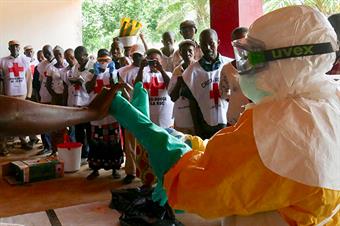
No. Current WHO guidance for HCW caring for suspected or confirmed 2019-nCoV acute respiratory disease patients recommends the use of contact and droplet precautions, in addition to standard precautions which should always be used by all HCW for all patients. In terms of PPE, contact and droplet precautions include wearing disposable gloves to protect hands, and clean, non-sterile, long-sleeve gown to protect clothes from contamination, medical masks to protect nose and mouth, and eye protection (e.g., goggles, face shield), before entering the room where suspected or confirmed 2019-nCoV acute respiratory disease patients are admitted. Respirators (e.g. N95) are only required for aerosol generating procedures. For more information on PPE for HCW caring for suspected or confirmed nCoV patients, click here.
No. Disposable medical face masks are intended for a single use only. After use they should be removed using appropriate techniques (i.e. do no touch the front, remove by pulling the elastic ear straps or laces from behind) and disposed of immediately in an infectious waste bin with a lid, followed by hand hygiene. For more information on using masks in the context of the nCoV outbreak, click here.
WHO developed its rapid guidance based on the consensus of international experts who considered the currently available evidence on the modes of transmission of 2019-nCoV. This evidence demonstrates viral transmission by droplets and contact with contaminated surfaces of equipment; it does not support routine airborne transmission. Airborne transmission may happen, as has been shown with other viral respiratory diseases, during aerosol-generating procedures (e.g., tracheal intubation, bronchoscopy), thus WHO recommends airborne precautions for these procedures. For more information about healthcare worker protection for 2019-nCoV, click here.
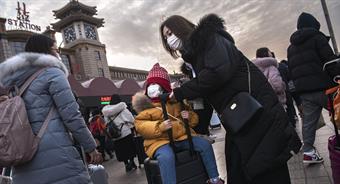
No. WHO does not recommend that asymptomatic individuals (i.e., who do not have respiratory symptoms) in the community should wear medical masks, as currently there is no evidence that routine use of medical masks by healthy individuals prevents 2019-nCoV transmission. Masks are recommended to be used by symptomatic persons in the community. Misuse and overuse of medical masks may cause serious issues of shortage of stocks and lack of mask availability for those who actually need to wear them.
In health care facilities where health care workers are directly taking care of suspect or confirmed 2019-nCoV acute respiratory disease patients, masks are an important part of containing 2019-nCoV spread between people, along with other PPE and hand hygiene. For more information on medical mask use, click here.
Ideally, suspected and confirmed 2019-nCoV acure respiratory disease patients should be isolated in single rooms. However, when this is not feasible (e.g., limited number of single rooms), cohorting is an acceptable option. Some patients with suspected 2019-nCoV infection may actually have other respiratory illnesses, hence they must be cohorted separately from patients with confirmed 2019-nCoV infection. A minimum of 1-meter distance between beds should be maintained at all times.
Do patients with suspected or confirmed 2019-nCoV need to be hospitalized if they have mild illness?
No. For patients who have mild illness, e.g., low-grade fever, cough, malaise, rhinorrhoea, sore throat without any warning signs, such as shortness of breath or difficulty in breathing, increased respiratory (i.e. sputum or haemoptysis), gastro-intestinal symptoms such as nausea, vomiting, and/or diarrhoea and without changes in mental status, hospitalization may not be required unless there is concern for rapid clinical deterioration. All patients discharged home should be instructed to return to hospital if they develop any worsening of illness. For more information on admission criteria, please click here.
For more information on caring for mildly symptomatic 2019-nCoV patients at home, please click here.
No. Current WHO recommendations do not include a requirement for exclusive use of specialized or referral hospitals to treat suspected or confirmed 2019-nCoV acute respiratory disease patients. However, countries or local jurisdictions may choose to care for patients at such hospitals if those are deemed the most likely to be able to safely care for patients with suspected or confirmed 2019-nCoV infection or for other clinical reasons (e.g., availability of advanced life support). Regardless, any healthcare facility treating patients with suspected or confirmed 2019-nCoV patients should adhere to the WHO infection prevention and control recommendations for healthcare to protect patients, staff and visitors. Click here for the guidance.
Environmental cleaning in healthcare facilities or homes housing patients with suspected or confirmed 2019-nCoV infection should use disinfectants that are active against enveloped viruses, such as 2019-nCoV and other coronaviruses. There are many disinfectants, including commonly used hospital disinfectants, that are active against enveloped viruses. Currently WHO recommendations include the use of:
- 70% Ethyl alcohol to disinfect reusable dedicated equipment (e.g., thermometers) between uses
- Sodium hypochlorite at 0.5% (equivalent 5000ppm) for disinfection of frequently touched surfaces in homes or healthcare facilities
Click here for the guidance on clinical management of severe acute respiratory infection when novel coronavirus (nCoV) infection is suspected.
Click here for the guidance on infection prevention and control during health care when novel coronavirus (nCoV) infection is suspected.
More information about environmental cleaning can be found here.
There is currently no data available on stability of 2019-nCoV on surfaces. Data from laboratory studies on SARS-CoV and MERS-CoV have shown that stability in the environment depends on several factors including relative temperature, humidity, and surface type. WHO continues to monitor existing evidence around nCoV and will update when such evidence is available.
No. Waste produced during the health care or home care of patients with suspected or confirmed 2019-nCoV infection should be disposed of as infectious waste. For more information on disposing of infectious waste, please click here. Or visit CDC website here.
No, there are no special procedures for the management of bodies of persons who have died from 2019-nCoV. Authorities and medical facilities should proceed with their existing policies and regulations that guide post-mortem management of persons who died from infectious diseases.