
An event organized by OHCHR in partnership with WHO and co-sponsored by the Permanent Missions of Chile, Ecuador, and South Africa, took place at the United Nations to highlight the interlinkage between the Sustainable Development Goals (SDGs), especially the health goal (SDG 3), and human rights. Panelists and Member States discussed the relationship between SDGs and the right to health and explored ways in which human rights could advance SDG implementation, particularly in the health sector.
The discussion also allowed countries to share best practices and ideas on how human rights and the right to health can reinforce and significantly advance the implementation of SDGs, especially SDG 3. The event also underscored how health is both an outcome and a determinant for sustainable development for which a political commitment and stronger leadership is required.
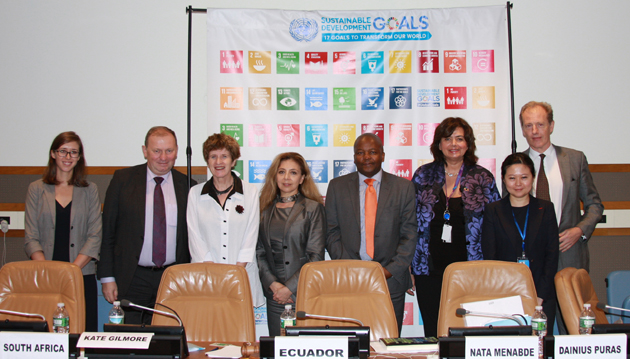
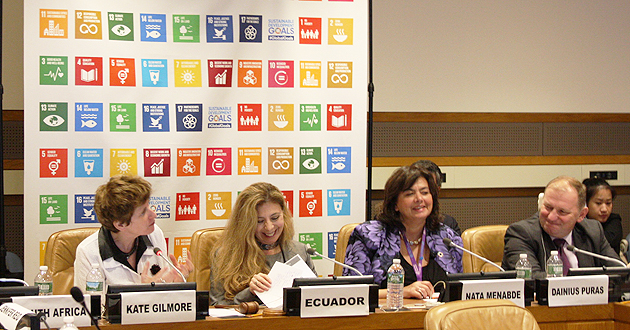
The expert panel included Ephraim Leshala Mminele, Deputy Permanent Representative of South Africa; Jennifer Reid, US advocacy and research officer at MSF, Kate Gilmore, UN Deputy High Commissioner for Human Rights; Dr. Nata Menabde, Executive Director of the WHO Office at the UN; and Dr. Dainius Pῡras, Special Rapporteur on the right of everyone to the enjoyment of the highest attainable standard of physical and mental health.
Dr. Nata Menabde highlighted the importance of advancing health and human rights through multi-sectoral approaches and noted that health is a factor that transcends all SDGs and sectors. She stressed the need to focus on the most vulnerable populations such as migrants, women and children, persons with disabilities and persons with mental health illnesses, and shared WHO’s efforts in promoting health, equity and human rights through universal health coverage and people-centered approaches. Dr. Menabde concluded by outlining WHO’s continuing commitment to the issue in providing guidance, technical assistance, building synergies and sharing best practices to successfully implement the SDGs.
Kate Gilmore stressed the urgency of responding to unprecedented changes, opportunities and challenges such as global mobility, conflict, contagion and demographic shifts by strategically investing in health. She also introduced the key recommendations made by the High-Level Working Group on the Health and Human Rights of Women, Children and Adolescents and concluded by addressing the lack in leadership - the greatest barrier to the realization of the right to health, and urged countries to demonstrate that the lives of women and children matter.
Dr. Dainius Pῡras proposed several recommendations for the achievement of universal health coverage, including investing in early childhood development, adolescent-friendly healthcare services, better integrating sexual and reproductive health services and mental health services and encouraging community and civil society participation. He urged countries to focus on accountability, universal health coverage, violence and primary care to achieve the SDGs.'
Mr. Mminele stressed the importance of recognizing the right of universal access to health care as a constitutional right. He shared the South African experience on human rights and SDGs, which includes increased allocation of resources towards the operational realization of the right to health, private sector collaboration and developing strategic health targets that adapt to the country’s national disease profile. He noted that provision of universal health coverage, implementation of health insurance schemes, addressing the social determinants of health and promoting healthy lifestyles and behaviors are essential for achieving the SDGs.
Jennifer Reid focused on the negative impact of laws and policies, such as intellectual property and monopoly pricing, on the access to life-saving medicines all over the world. She underscored the fact that MSF encourages countries to implement public health safeguards and patent law reforms to reduce prices and realize the right to health.
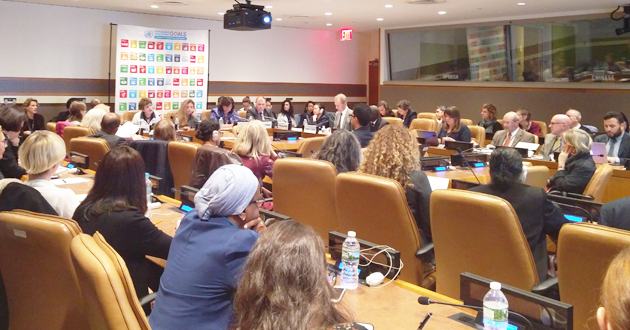
A number of interventions took place from the floor, including the Mission of Ecuador who noted that access to the highest attainable standard of physical and mental health must be addressed as a multidimensional phenomenon and that developing countries face specific challenges, which must be acknowledged and supported by mobilizing more resources. The Mission of Thailand spoke about health as a constitutional right and their efforts in improving universal health coverage and the health of migrants while the Mission of Chile shared their most recent human rights-based health policies and frameworks to decrease inequalities and promote the 2030 Agenda.
The Mission of Senegal addressed the issue of making smart investments for health, while civil society representatives engaged in a dialogue that reaffirmed the benefits of civil society participation. The Assistant Secretary-General for Human Rights, Andrew Gilmour, closed the session by noting that OHCHR and WHO will continue to support Member States in their efforts to advance the right to health and human rights within the sustainable development agenda.