
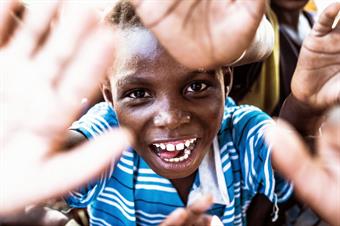
One of Africa's biggest-ever emergency vaccination campaigns starts this week in Democratic Republic of the Congo with the aim to protect millions of people against yellow fever before the rainy season begins in late September.
.jpg)
WHO/E. Kabambi
Last minute preparations ahead of the Democratic Republic of the Congo's preventative vaccination campaign against yellow fever are well underway. Here workers unload the last of the syringes and other supplies needed to vaccinate some 10.5 million people in the targeted 32 health zones in Kinshasa province and an additional 15 health zones in districts bordering Angola.
.jpg)
WHO/E. Kabambi
Ready for the vaccination campaign, these supplies have been delivered by a truck to 15 health zones in Democratic Republic of the Congo near the border with Angola. The country has already vaccinated some 2 million people during an initial campaign covering Kongo Centrale and Kinshasa. WHO and partners are racing to support the Ministry of Health to vaccinate as many people at risk as possible before the onset of the rainy season.
.jpg)
WHO/E. Kabambi
At the heart of the response are people. Here UNICEF and WHO support the Ministry of Health officials to brief 70 community mobilizers for the targeted Kinshasa suburbs. They discuss sharing feedback from the community to update messages especially in the local languages. The mobilizers are also taking a refresher course on the main messages of the campaign to explain all aspects of the campaign. Partners including the Red Cross have also been active in deploying volunteer community mobilizers and assisting in ensuring crowd control at vaccination sites.
.jpg)
WHO/E. Kabambi
Given the limited global supply of the yellow fever vaccine, and following the recommendation of the Strategic Advisory Group of Experts on Immunization (SAGE), WHO has recommended to the Government of Democratic Republic of the Congo to use an emergency dose using one fifth of the full dose in Kinshasa to ensure that as many people at risk are protected as possible. Studies show that this ‘emergency’ dose will safely provide effective immunity against yellow fever for at least 12 months – especially during the coming rainy season and possibly for much longer. Social mobilizers have been going door to door in the targeted areas, to explain and also listen to the community and answer any questions they may have.
.jpg)
WHO/E. Kabambi
Members of the logistics team load pickup trucks with posters that will be used for the vaccination campaign in the nearby provinces. Some are in French, others in local languages. The logistics team has also helped set up mobile laboratory testing facilities in the remote Kahemba region near the border with Angola and have established a cold chain to ensure that the vaccines are transported in the right conditions from the time they arrive in the country until they are administered.
.jpg)
WHO/E. Kabambi
This vaccination campaign is the largest emergency yellow fever campaign ever undertaken in the world. Planning this effort has been a mammoth undertaking and WHO has deployed almost 100 experts to support the vaccination campaign in fields such as epidemiology, logistics, immunization, risk communication and social mobilization as well as data management. Here the WHO Representative to Democratic Republic of the Congo, Dr Yokouide Allarangar, is flanked by Dr Peter Graaff, WHO Director of Emergencies Management who travelled from WHO headquarters to assist in yet another operational first on outbreak response for WHO.