

Clinical management, care and support
WHO guidelines for the prevention of sexual transmission of Zika virus
Rationale for the guidelines
WHO published interim guidelines on the prevention of sexual transmission of Zika virus in September 2016 (1), based on a limited amount of evidence under an emergency process during a public health emergency of international concern. The body of evidence has grown considerably since then and WHO experts concluded, at a meeting in March 2017, that the guidelines should be developed under the formal WHO guideline process (2).
These guidelines contain updated recommendations on the prevention of sexual transmission of Zika virus, based on the best available evidence as of June 2018.
WHO toolkit for the care and support of people affected by complications associated with Zika virus
Zika virus is associated with severe neurological complications, particularly congenital Zika virus syndrome and Guillain Barré syndrome. The associated complications have a marked impact on the people affected and their communities, including both physical and mental health.
The WHO Toolkit for the care and support of people affected by complications associated with Zika virus has been developed to serve as a model guide, with the goal of enhancing country preparedness for Zika virus outbreaks. The toolkit is intended to provide a systems approach involving public health planners and managers so that the necessary infrastructure and resources can be identified and incorporated as needed, as well as technical and practical guidance for health care professionals and community workers.
The toolkit includes three manuals to provide countries with tools to effectively recognize people affected by Zika virus and deliver comprehensive care and support:
- Manual for public health planners and managers
- Manual for health care professionals
- Manual for community workers
Screening, assessment and management of neonates and infants with complications associated with Zika virus exposure in utero
This Rapid Advice Guideline updates the Interim Guidance on the “Assessment of infants with microcephaly in the context of Zika virus” published in February 2016 (WHO/ZIKV/MOC/16.3). The recommendations provides guidance on the screening, clinical assessment, neuroimaging, laboratory investigation and follow-up of children born to women living in areas of Zika virus transmission. The Guideline summarises the evidence base and rationale in support of the recommendations and expands the scope to address complications beyond microcephaly and what is now referred to as the congenital Zika virus syndrome.
Identification and management of Guillain-Barré syndrome in the context of Zika virus
Guillain-Barré syndrome (GBS) is a disorder in which the body’s immune system attacks part of the peripheral nervous system. GBS can be triggered by a variety of infections, including dengue and chikungunya viruses. The syndrome can affect the peripheral nerves that control muscle strength as well as those that transmit feelings of pain, temperature and touch. This can result in muscle weakness and loss of sensation in the legs and/or arms. Approximately 25% of GBS patients require intensive care and 3-5% die even with appropriate supportive care, due to complications related to: paralysis of the muscles that control breathing; cardiac arrest; or blood clots.
This document aims to provide interim guidance on the case definition of GBS and strategies to manage the syndrome, in the context of Zika virus and its potential association with GBS. This document is intended to inform the development of local clinical protocols and health policies related to the care of patients with GBS. An expert meeting will be organized in March 2016 to develop additional guidance to identify and manage GBS and other possible neurological disorders in the context of Zika virus transmission.
Infant feeding in areas of Zika virus transmission
The purpose of this guideline is to provide a recommendation to guide governments, ministries of health, policy-makers and health-care workers in regions affected by transmission of Zika virus, in the development of local and national protocols and policies on infant feeding, including breastfeeding practices in areas of Zika virus transmission, and their implementation. It may also be used to inform communication to the general public.
Zika virus is a mosquito-borne virus transmitted by Aedes mosquitoes; the same mosquito also transmits other vector-borne diseases – dengue, chikungunya and yellow fever. Currently, there is no treatment or vaccine to protect specifically against Zika virus infection.
This guideline is part of a body of work that explores available evidence for possible acceptable medical reasons for temporary or long-term cessation of breastfeeding. It updates the interim guidance on breastfeeding in the context of the Zika virus published by the World Health Organization on 25 February 2016.
Evidence
- Colt S, Garcia-Casal MN, Peña-Rosas JP, Finkelstein JL, Rayco-Solon P, Weise Prinzo ZC, et al.
(2017) Transmission of Zika virus through breast milk and other breastfeeding-related bodily-fluids: A systematic review. PLoS Negl Trop Dis 11(4): e0005528. https://doi.org/10.1371/journal.pntd.0005528
Related links
- Acceptable medical reasons for use of breast-milk substitutes
- Breastfeeding in the context of Zika virus: Interim guideline
- Zika virus fact sheet
- Zika virus health topics
More information
Breastfeeding in the context of Zika virus
The main mode of Zika virus transmission is through infected Aedes mosquitoes. However, current widespread transmission of the virus has raised questions as to whether transmission can also occur during breastfeeding, a practice essential to infant and young child survival and development. WHO recommendations to start breastfeeding within 1 hour of birth and to continue for the first 6 months of life remain valid in the current context of Zika virus transmission.
The purpose of this document is to provide interim recommendations to guide breastfeeding practices in the context of Zika virus. A systematic review of evidence will be conducted in March 2016 to revise and update these recommendations.
Pregnancy management in the context of Zika virus infection
The mosquito vector that carries the Zika virus thrives in warm climates and particularly in areas of poor living conditions. Pregnant women living in or travelling to such areas are at equal risk as the rest of the population of being infected by viruses borne by this vector. Maternal infection with Zika virus may go unnoticed as some people will not develop symptoms. Although Zika virus infection in pregnancy is typically a mild disease, an unusual increase in cases of congenital microcephaly, Guillain-Barré syndrome and other neurological complications in areas where outbreaks have occurred, has significantly raised concern for pregnant women and their families, as well as health providers and policy-makers.
The aim of this document is to provide interim guidance for interventions to reduce the risk of maternal Zika virus infection and to manage potential complications during pregnancy. This guidance is based on the best available research evidence and covers areas prioritized by an international, multidisciplinary group of health care professionals and other stakeholders. Specifically, it presents guidance for preventing Zika virus infection;antenatal care and management of women with infection; and care during pregnancy for all pregnant women living in affected areas, with the aim of optimizing health outcomes for mothers and newborns. The guidance is intended to inform the development of national and local clinical protocols and health policies that relate to pregnancy care in the context of Zika virus transmission. It is not intended to provide a comprehensive practical guide for the prevention and management of Zika virus infections.
Also see: Comment in the Lancet Global Health
19 May 2016
Also available in
Knowledge, Attitudes and Practice surveys Zika virus disease and potential complications
This is a resource pack for a Knowledge, Attitudes and Practices (KAP) surveys about Zika virus and its suspected complications such as microcephaly and Guillain-Barré syndrome.
This resource and associated advice was requested by governments and response partners as a way to rapidly obtain valuable and insightful information in order to tailor interventions to better address people's needs at community level, thereby contributing to the overall public health response to Zika virus and its potential complications. It can be used in communities with Zika virus transmission or those at risk.
This resource pack has been developed by WHO in collaboration with response partners as part of its Strategic Response Framework for the Zika emergency. The KAP questions in this resource pack have not been field-tested. Rather, it is a resource for partners and Member States who plan to conduct KAP surveys in a community setting with adult respondents. It provides a bank of key questions in the domains of knowledge, attitudes and practices. It is intended that partners will identify key areas for investigation according to their operational priorities, select the most relevant questions and update them to reflect national and sub-national contexts.
Create and run your own Zika KAP survey with Kobo Toolbox
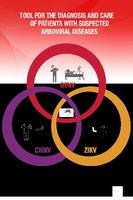
Tool for the diagnosis and care of patients with suspected arboviral diseases
Dengue is the most common mosquito-borne viral disease in the Americas and the most suspected in patients with fever. However, the recent introduction of two new arboviral diseases (chikungunya virus in late 2013 and Zika virus in 2014) has created a new challenge for public health in the Americas. The three arboviral diseases (dengue, chikungunya, and Zika) can produce very similar clinical symptoms, mainly during the acute phase (the first days of the disease), hindering clinical diagnosis by health workers, creating problems for appropriate case management, and sometimes triggering fatal events. Serological diagnosis has presented further difficulties, due to the cross-reaction between IgM/IgG antibodies of the dengue and Zika viruses, complicating laboratory confirmation and compromising epidemiological surveillance.
Publication details
Publication details