


Suicide prevention
Close to 800 000 people die by suicide every year. Furthermore, for each suicide, there are more than 20 suicide attempts.
Suicides and suicide attempts have a ripple effect that impacts on families, friends, colleagues, communities and societies.
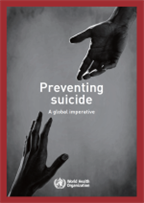
Suicides are preventable. Much can be done to prevent suicide at individual, community and national levels.
Close to 800 000 people die by suicide every year; that’s one person every 40 seconds. Suicide occurs throughout life. It is the second leading cause of death among 15-29 year-olds globally.
Suicide occurs in all regions of the world. In fact, 79% of global suicides happen in low- and middle-income countries.
While the link between suicide and mental disorders (in particular, depression and alcohol use disorders) is well established, many suicides happen impulsively in moments of crisis. Further risk factors include experience of loss, loneliness, discrimination, a relationship break-up, financial problems, chronic pain and illness, violence, abuse, and conflict or other humanitarian emergencies. The strongest risk factor for suicide is a previous suicide attempt.
Much can be done to prevent suicide. WHO recommends four key interventions which have proven to be effective:
- restricting access to means
- working with the media to ensure responsible reporting of suicide.
- helping young people develop skills to cope with life’s pressures
- early identification and management of people who are thinking about suicide or who have made a suicide attempt, keeping follow-up contact in the short and longer-term
Collectively, WHO’s approach to suicide prevention is known as LIVE LIFE, comprising leadership, interventions, vision, evaluation (LIVE) as cross-cutting strategies and less means, interaction with the media, forming the young, early identification (LIFE) as key effective interventions. This approach is the basis on which comprehensive multisectoral national suicide prevention strategies should be developed.
National suicide prevention strategies: progress, examples and indicators