
Newborn health
To ensure every child survives and thrives to reach their full potential, we must focus on improving care around the time of birth and the first week of life.
The high rates of preventable death and poor health and well-being of newborns and children under the age of five are indicators of the uneven coverage of life-saving interventions and, more broadly, of inadequate social and economic development. Poverty, poor nutrition and insufficient access to clean water and sanitation are all harmful factors, as is insufficient access to quality health services such as essential care for newborns.
Health promotion, disease prevention services (such as vaccinations) and treatment of common childhood illnesses are essential if children are to thrive as well as survive.
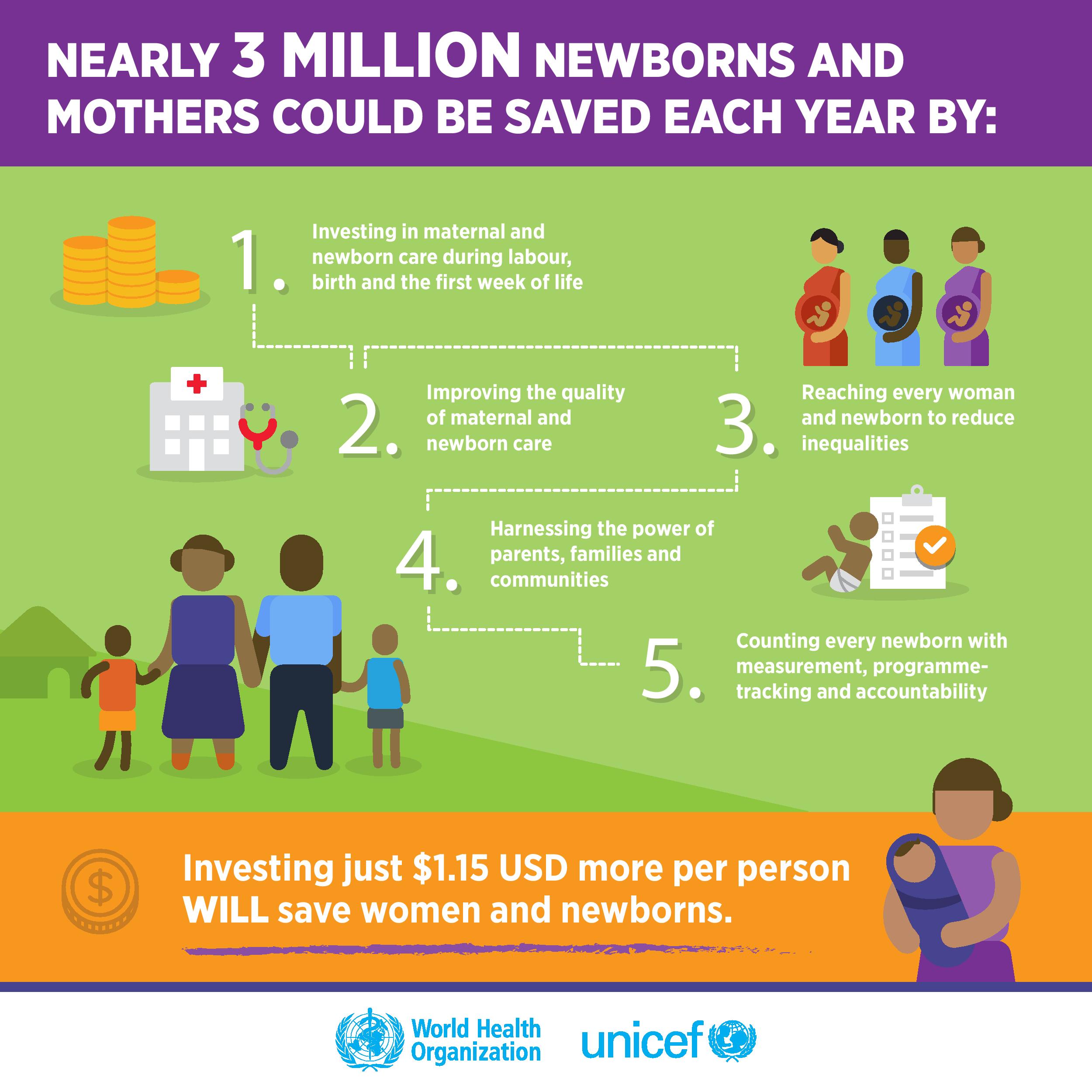
In 2014, 194 Member States of the Sixty-seventh World Health Assembly endorsed the action plan (Resolution WHA 67.10). Led by UNICEF and the World Health Organization, Every Newborn Action Plan (ENAP) was guided by the advice of experts and partners and by multistakeholder consultations and a web-based consultation with over 300 comments from stakeholders. The WHO Director-General has been requested to monitor progress towards the achievement of the global goal and targets, reporting periodically to the World Health Assembly until 2030.
Twenty-eight ‘focus countries’ were targeted for data collection through the use of a progress tracking tool. This systematic tracking of progress enables the assessment of the status of implementation of ENAP strategies, maps technical assistance needs and identifies barriers to implementation in line with the ENAP milestones and recommendations.
Another area of work is the quality of care network. The main objective of the network is broadening the focus from access to care to include quality of care, for Maternal, Newborn and Child Health to cut preventable maternal and newborn illness and deaths, and to improve every mother’s experience of care.
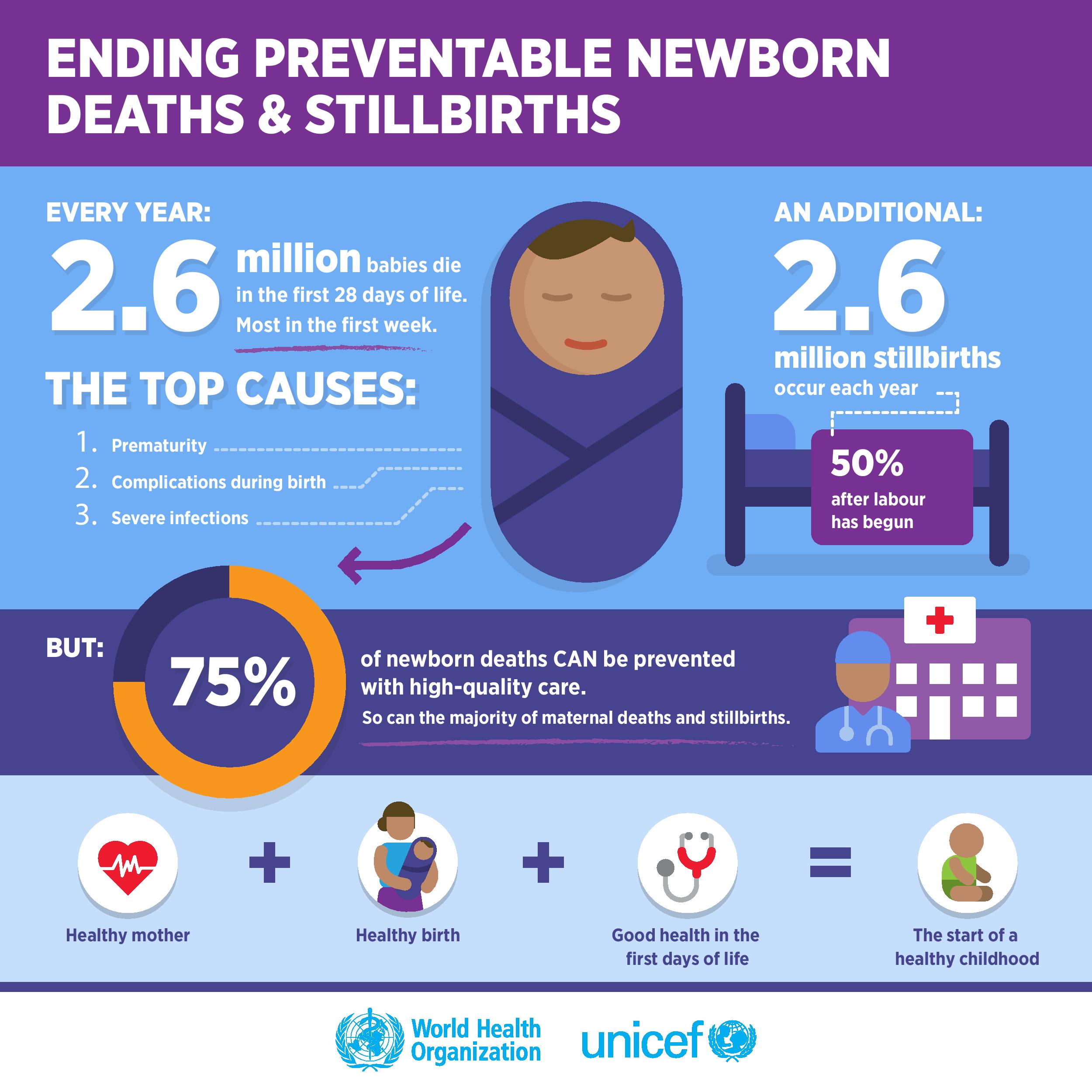
Newborn deaths account for 45% of deaths among children under the age of five globally, resulting in 2.7 million lives lost each year. In addition, 2.6 million babies die in the last 3 months of pregnancy or during childbirth (stillbirths) and 303,000 maternal deaths occur each year.
In 2016 2.6 million children died in the first month of life from conditions and diseases associated with lack of quality care at birth or skilled care and treatment immediately after birth.