Landslides
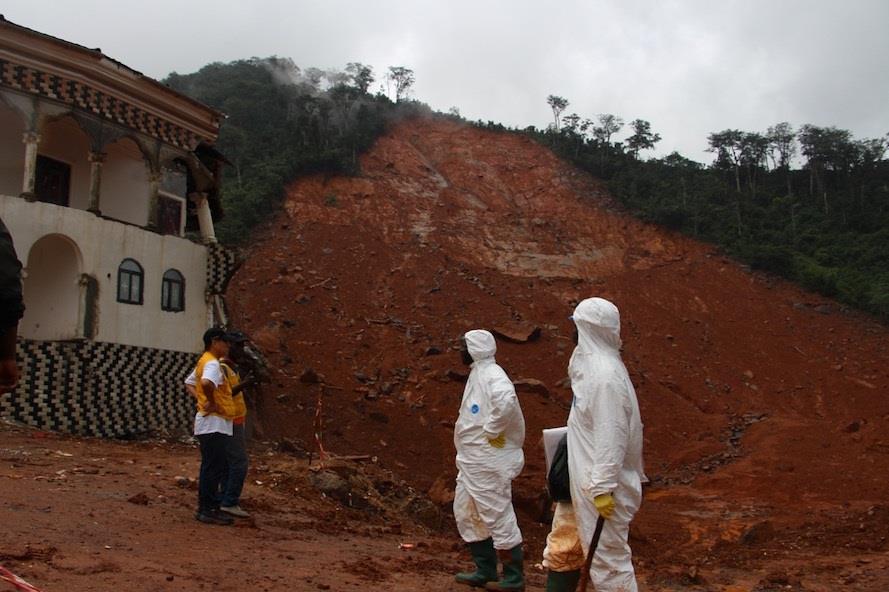
Landslides are more widespread than any other geological event, and can occur anywhere in the world. They occur when large masses of soil, rocks or debris move down a slope due to a natural phenomenon or human activity. Mudslides or debris flows are also a common type of fast-moving landslide.
Landslides can accompany heavy rains or follow droughts, earthquakes or volcanic eruptions. Areas most vulnerable to landslides include:
- steep terrain, including areas at the bottom of canyons;
- land previously burned by wildfires;
- land that has been modified due to human activity, such as deforestation or construction;
- channels along a stream or river;
- any area were surface runoff is directed or land is heavily saturated.
Between 1998-2017, landslides affected an estimated 4.8 million people and cause more than 18 000 deaths. Climate change and rising temperatures are expected to trigger more landslides, especially in mountainous areas with snow and ice. As permafrost melts, rocky slopes can become more unstable resulting in a landslide.
Landslides can cause high mortality and injuries from rapidly flowing water and debris. The most common cause of death in a landslide is trauma or suffocation by entrapment.
Broken power, water, gas or sewage pipes can also result in injury or illness in the population affected, such as water-borne diseases, electrocution or lacerations from falling debris. People affected by landslides can also have short- and long-term mental health effects due to loss of family, property, livestock or crops.
Landslides can also greatly impact the health system and essential services, such as water, electricity or communication lines.
The magnitude of the physical and human costs from landslides can be reduced if adequate emergency prevention, preparedness, response and recovery measures are implemented in a sustainable and timely manner.
WHO works with Member States to build resilient and proactive health systems that can anticipate the needs and challenges during emergencies so that they are more likely to reduce risks and respond effectively when needed.
As the health cluster lead for global emergencies, WHO works with partners to respond to:
- ensure appropriate food supplementation;
- restore primary care services, like immunization, child and maternal health, and mental health;
- assemble mobile health teams and outreach;
- conduct epidemic surveillance, early warning and response;
- call for emergency funding to support health action.