

-paho-je-cogan.tmb-1920v.jpg?sfvrsn=9de5d722_2 1920w)
The man with the orange shirt was once sick with dengue and as a result he is now more aware of the causes of the disease. He takes care that there is no standing water in the tires of his workshop so that no one else gets sick.
Dengue and severe dengue
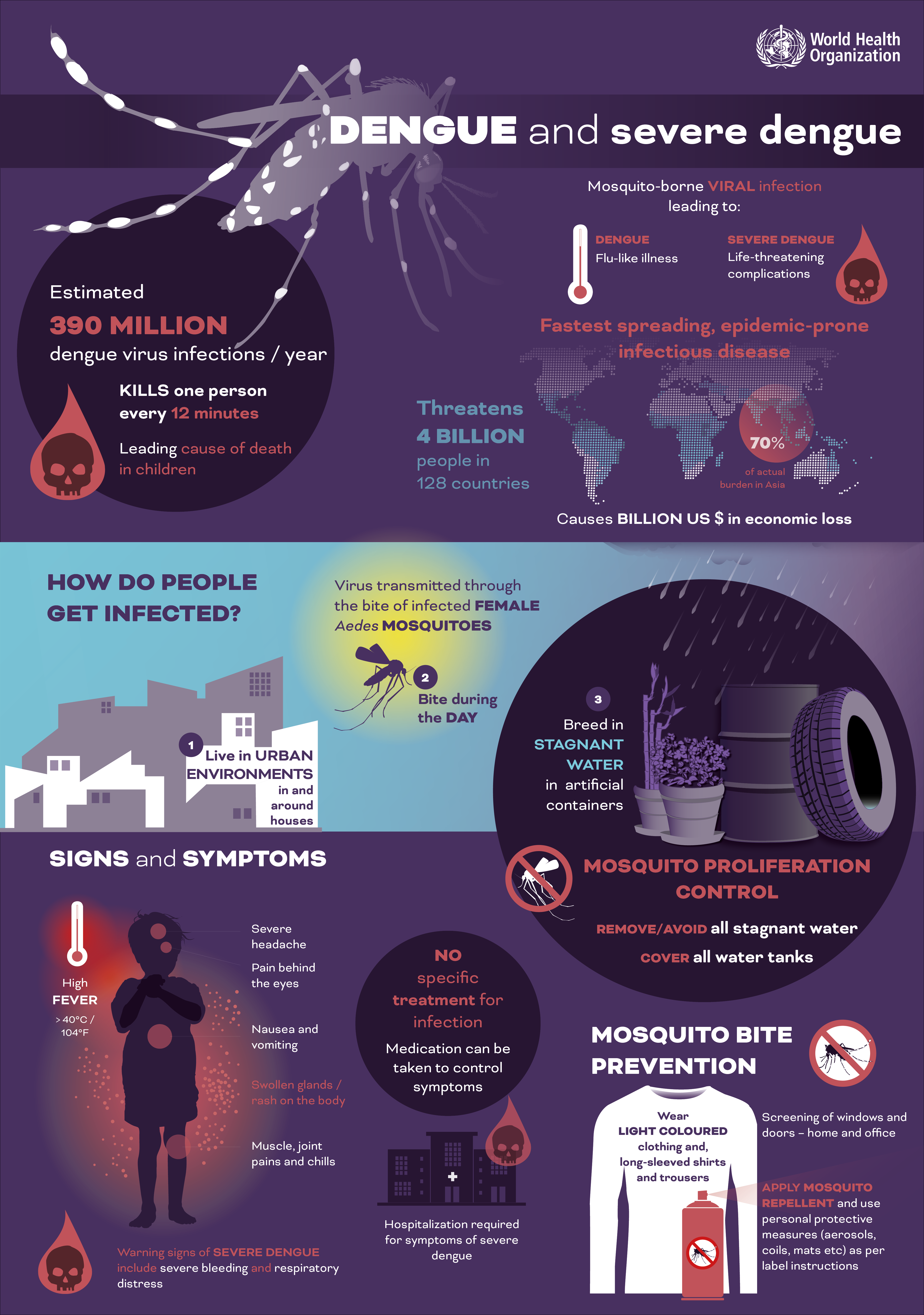
Dengue is a mosquito-borne viral infection that is common in warm, tropical climates. Infection is caused by any one of four closely related dengue viruses (called serotypes) and these can lead to a wide spectrum of symptoms, including some which are extremely mild (unnoticeable) to those that may require medical intervention and hospitalization. In severe cases, fatalities can occur. There is no treatment for the infection itself; but the symptoms that a patient experiences can be managed.
Earlier this year, WHO listed dengue as a potential threat among ten diseases for 2019 and current outbreaks in many countries confirm this observation. Dengue epidemics tend to have seasonal patterns, with transmission often peaking during/after rainy seasons. There are several factors contributing to this increase and they include high mosquito population levels, susceptibility to circulating serotypes, favourable air temperatures, precipitation and humidity all of which affect the reproduction and feeding patterns of mosquito populations, as well as the dengue virus incubation period. Lack of proactive control interventions and staff are some of the other challenges.
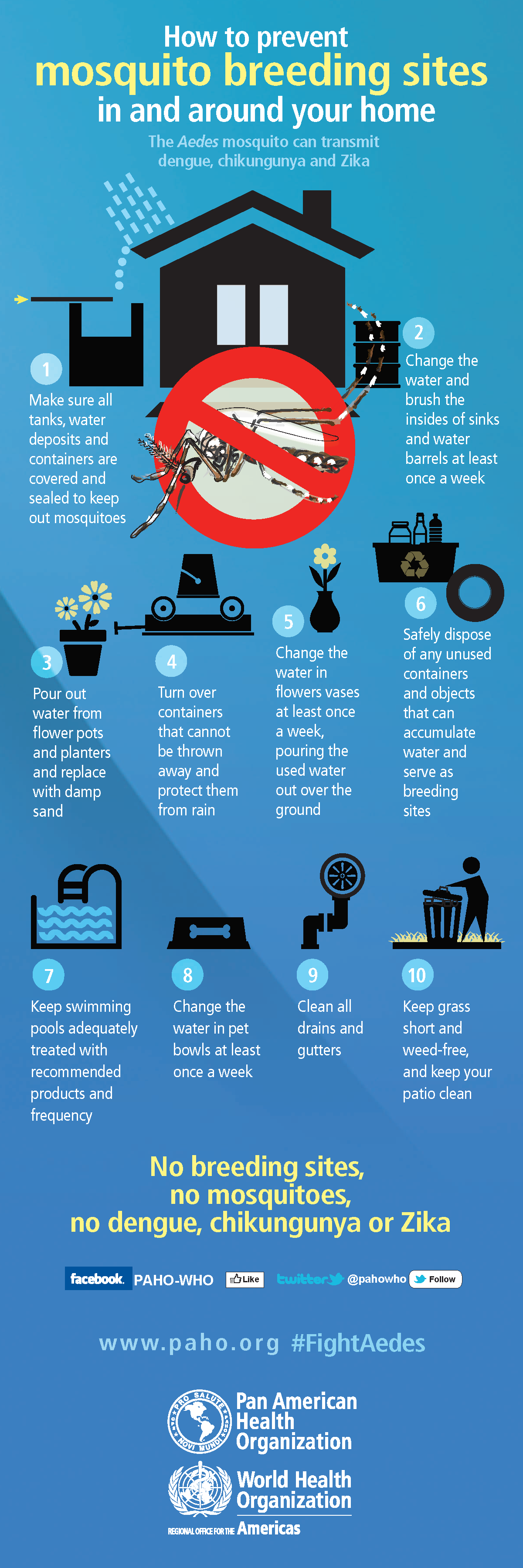
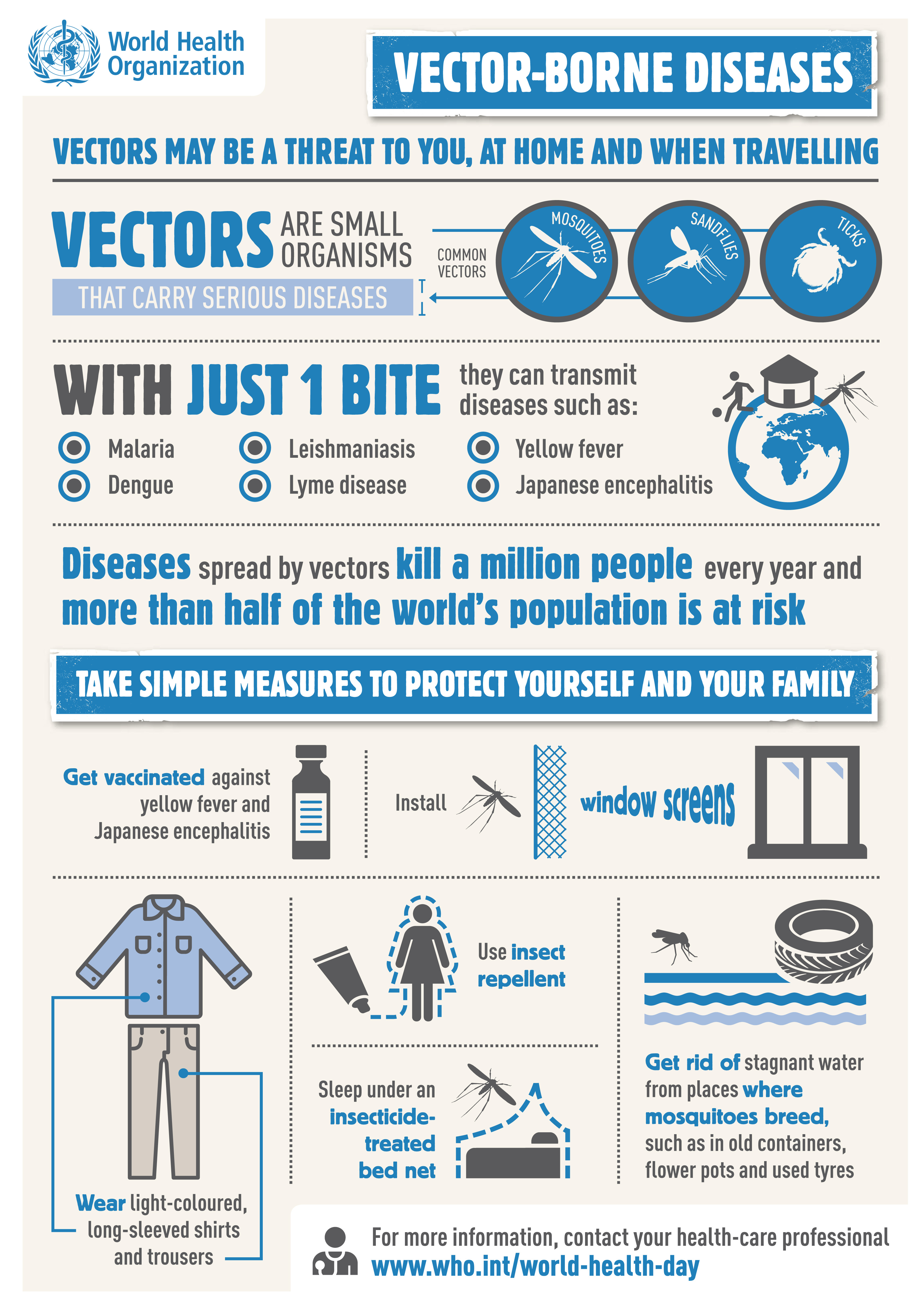
The best way to prevent infection is to avoid being bitten by mosquitoes during day time. Mosquitoes that commonly transmit dengue virus often live in and around the home, and in the garden. People should:
- Wear clothing that covers the body well (especially legs and feet).
- Keep mosquitoes out of the house by placing insect screens over doors and windows of homes, offices and classrooms.
- Apply insect repellents according to manufacturer’s label instructions.
- Sleep under a net, even during the day. It is a good option
- Take extra precaution to prevent transmission if a family member is infected by avoiding mosquito bites. Dengue mosquitos can transmit the disease to more than one person through multiple bites (leading to clusters of cases).
Comply with dengue control initiatives which may include elimination of breeding sites and spraying of insecticides. Local health authorities have vector control strategies that aim to lower the number of adult mosquitoes in the population. This may include regular spraying leading up to the rainy season (to delay the start of mosquito population growth), or spraying in response to increased mosquito numbers, or a report of dengue in the area.
Dengue is a self-limiting febrile illness, with symptoms ranging from asymptomatic to mild, and severe. Symptoms of dengue may be observed ~4-10 days after the bite of an infected mosquito. Common symptoms are like that of the flu, with patients experiencing:
- Fever
- Headaches
- Pain behind the eyes
- Muscle and joint pain
- Nausea/vomiting
- Rash
- Fatigue
As the disease progresses, patients can also suffer from respiratory distress, bleeding from the nose, gums, and have a rapid drop in blood pressure leading to shock. If left unmanaged, this can lead to death. Sound case management of dengue in hospitals have helped to reduce case fatality rates to less than 1% in most affected countries.
Prevalence
Dengue is increasing at a higher rate than any other communicable disease, with 400% increase over 13 years (2000-2013). Annual dengue incidence is estimated to be in the order of 100 million symptomatic cases a year, with another ~300 million asymptomatic infections. The greatest burden is seen in Asia (75%) followed by Latin America and Africa.

andré-luiz-d-takahashi.tmb-1920v.jpg?sfvrsn=dfa2674e_2 1920w)