Mr Chairman, Excellencies, honourable ministers, distinguished delegates, Dr Singh, colleagues in the UN family, ladies and gentlemen,
I thank the government of the People’s Republic of Bangladesh for hosting this Regional Committee. I thank this country’s friendly people for making us feel so welcome and at home.
Bangladesh has championed the importance of better health as a nation-building strategy. It has done so with a most appropriate emphasis. That is, on reaching the community at the grassroots level through its widespread network of community health workers.
This is a solid foundation for universal health coverage.
It is one of the best ways to ensure that a country has the resilience to withstand shocks, whether from climate change, with its promise of more frequent and severe extreme weather events, or from a virus.
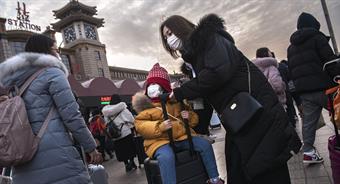
Like other parts of the world, countries in this region are on high alert for any possible importation of the Ebola virus in an air traveler.
Hardly a day goes by without rumours of an imported case at an airport or in an emergency room somewhere in the world.
This is understandable. The virus is deadly. The disease is dreadful. People are afraid.
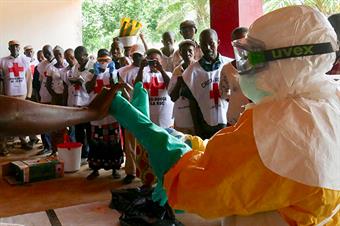
This is the largest, most severe, and most complex Ebola outbreak ever seen in the nearly four-decade history of this disease. This is a fast-moving outbreak, with a number of unprecedented features, that is delivering one surprise after another.
As we look at what this virus has done to affected parts of west Africa, every country in the world wants to keep the Ebola virus out of its borders.
What we see is this: decimated families and communities, abandoned villages, food and fuel shortages, uncollected bodies, two thousand fresh and recent graves, a rising number of orphans, and hospitals overflowing or shut down entirely.
As the economists tell us: Revenues are down. Foreign exchange levels are down. Markets are not functioning. Airlines and ships are not coming in. Development projects are being cancelled. And business people have pulled out.
In some areas, no health services whatsoever are functioning. Not for malaria, or tuberculosis, or AIDS. Not for childhood diarrhoeal disease and pneumonia, or even safe childbirth. Not for anything.
Honourable ministers, imagine, just imagine something like that happening to your country, to your people.
Ladies and gentlemen,
The whole world is watching this disease, and how WHO performs as we try to bring it under control.
What does this outbreak, that has been making headlines for months, tell us about the state of the world at large?
What does it tell world leaders, and the citizens who elect them, about the state and status of public health?
I see six things.
First, the outbreak spotlights the dangers of the world’s growing social and economic inequalities. The rich get the best care. The poor are left to die.
Second, rumours and panic are spreading even faster than the virus. Ebola sparks nearly universal fear. Fear vastly amplifies social disruption and economic losses well beyond the outbreak zones.
The World Bank estimates that the vast majority of economic losses during any outbreak arise from the uncoordinated and irrational efforts of the public to avoid infection.
Third, when a deadly and dreaded virus hits the destitute and spirals out of control, the whole world is put at risk.
Our 21st century societies are interconnected, interdependent, and electronically wired together as never before. We see this now with a very dangerous outbreak in Nigeria’s oil and natural gas hub.
Nigeria is the world’s fourth largest oil producer and second largest supplier of natural gas. The outbreak in the country’s energy hub can potentially dampen economic outlooks worldwide.
Fourth, decades of neglect of fundamental health systems and services mean that a shock, like climate change or a disease run wild, can bring a country to its knees.
You cannot build these systems up during a crisis. Instead, they collapse. A dysfunctional health system means zero population resilience.
Fifth (and I feel very strongly about this): Ebola emerged nearly 40 years ago. Why are clinicians still empty-handed, with no vaccine or cure? Because Ebola has been, historically, geographically confined to poor African nations.
The R&D incentive is virtually nonexistent. A profit-driven industry does not invest in products for markets that cannot pay.
We have been trying to make this issue visible for ages. Now people see it clearly and dramatically, in the daily headlines and TV news.
Finally, the world is ill-prepared to respond to any severe, sustained, and threatening public health emergency. This was the conclusion reached by a panel of experts commissioned to review events during the 2009 influenza pandemic and distil lessons for the future.
With Ebola, that prediction has come true.
I also see two specific lessons for WHO.
One: We must continue to push for the inclusion of health, and health systems, on the post-2015 development agenda.
We now have some much more compelling evidence for doing so, and a much more responsive audience. People are now willing to hear arguments that have fallen on deaf ears for years.
Two: The pressures of this outbreak are revealing some cracks and weaknesses at WHO, some dysfunctional elements that must be corrected urgently as part of organizational reform. At all three levels.
Ladies and gentlemen,
Let’s get down to business. You have a packed and important agenda.
Accountability means counting. You must improve your systems for civil registration and vital statistics.
You need more, and better educated, health-care staff. Find them. Train them. Encourage them. Give them the right incentives.
Traditional medicine is important for this region. Improve it.
Continue to work on the various prongs of your strategy for preventing noncommunicable diseases, also by reducing the harmful use of alcohol.
WHO has given countries a menu of proven alcohol policy options. They work. Use them.
Viral hepatitis has finally emerged from obscurity to receive the attention it deserves. Make that attention even sharper.
I thank you for your attention and wish you a most productive session.