
Good morning to all of you, your Royal Majesty, your Highness, your Excellencies, honourable ministers, distinguished delegates, ladies and gentlemen,
Let me thank the government of Italy and the city of Rome for hosting this event. WHO is privileged to be working closely with FAO
Ladies and gentlemen,
The need for strong and smart policies governing agriculture, food production, and nutrition is greater today than at any time in recent history. Many realities support this view.
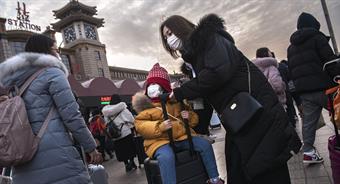
Our 21st century societies are interconnected, interdependent, and wired together as never before. The increases in international air travel and trade have been phenomenal.
Like countries, policy spheres are interconnected. Their boundaries are blurred. Good food- and nutrition-related policies must be mutually reinforcing. They cannot be planned in isolation.
With societies and policy spheres tied together, the consequences of bad policies in one country, or a killer disease affecting parts of West Africa, rapidly reverberate all around the world.
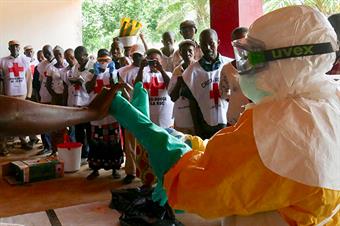
I will use the Ebola epidemic to make two points that are relevant to your agenda.
When my staff fly into Lofa, Liberia, they pass over the so-called Forest Zone, a triangle-shaped area of ancient tropical rain forest where the country’s borders intersect with those of Guinea and Sierra Leone.
The photos taken by my staff show the scooped out gouges, the sprawling bald spots in the forest where foreign mining and timber companies exploited the country’s natural resources during years of civil unrest and weak government oversight.
Those activities denuded the forest and disrupted its natural ecology, driving wild animals closer and closer to human settlements.
This is my first point. Environmental policies must also be part of the discussions during this summit. Our planet, ladies and gentlemen, is losing its capacity to sustain human life in good health.
No one is predicting that population growth will outpace the productivity of the world’s food systems. But this food must be health-promoting, and it must be produced in sustainable ways that, first, do no harm.
My second Ebola example is this. When studies linked bushmeat, from wild animals that reside in the Forest Zone, to the start of the outbreak in Guinea, the hunting and consumption of bushmeat were banned.
This is my second point: the profound importance of ensuring food security for all.
You cannot solve the problem of hunger with a ban. As I have been told, bushmeat is a principal source of food and a principle source of income for these people. If banned from hunting, selling, and consuming this food, they starve.
And there are other realities we need to address.
Worldwide, social inequalities, in income levels, in opportunities, in health outcomes and nutritional status, are at their highest level in living memory.
Economies are growing, but policies tend to favour the elite and powerful, while failing to protect the poor. The world does not need any more rich countries full of poor people.
Dire poverty and hunger still affect millions of people. Hunger, and the resulting nutrition deficiencies, cause millions of cases of diseases, like anaemia, night blindness, and goitre, and problems, like low birth-weight babies, and wasting in young children.
Undernutrition stunts the growth and cognitive development of children, and kills them near the start of their very short lives.
Of course, WHO establishes dietary and nutritional guidelines and looks after food safety issues. For example, April 7 is World Health Day. Food safety is next year’s theme. In addition, WHO estimates and maps the prevalence of undernourished and over-nourished individuals worldwide.
But we also deal with other worries.
According to some experts, the world’s food system, with its reliance on the industrialized production of ever-cheaper, highly-processed, and unhealthy foods, is broken.
This is not my personal area of expertise. I cannot agree or disagree, but from a health perspective, I do see some warning signs.
In large parts of the developing world, and especially in Africa, family farmers are the backbone of the economy. The globalization of an industrialized food supply crowds them out. As a result, their traditional livelihoods are often displaced and their healthy diets replaced with unhealthy ones.
Municipal authorities in large cities in Africa and Asia find it cheaper to import processed foods from abroad than to gather fresh produce from the hinterlands.
This brings to mind the classical image of globalization. A US ship, loaded with wheat, heading for Asia passes an Indian ship, also loaded with wheat, on its way to America.
And yet, ladies and gentlemen, this redundancy and inefficiency is still cheaper than gathering fresh produce from local farmers. We really need to think hard. Why?
Something is wrong.
Ladies and gentlemen,
Part of our out-of-balance world still starves to death.
Another part stuffs itself into a level of obesity so widespread that it is pushing life-expectancy figures backwards, and pushing the costs of health care to astronomical heights.
A high prevalence of population-wide obesity and overweight is not too difficult to spot. It is actually the warning signal that bad trouble is on its way in the form of more heart disease, more diabetes, and more cancers at multiple sites.
The future health of this world needs policy coherence, nationally and also globally. It needs policy coherence across multiple sectors, including agriculture, food production, distribution, and marketing, and protection of the environment and the livelihood of farmers.
We need state-of-the-art scientific consensus reports on the minimum micronutrient intakes required to prevent problems associated with undernutrition, and the maximum intakes that should not be exceeded to protect against chronic diet-related diseases.
The World Health Organization produces these reports. That is not the problem.
The problem is getting the recommendations implemented in countries. And this means persuading the food industry to produce more healthy foods and to stop selling so many convenient and tasty foods that are bad for health.
I think that the economic objective and the health objective can converge, and I think that the countries of this world have the creativity to work with civil society and the private sector to make this happen.
Mapping out a framework of coherent policies, fit for the 21st century, is part of our job here at this summit.
Ladies and gentlemen, honourable ministers,
I look to you for your guidance and advice on how WHO and FAO can support you in achieving this objective. I wish all of you a most productive meeting.
Thank you.