Honourable ministers, distinguished ambassadors, colleagues from international agencies, representatives of foundations, ladies and gentlemen,
I welcome today’s senior-level meeting and thank Finland for co-hosting this event with WHO.
We have been worrying about the dismal compliance with IHR core capacities for nearly a decade. We have been looking for incentives and solutions for nearly a decade.
Now, with the establishment of this alliance, and aided by the joint external evaluation tool, we can jump-start a capacity building drive that can help fix a root cause of global health insecurity.
The most effective capacity building is systematic, standardized, aligned with country priorities, and deeply concerned with quality assurance and the comparability of data. Systematic and objective fact-finding is the best way to identify and prioritize gaps, and then attract the resources to fill them.
The alliance also draws on the One Health approach, which is fully supported by the tripartite agreement among FAO, OIE, and WHO. On current plans, the work of the alliance will be supported by a small secretariat, located in WHO. The secretariat will work closely with a group set up to play an advisory and coordinating role.
Ladies and gentlemen,
All major outbreaks since the start of this century, SARS, H1N1 influenza, Ebola, and now Zika, point to the same conclusion. The world is woefully ill-prepared to respond to an outbreak of an emerging or re-emerging disease that is both severe and sustained.
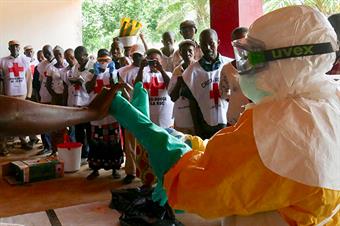
Ebola in West Africa illustrated the profound vulnerability of countries with weak health infrastructures and capacities to the shock of a deadly and dreaded disease. The world witnessed the tragic consequences of limited surveillance and detection capacities, insufficient laboratories and information systems, dilapidated hospitals, and a dire shortage of health care staff and essential supplies.
Zika is illustrating a different set of vulnerabilities. As with Ebola, the initial response to Zika is impeded by the lack of vaccines, specific therapies, and reliable diagnostic tests. At present, we have no way of telling most pregnant women whether they have been infected or not.
Epidemiological investigations are severely constrained by these weak diagnostics at a time when we need to get some answers fast.
Zika also reveals the profound vulnerability created by the world’s failure to maintain programmes for mosquito control. With no other tools at hand, mosquito control is the only immediate line of defence at a time when more and more mainstay insecticides are rendered useless by the development of resistance.
We desperately need to know how the Zika virus that is currently circulating in the Americas will behave in Africa and densely population parts of Asia.
Cape Verde, which is currently experiencing Africa’s first large Zika outbreak, has virtually no domestic diagnostic capacity and certainly zero capacity to isolate and sequence the virus.
WHO, together with its partners, has stepped in quickly to provide this support. But like so much of the Zika response, this is a reactive, piecemeal, band aid solution to a problem that cries out to be addressed at its roots.
The establishment of this alliance puts us in a position to do much better in the future. What these countries need is capacity and the self-reliance this brings.
Having more countries able to implement the IHR is what makes the world, as a whole, more secure against the threat from emerging and re-emerging diseases.
I appreciate most especially the sense of urgency that has moved this initiative forward so quickly, and wish you a most successful meeting.
As I have said repeatedly, what we need is an accelerating process that can move the capacity-building agenda forward. This proposed alliance is a Director-General’s dream.
Thank you.