
President Hollande, distinguished speakers and panellists, ladies and gentlemen,
I am honoured to be here with you today. I thank France and the European Commission for co-organizing the conference, and the Netherland’s Presidency of the European Union for co-sponsoring it with WHO.
Global health security is threatened by some ominous trends. Changes in the way humanity inhabits the planet have given the volatile microbial world multiple new opportunities to exploit.
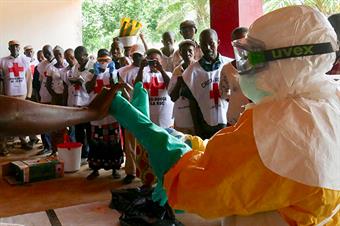
The world remains woefully ill-prepared to respond to outbreaks that are both severe and sustained. This was the conclusion reached by all independent assessments of the Ebola response. Those assessments also warned about the risk of complacency.
We had no time for complacency to set in.
Even before we could declare the Ebola outbreak over, Zika burst on the scene to exploit another set of vulnerabilities and deliver a host of surprising neurological abnormalities and complications.
Preparedness means addressing the root causes of vulnerabilities that allow outbreaks to take countries and the international community by surprise.
The emphasis of this high-level conference has been firmly placed on strengthening country capacities to implement the International Health Regulations. Equal emphasis went to the need for practical solutions.
You have discussed how the IHR operate as the cornerstone of global health security. You heard from Prof Didier Houssin, Chair of the IHR Review Committee, about implementation problems experienced during the Ebola outbreak in West Africa.
Earlier this month, an alliance was formed, led by Finland, to use systematic and standardized country assessments of core capacities to improve the evidence base, identify specific gaps, and attract the resources to fill them.
You heard about a number of additional initiatives that underscore how global health security is a truly collaborative undertaking requiring support from sectors well beyond health.
The conference rightly viewed the strengthening of IHR core capacities as an integral part of broader efforts to strengthen health systems. You stressed the need for adequate numbers of appropriately trained staff and for high-quality diagnostic services that can get reliable results quickly.
We need to remember: the three countries in West Africa that contained Ebola with no major outbreak, that is, Nigeria, Senegal, and Mali, all had high-quality domestic diagnostic capacity in place.
Yesterday, you had a chance to discuss the new IHR monitoring and evaluation framework requested by last May’s World Health Assembly. The framework is another example of concrete measures that contribute to the world’s collective preparedness.
In short, over these past two days, we have seen global solidarity operating at its best. The conference has signalled a high level of political engagement and an equally high level of practical commitment to take concrete action.
I am optimistic that your call for accelerated, and targeted, action will strengthen the world’s defences against emerging and re-emerging infectious diseases.
Thank you.