Your Excellency, Mr Donald Tsang, Chief Executive of the Hong Kong Special Administrative Region, Excellencies, honourable ministers, distinguished delegates, Dr Shin, ladies and gentlemen,
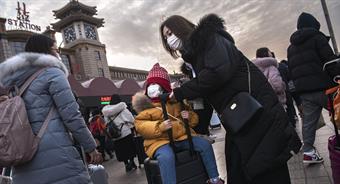
It is a great pleasure to be back in my home town. This visit coincides with yet another outbreak, this time on a global scale. In this connection, let me thank Chief Executive Mr Donald Tsang for his leadership in Hong Kong’s prompt and remarkable response to the influenza pandemic.
The community, health professionals, scientists, and civil servants have all pulled together to combat a rapidly spreading threat. This kind of quick and broad-based response will be critical in the coming months, here and everywhere else in the world.
When WHO announced the start of the pandemic in June, attention quickly focused on the winter influenza season in the southern hemisphere as a key indicator of how the pandemic might evolve. In this region, national reporting of experiences has been a model of speed, openness, constant communication with the public and the media, and generous sharing of information with the international community.
In the heat of the outbreaks, experts in your countries still found time to advise me, participate in panels, and contribute to WHO virtual networks set up to monitor the evolving clinical, epidemiological, and virological dimensions of the pandemic. The second wave of spread is now beginning with guidance from a solid body of observations and research data. This, too, is a remarkable achievement just 5 months after the new H1N1 virus was identified.
In the early phase of this pandemic, doctors in countries of this region, especially in Australia and New Zealand, helped alert the world to a problem that warrants additional preparedness measures. Several other countries, notably China, Hong Kong China, Japan, and the Philippines, have subsequently contributed to our understanding of the pandemic. As we are beginning to see, intensive care units and emergency rooms are likely to feel much of the heat of this pandemic.
While the overall clinical picture remains largely reassuring, health officials are increasingly concerned about a small subset of patients who suddenly and rapidly fall very ill, usually on day 5 or 6 after symptom onset.
Their clinical course can deteriorate from normal respiratory function to severe respiratory failure in less than 24 hours. Saving these lives depends on rapid access to highly specialized care in highly specialized facilities. Though the numbers of such cases have been small to date, we are wise to anticipate an added burden on intensive care units as more and more people become infected.
Research conducted in this region is helping us understand treatment issues and has also given us the first early clues of what might influence individual susceptibility to severe disease. You also helped raise international concern about the increased risk of severe disease in indigenous populations.
Ladies and gentlemen,
This pandemic is providing the first true test of how we, as an international community, can work together within the framework of the revised International Health Regulations. We are, I believe doing well, also in keeping the level of economic and social disruption associated with the pandemic as low as possible. This is especially welcome news at a time of severe global economic recession.
Let me make one final observation. This is a region well-known for its cohesion and spirit of mutual support, despite vast differences in levels of economic development.
Such vast differences, also in health status, access to care, and the range of services that health systems can offer, are seen throughout the world. Solidarity at the global level gives us our best chance to minimize the impact these differences will have on the levels of illness, death, and disruption caused by this pandemic.
I applaud and welcome the recent announcement of donations of pandemic vaccine to WHO by nine countries, including two from this region: Australia and New Zealand. I hope that others will follow this example in demonstrating their commitment to global solidarity in the face of this pandemic.
Thank you.