Mr Chairperson
Honourable members of the Executive Board
Ladies and gentlemen,
Thank you for including me on the shortlist. I am greatly honoured by this vote of confidence. I have great respect for the difficult decision you must make.
You have seen my manifesto. You know my background and my experience. You have read of my commitment to attaining results for health and my vision for WHO. Rather than repeat this information, I would prefer to tell you how my experience on the campaign trail has sharpened this vision.
Following my nomination, I met with nearly all of you, often in your own countries. I listened to your concerns and witnessed the extraordinary work you are responsible for in your countries. It has been a humbling and an exciting experience. Thank you.
I was asked many questions. Some were strictly technical, often about a particular disease or a specific control strategy. Others were administrative in nature: how best to manage WHO as an organization. Still others were about leadership: how to manage the politics of international public health.
Your questions underlined the importance of the role of the Director-General. This is an influential organization with a splendid record of achievements. The Director-General doesn’t “rule” WHO, of course. This organization is owned by its Member States. But a Director-General does lead. And that leadership determines how well WHO performs in many significant ways.
You emphasized that the Director-General must have competence in each of the three areas: technical matters, political leadership and administrative management.
On technical competence, you probably know me best for my work in SARS and avian flu, but my knowledge and experience go far beyond this field, as shown in my curriculum vitae.
It is important also to discuss the technical competence and credibility of WHO. This is our greatest asset. If elected, I will protect it jealously.
Health problems are subject to scientific scrutiny, and we have powerful methodologies for getting proof. We can prove that an agent causes a disease, a drug cures it, or a vaccine prevents it. Epidemiological tools allow us to link lifestyle factors to an increased risk of disease. We can know. We can prove.
This is how I understand that familiar phrase – “evidence-based policy”. When we know the size of a problem, its cause, and its remedy, we have a moral imperative to act. As Director-General, I will strengthen the legitimacy, quality, and efficiency of our policy development processes. I will act on evidence and use it to shape priorities.
Unfortunately, not all of the problems faced by WHO are subject to scientific scrutiny, or yield their secrets under a microscope. You know the ones I mean: lack of resources and too little political commitment. These are often the true “killers”. And this is where the role of the Director-General comes in.
As Director-General, I will attract resources, inspire confidence, and win commitment. I will argue on the side of humanity with compassion and passion. I will use the weight of science and humanitarian ethics to persuade.
This brings me to the second area of competence: political leadership. Public health issues are primarily technical in nature, but when the evidence is clear and health is at stake, the Director-General must be prepared to take a stand on difficult, and at times political, issues that affect health. I will do so.
The Director-General of WHO is not a figurehead, a person of merely symbolic significance. A Director-General leads, guides, and decides. These decisions affect millions of lives around the world.
An articulate and convincing Director-General can win hearts and minds – hearts based on ethical principles and minds based on good science. If you win hearts and minds, and inspire the confidence of donors, you are on a good way towards fighting those two “serial killers”: too little cash, too little caring.
The third competence is the managerial challenge of running WHO. I have much experience in managing a large and complex organization. During my tenure as Director of the Hong Kong Department of Health, I managed 7,000 staff and a budget of nearly half a billion US dollars a year.
I also have experience in setting priorities. This is critically important, as it underpins the prudent management of resources and staff. The determinants of health are broad. The opportunities are many. The work of WHO touches many sectors other than health. This creates a temptation to follow a “full menu” approach, which carries the risk of spreading resources too thin.
I have heard repeated calls for WHO to stick with a set of core public health functions. We must focus on those tasks that WHO is uniquely well-suited to perform. For other health-related issues, I will ensure WHO uses its enviable technical expertise to complement the work of others – sister agencies in the United Nations, the development banks, bilateral partners, NGOs, civil society, and the private sector.
Voluntary contributions will not distort WHO priorities when the health agenda is firmly and clearly articulated and makes compelling good sense for all concerned, including those who so generously support us. I am committed not only to further improving transparency in managing resources, but also to greater objectivity in reporting on performance.
On management of the secretariat, I was asked some very difficult questions. What should be the relationship between headquarters, regional and country offices? How should resources be split among the three levels? How can we assure greater geographical diversity in our staff?
I believe the regional structure of WHO is an asset. As Director-General I will ensure WHO functions coherently, with a common understanding of the synergistic roles of the three different levels. Resources will be allocated on the basis of the principles you, the Executive Board, have articulated. I commit to meeting the geographical and gender diversity targets that you have set within the next three years.
I was also asked if I would introduce a significant restructuring of WHO. Reform – yes. A major upheaval – no. I know you support the ongoing reforms. I agree: WHO needs to be leaner, more effective, and rapidly responsive to a changing world. But this is not the right time for a major upheaval. As an insider, I need to say that WHO – and its staff – need some continuity right now.
Mr Chairperson,
I will now turn to more specific health issues. My discussions with you all have helped to sharpen my vision and priorities for WHO, as set out in my manifesto.
I want to illustrate the challenge that lies ahead using two examples, one old, tragic, and recurring, and another that is recent and uplifting.
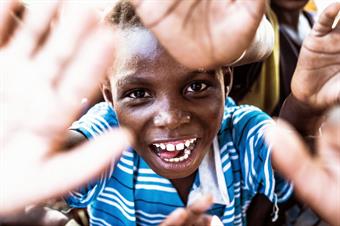
The first is the true story, told tens of thousands of times over, of a mother who brings her severely malnourished child to a clinic.
“What should the child be eating?” she is asked. The mother gives all the right answers: green and leafy vegetables, fruit, milk, quality protein. “What did the child eat today? “Cassava.” “And yesterday and the day before?” “Cassava. Cassava. Cassava is all we have to eat.”
My point: all of our efforts at health promotion achieve little when the root problem is poverty. We must look at the whole picture when assessing our activities. This, I believe, is the beauty of the millennium development goals. They acknowledge that problems hindering human development are interlinked. Poverty breeds disease, and disease anchors populations in poverty. I am passionately committed to the achievement of these development goals.
My second example is this year’s Nobel Prize for Peace, awarded to Prof. Muhammad Yunas of Bangladesh and his Grameen Bank. This is a system of micro-credit extended to the rural poor. 97% of the beneficiaries are women. In its 30 years of existence, this system has lifted more than 4 million people out of poverty.
The Nobel citation notes that “Lasting peace cannot be achieved unless large population groups find ways to break out of poverty.” The same applies to health.
The Grameen Bank uses 10 indicators to determine when a family has broken out of poverty, and 5 are health-related. When a family moves out of poverty, it adopts health-promoting behaviours: safe water, sanitation, mosquito nets, prompt attention to illness – and something to eat besides cassava.
Here are the principles of this initiative: it is pro-poor, community-based, locally owned, and leads to large-scale and sustainable improvements in health-promoting behaviour. It addresses head-on the issues of equity and access. It acknowledges that women are often the agents of change in communities, and that the best help is self-help. People need a hand up, not a handout.
In short, it embodies the principles of health for all and primary health care.
While I am not arguing for a return to Health for All, I am most definitely arguing for a return to the principles of integrated primary health care, which I will return to shortly.
Mr Chairperson,
Attaining results for health means addressing six core components, as I have laid out in my manifesto: development, security, capacity, information and knowledge, partnership, and performance.
The first two components deal with fundamental needs: for health development and health security. Poverty and insecurity are two of the greatest threats to 'harmony' – a word at the core of the WHO Constitution, but one used infrequently today. I think we should use it more. Harmony is a measure of civilization. Health is intrinsically related to both development and security, and hence to harmony.
The next two components are strategic: capacity building – particularly strengthening health systems – and information and knowledge. Here I mean getting the evidence right and setting the agenda for research and development.
The remaining two components are operational: managing partnerships and improving WHO performance.
This is a simple structure: two fundamental health needs, two main strategies for meeting the needs, and two operational approaches for achieving results in countries. Like the determinants of health, the six components are closely interrelated.
Health development is at the heart of the Millennium Development Goals. But health development is not limited to the MDG targets for the health of women and children, and turning back the epidemics of HIV, malaria and TB. It also includes reproductive health, violence and injuries, and the growing burden that chronic diseases place on development – heart disease, cancer, diabetes, mental illness and others.
As Director-General I will be committed to accelerating initiatives in safer pregnancy, integrated management of childhood illness and immunization. I will enhance WHO efforts to reach the target of universal access to HIV treatment, prevention and care. I will increase the momentum to control malaria, TB and neglected infectious diseases. I will complete polio eradication. I will scale up efforts to control tobacco, including full implementation of the Framework Convention on Tobacco Control. I will accelerate action to implement the Global Strategy on Diet, Physical Activity and Health. By health security, I mean security at both global and community levels. At the global level, I mean defence against the threat from outbreaks of new diseases – in ways that minimize shocks to economies and societies. At the community level, I mean provision of the fundamental prerequisites for health: enough food, safe water, shelter, and access to essential health care and medicines. These essential prerequisites also need to be provided when emergencies or disasters occur.
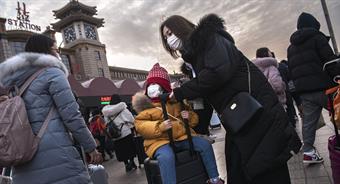
For global health security, I am keenly aware of our shared concern about the prospect of an influenza pandemic. As representative of the Director-General for Pandemic Influenza, I have led this work in WHO. We have strong and efficient mechanisms for global outbreak alert and response - tested in recent years by SARS and avian influenza. We have strong regulatory mechanisms embodied in the International Health Regulations. But these are not enough. The needs are national as well as global. As Director-General I will support countries in building essential capacity in prevention, preparedness, response and rehabilitation.
Improving health development and health security means improving health systems. All the donated drugs in the world won’t do any good without an infrastructure for their delivery. You cannot deliver health care if the staff you trained at home are working abroad. The international community will not be securely defended against outbreaks until all countries have core surveillance and response capacities in place. The global surveillance system must have no gaps or weak spots.
That is why integrated primary health care is so important. It applies to health development, and to community health security. It is the cornerstone of building the capacity of health systems.
My reason for promoting integrated primary health care to strengthen health systems is simple. It works. This is the only way to ensure fair, affordable, and sustainable access to essential care across a population. We have the evidence. I have experienced this personally. During my tenure in Hong Kong, I introduced primary health care from the diaper to the grave. I focused on health promotion and disease prevention, with special emphasis on self-care and healthy lifestyles. In addition, through working with mainland China, a country with diversity in regional and economic development, I have learnt many lessons and have much experience to share.
The world is not – all by itself – going to become a fair place as far as health is concerned. Progress in medicine races ahead, yet resources for public health remain constrained. This leads to further imbalances across the globe – some people leading ever longer and healthier lives, others dying prematurely from preventable causes. This is not a healthy situation – for populations or world security.
I have heard about the importance of primary health care repeatedly during my visits to Latin America, Africa, Europe and Asia. Many countries in Africa face the challenge of rebuilding social support systems. Others in central Asia and Eastern Europe are undergoing transition from planned to market economies. They want WHO support. They want to make sure that equitable and accessible systems built on primary health care are not sacrificed in the process. They also reminded me that traditional medicine is often an important component that needs to be addressed, and I agree with them.
When setting the public health agenda, WHO must not forget the importance of research and development. In 1950, the top three priorities at WHO were sexually transmitted diseases, malaria and TB. Substitute HIV/AIDS for sexually transmitted diseases, and things have changed very little. As several foundations and public-private partnerships know, we will not be able to make major steps forward until we have new vaccines, drugs, and diagnostics. In addition, we must find the right balance between the protection of intellectual property rights and access to affordable essential medicines. This is not easy! But we cannot be evasive.
As Director-General I will address, as a matter of urgency, the problem of outward migration of health staff. The problem is not insurmountable. One of my most inspiring recent experiences occurred during a visit to a children’s hospital in a developing country in the Americas. Though the workload was heavy, the staff were not looking for a better job elsewhere. In a motivating and enabling environment, they were looking for creative ways to do their job better. I am a doctor. I understand their utter dedication to save lives. Again, we see the ethics of the health profession at work.
On information and knowledge, it is critical to get the evidence right. This is something WHO has always done well. The challenge here is to make evidence have the right impact. We need evidence to support countries as they establish their own priorities and select the best strategies for reaching them. I plan to set up a global health observatory to collect, collate and disseminate data on priority health problems. I will integrate WHO’s research activities to more strategically address a common health research agenda.
When we have these evidence-based instruments, the fifth component, working in partnerships, becomes much easier. Today, collaboration to achieve public health goals is no longer simply an asset. It is a critical necessity. WHO needs to develop an approach to collaboration that emphasizes management of diversity and complexity.
As Director-General, I will engage WHO strategically in partnerships for health, strengthening relationships with civil society and the private sector, and creating greater alignment between partnerships. I will work closely with our partners in the UN system to bring about reforms that enhance the effectiveness of the UN – especially at the country level.
Performance is the final component, and here we face the challenge of making WHO perform more efficiently and effectively, getting all level of WHO to work more cohesively, and motivating staff. I believe that WHO leads the UN in terms of results-based management, but there is still some way to go to improve accountability and transparency.
I will also accelerate human resource reform to build a work ethic within WHO that is based on competence, and pride in achieving results for health. The Director-General must be a good leader on the world stage and also right here, in this building.
Mr Chairperson,
How will we know we are making progress in the six areas I have described? In public health, we are used to working with indicators – life expectancy, infant mortality rates, disease burden. Improvements in these indicators are the key measures of the performance of WHO, globally and in all regions.
With the enormous burden of disease in Africa, improving the health of the people of this region is critical for global health. All regions, all countries, all people are equally important. This is a health organization for the whole world. But we must focus our attention on the people in greatest need. The health of the people of Africa must therefore be the key indicator of the performance of WHO.
My second concern is the health of women – and not just maternal health. Women do much more than have babies. Unfortunately, their activities in households and communities, coupled with their low status, make them especially vulnerable to health problems – from indoor air pollution and multiple infectious diseases to violence. Yet evidence from many sources also shows that women are agents of change – for families, the workforce, and entire communities. Reducing health problems in women and empowering them will result in a dramatic increase in health-promoting behaviours – right where it counts most.
Improvements in the health of the people of Africa and the health of women are key indicators of the performance of WHO. Our commitment to results is only relevant if we can demonstrate an impact in these two populations.
Mr Chairperson,
I am immensely proud to work for WHO. An organization that is increasingly recognized for what it does, not just what is says. An organization that is opening itself up to the scrutiny of member states as never before. An organization that is committed to technical excellence. An organization that measures its achievements in terms of results – not number of reports or meetings. This legacy was created by the work of Dr Lee and his predecessors. I am firmly committed to taking this legacy forward.
Having said all of this, I want to repeat – a director-general does not “rule” WHO. You do. But if nominated and elected, I will leave my personal stamp. I have worked in public health for 30 years. I have the technical competence and experience, the managerial skills, and the political acumen to lead this complex organization. I have the commitment, passion, and humility to serve the member states of WHO.
Thank you again for giving me this opportunity to share my vision. I trust I have given you the information needed to judge the nature of my personal “stamp”.
Thank you.