Your Excellency, Mr Madhav Kumar Nepal, Right Honourable Prime Minister of the Federal Democratic Republic of Nepal, honourable ministers, ambassadors, distinguished delegates, Dr Samlee, ladies and gentlemen,
Good morning.
First, let me thank the government of Nepal for hosting the joint session of the 27th Health Ministers Meeting and the 62nd session of the Regional Committee for South East Asia.
The world is in the midst of the most severe economic downturn in at least three decades. The world is in the midst of the first influenza pandemic in four decades. The world is already feeling the effects of climate change, and these effects will continue to escalate for quite some decades to come.
And yet, the world is also in the midst of the most ambitious drive in history to reduce poverty and reduce the great gaps in health outcomes, through achieving the Millennium Development Goals.
How does public health position itself in this cross-current of trends? From one direction, public health is bolstered by unprecedented commitment, determination to reach ambitious goals, and creativity in finding ways to do so.
From another direction, public health is battered by global crises, with global consequences that are unfairly biased against those countries and populations least able to cope.
How do we keep the momentum for better health from faltering under the pressures of a global economic recession, a climate that is changing for the worse, and an influenza pandemic that is now unstoppable?
The need to stay the course is greater today than ever before. Precisely because of these global crises, the price of failure keeps getting higher. Developing countries have the greatest vulnerability to global crises and the least resilience. They are hit the hardest and take the longest to recover.
Already, the world is dangerously out of balance. The differences, within and between countries, in income levels, in opportunities, and in health outcomes, are greater today than at any time in recent history.
If we do not maintain the current momentum for better health, stay the course, keep our promises, and stick to our goals, a bad situation is certain to get worse.
A clear example is the health of women. Since taking office, this has been one of my priority concerns.
I am pleased to be in a country that is quickly developing policies aimed at reducing maternal mortality, and doing so in a systematic way. Your approach is also a practical and realistic one, as reflected in the Maternity Incentive Scheme implemented in 2005.
As we all know, the number of deaths during pregnancy and delivery will not go down until more women have skilled attendants at birth and access to emergency obstetric care. Financial barriers to care, including the costs of transport, must also be addressed, as is being done here in Nepal. Nepal also has a plan for advancing the status of women, and this, too, is most welcome.
These and other plans emphasize social equity as a central tenet of primary health care. Tomorrow, I will be commenting on the importance of this region’s commitment to a renewal of primary health care.
A renewed commitment to primary health care underpins efforts to improve the health of women. This relationship is starkly evident in a report on Women and Health that I have commissioned. The report, which will be issued in November, explores the many health risks that women face throughout the life course, and sets out an agenda for change.
You need strong leadership. You need comprehensive and responsive health care that goes beyond a narrow focus on reproductive health. You need the right policies and, above all, you need the data for setting priorities and monitoring progress.
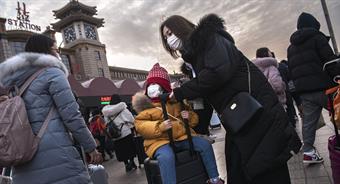
Tomorrow, I will also summarize what we know about the influenza pandemic and the range of illness it is causing. We know that the new H1N1 pandemic virus has rapidly established itself in 188 countries and is now the dominant influenza strain. The pandemic will be with us for quite some months to come.
Once again, the capacity of health systems to respond will play a decisive role in determining the pandemic’s impact in different countries. Though the new virus is virtually identical in all outbreak sites, we have to anticipate a very different impact in countries with limited resources and weak health systems with limited capacities, especially for intensive care.
A health system is a social institution. It does far more than deliver babies and pills, the way a post office delivers letters. Properly managed and financed, a health system that strives for universal coverage contributes to social cohesion and stability.
This world desperately needs more social cohesion and stability. It also desperately needs greater balance and fairness, especially in access to health care.
Ladies and gentlemen,
Public health had no say in the policies that seeded the financial crisis or set the stage for climate change. But public health has much to say about the influenza pandemic, how it is managed, and how its impact can be reduced.
This is one occasion when heads of state and ministers of finance, tourism, and trade will listen closely to ministers of health. Between the extremes of panic and complacency lies the solid ground of vigilance, and this is our territory.
We need to get the messages and the advice right, based on early data, as they emerge, in the context of a rapidly evolving situation. We need to make some far-reaching, often costly decisions in an atmosphere of considerable scientific uncertainty.
This is not easy. But this is a public health emergency, and this is our job.
Thank you.