
Your Excellency Jeannette Kagame, First Lady of the Republic of Rwanda,
Your Excellency Antoinette Sassou N’guesso, First Lady of the Republic of Congo,
Your Excellency Neo Jane Masisi, First Lady of the Republic of Botswana,
Your Excellency Hinda Deby Itno, First Lady of the Republic of Chad,
Your Excellency Aissata Issoufou, First Lady of the Republic of Niger,
Your Excellency Rebecca Akufo-Addo, First Lady of the Republic of Ghana,
Dr Winnie Byanyima, Executive Director of UNAIDS,
Excellencies, distinguished guests, dear colleagues and friends,
First of all, I’d like to congratulate the Organization of African First Ladies for Development for organizing this event, and for your leadership on these issues.
Since its establishment in 2002, the Organization has been a trailblazer in Africa in raising awareness on the HIV/AIDS pandemic, mobilizing resources, promoting strong community leadership and networks to advocate for people living with HIV, and
I also congratulate you on your new strategic plan, which emphasizes universal health coverage and a healthier population in Africa, which is very important.
Likewise, the “Free to Shine” campaign led by OAFLAD and the African Union reinforces the political commitment of African nations to end childhood AIDS and keep mothers healthy.
As First Ladies you play an incredibly important role.
You provide exemplary leadership, and compassion, on many health agendas, in particular through your commitment to fulfilling the vision of an AIDS-free Africa.
You know the incredible progress we have made to eliminate mother-to-child transmission of HIV on our continent.
Today, in more than one in three countries, more than 90% of HIV-positive pregnant women are receiving anti-retroviral therapy.
Eastern and southern Africa are leading the elimination of mother-to-child transmission of HIV with an average of 92% of pregnant women are receiving anti-retroviral therapy. Rwanda, Botswana, Malawi and Namibia are among an ever-increasing number of countries making great progress on Prevention of Mother -to-Child Transmission (PMCT).
But one in three is still nowhere near good enough. We have a lot of work to do.
HIV, Hepatitis B and syphilis are all endemic in Africa.
All three can be maternally transmitted.
All three are devastating for mothers, families.
All three take a heavy toll on health systems, with catastrophic expenditures for families leading to poverty in our communities.
And all three can be prevented.
The reason they are not is because the women and children they afflict lack access to integrated, quality antenatal services that are routine in many parts of the world.
It’s a matter of inequality.
Many of you are mothers.
You know that no mother should die when giving life. No child should be born with HIV, hepatitis or syphilis.
And they don’t have to. The services we’re talking about can and should be provided to every mother through strong primary health care, which is the foundation of universal health coverage.
That’s why WHO recently signed a Memorandum of Understanding with the African Union to work together on strengthening primary health care, and ultimately achieve Universal Health Coverage (UHC), among other issues establishing Africa Medicine Agency and strengthening Africa Communicable Disease Control (CDC).
This is a commitment that builds on the Addis Ababa Call to Action endorsed at the AU Summit earlier this year.
These are very encouraging signs.
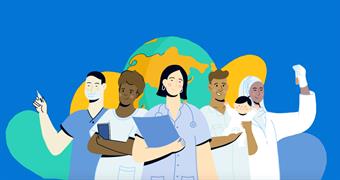
One of the key challenges we face in building strong primary health care on this continent is the deficit of health workers.
Between now and 2030, the world is facing a shortfall of 18 million health workers, mostly in low- and middle-income countries, including in Africa.
About half of that shortfall is nurses and midwives, who play a vital role in delivering quality antenatal services.
To help close this gap, WHO has declared 2020 the Year of the Nurse and the Midwife.
Throughout the year, we will be holding advocacy events and working with countries to find ways of recruiting, training and retaining nurses and midwives.
We would very much value the support of OAFLAD in this endeavor.
Excellencies,
Thank you once again for the opportunity to be here and to address you today.
Eliminating mother-to-child transmission of HIV, syphilis and hepatitis B throughout our continent is achievable.
And you can help to provide the key ingredient: political commitment.
I believe we can leverage your commitment even more. Your new strategic plan offers great potential for innovation and advancing UHC to provide health for all. To this end, I suggest our two organizations, OFLA and WHO, revise our Memorandum of Understanding signed in 2016 to work with you to achieve the new targets you have set in your strategic plan.
With your support, we can not only save many lives, we can change the course of history for our Africa.
Thank you for your commitment and leadership.
Together, let’s build a healthier, safer, fairer Africa.
I thank you. Murakoze cyane.