
Madame President, Minister of Health of El Salvador, distinguished guests at the head table, Secretary Burwell of the host country, Regional Directors Emeritus Sir George Alleyne and Dr Mirta Roses, honourable ministers, distinguished delegates, Dr Carissa Etienne, friends, partners in global health, ladies and gentlemen,
I am happy to join you again.
Dr Etienne has provided an excellent overview of health issues and challenges in the region. I’m so proud of you.
Ladies and Gentlemen,
Over the past year, health news in this region has been dominated by the Zika outbreak. The possibility that a mosquito bite during pregnancy could be associated with severe neurological abnormalities in newborns has alarmed the public and astonished scientists.
Apart from responding to the outbreaks, your countries have contributed greatly to scientific understanding of the virus, its modes of transmission, and its consequences, especially for the developing fetus.
Thanks to your research, scientific evidence has confirmed a causative association between Zika infection during pregnancy and microcephaly and other severe congenital abnormalities.
The possibility that previous infection or co-infection with a related virus, like dengue, might increase the risk of Zika congenital syndrome is still under investigation.
Knowledge continues to evolve, and many questions still need to be answered. This is a virus that constantly delivers surprises. The more we learn, the worse things look.
We also know from experiences in this region that Aedes aegypti is extremely difficult to control using currently available tools.
The whole world is grateful to Brazil for its tremendous efforts to prevent the international spread of Zika during the summer Olympics. Thank you very much. WHO was steadfast in its support for holding the games as scheduled, and are glad we took that stance. I want to the members of the Zika Emergency Committee and its chair for looking at science and making decisions based on science.
During my tenure as Director-General, health in this region has improved considerably, due to sustained economic development, increased financial and technical resources, and social policies that address poverty and aim for universal access to health and universal health coverage.
As the world enters the 2030 era of sustainable development, your agenda contains forward-looking reports that consistently take a human-rights approach to health problems, whether these concern high-risk groups for HIV and sexually transmitted infections or the large number of migrants who move through your countries.
The commitment to equity has been especially strong in this region, and you have made great efforts to build health systems that are both fair and resilient.
Disasters are disruptive irrespective of causes. In terms of the impact of disasters, this region is second only to Asia.
Countries in Latin America and the Caribbean have learned that investing in people-centred, resilient health systems, including prevention, preparedness and the IHR core capacities, is more efficient than financing acute or sustained emergency responses.
The new WHO programme for Health Emergencies, relevant to all Regions and HQ, must be supported politically and financially for full implementation. The peoples of the world expect their governments to protect them against health emergencies.
Ladies and Gentlemen,
Steady progress in this region, one of the best performing regions, over the last decade makes it possible to aim for the elimination of some major health problems.
Between 2010 and 2014, the rate of mother-to-child transmission of HIV dropped by half.
Last year, Cuba became the first country in the world to be validated as having attained the goal of eliminating mother-to-child transmission of both HIV and syphilis. Thank you for that leadership.
You have also moved closer to the goal of malaria elimination in the region’s 21 countries where the disease remains endemic.
You are considering a plan for the elimination of neglected tropical diseases, known in the Americas as neglected infectious diseases. Given the prevalence of these diseases, and their close association with extreme poverty, this is a pro-poor initiative on a massive scale.
You are wisely looking at the prevention and control of Zika together with dengue and chikungunya, following an integrated clinical, epidemiological, and laboratory approach.
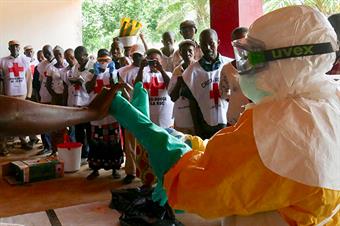
The strategy also covers the need to actively involve society in the control of mosquito breeding sites. We need to learn the lessons. Regardless of whether we talk of Ebola, Zika, or Rift Valley Fever, the community is always the first responder and it is in our collective interest to increase the capacity of communities, including women and children, to respond.
Although chikungunya has been circulating in the region only since 2013, all three diseases have created an overwhelming burden on health systems.
The world will be looking to the Americas for guidance on whether some of the new technologies for mosquito control, such as the use of mosquitoes infected with Wolbachia bacteria, hold promise for wide-scale use. Brazil is working on this and other innovative mosquito control technologies.
You will be looking in depth at one dilemma that faces all WHO Member States. That is, how to provide equitable access to new medical products that have very high prices.
Many high-cost new medicines provide substantial benefits over existing products, and several are included in the latest WHO Model List of Essential Medicines.
The challenge is to cover those who will genuinely benefit in ways that do not threaten the financial sustainability of health systems.
The policy options you are considering also stress the important need to guard against the replacement of effective lower-cost medicines with new more expensive products of little or no added value. I stress the importance of technology assessment before procuring a product. WHO and PAHO will be here to support you.
All regions will benefit from your leadership on these challenging issues.
As this is the last time I will address this Regional Committee, I thank you and wish you a fruitful Regional Committee for the Americas.