Your Excellency, Mr Blaise Compaoré, honourable ministers, distinguished guests, our partners in the Meningitis Vaccine Project, ladies and gentlemen,
This is a big day for Burkina Faso and its people, who have lived so long in fear of what the hot, dusty Harmattan winds will bring each year.
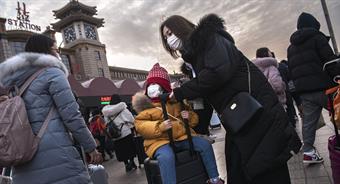
Epidemic meningitis is not the biggest killer in Africa, but it is among the most greatly feared of all diseases. This is easy to understand: the sudden contagion, the rapid progression to severe disease, the long lines of people waiting for a vaccine after the epidemic has started.
The empty streets, the deaths, the weeks when parents watch over children in hospital. The children who survive but are permanently impaired by mental disorders or hearing loss.
Africa deserves better. And today, with the launch of this new vaccine, Africa is getting the best technology that the world, working together, can offer.
Africa asked for this vaccine. African leaders, and African scientists, can take much of the credit. And they can take advantage of capacities that were strengthened during the process.
The terrible meningitis epidemic of 1996 caused more than 250,000 cases in Africa’s meningitis belt. This was the wake-up call.
African ministers of health asked WHO to help. At that time, the control strategy was reactive, with vaccination starting after the epidemic began. The vaccine itself was inadequate as it confers limited protection.
African leaders and scientists profiled the ideal vaccine, right down to the price. As one Minister of Health stated at the time, “A vaccine that Africa cannot afford is worse than no vaccine at all.”
In 2001, the Meningitis Vaccine project was launched by WHO and PATH, with core funding from the Bill and Melinda Gates Foundation. But at a target price of 50 cents per dose, no large pharmaceutical company was interested. That prompted the creation of an entirely new model for innovation.
A consortium of academics and scientists developed the vaccine. Technology was transferred from the USA and the Netherlands to the Serum Institute of India, which agreed to manufacture the vaccine at the target price.
African scientists contributed to the design of study protocols and conducted the clinical trials. Canada assisted the Indian National Authority in regulatory approval, and WHO pre-qualified the vaccine this summer.
In less than a decade, in record-breaking time, a new vaccine tailor-made for an African need, priced for Africa, and developed with hands-on support from African scientists, is being launched today.
Let me emphasize. No steps were skipped. No standards were compromised. MenAfriVac is the best the world can offer.
Let me thank the GAVI Alliance, UNICEF and Médecins sans Frontières for their support as international partners. Let me thank the many brilliant and dedicated scientists, also here in Burkina Faso, who made the new vaccine possible.
There were setbacks, of course, but all partners remained dedicated to a public health mission. Today marks the beginning of the end of deadly and disruptive epidemics in Africa’s meningitis belt.
Ladies and gentlemen,
The health impact of this achievement is likely to be tremendous. The vaccine protects children as young as one year of age, and confers immunity that may last a decade.
It reduces transmission and contributes to herd immunity, meaning that even people who were not vaccinated receive some protection. WHO estimates that the vaccine will save nearly 150,000 young lives by 2015.
The spirit of mutual collaboration, and mutual learning, that supported this goal has enabled African countries to strengthen systems for disease surveillance, clinical development, pharmacovigilance, and vaccine logistics.
In turn, collaborating partners have learned much about the specific needs and opportunities in countries of the meningitis belt. You deserve our full respect.
I have a final comment. This is a big day for the people of Burkina Faso, to be followed by Mali and Niger. These are the three hyperendemic countries.
But this should be a big day for all people living in the meningitis belt.
I join others in calling for the funding, from international partners and the governments of endemic countries, needed to ensure that all people, in all countries in the meningitis belt, get the best vaccine the world can offer.
The hot dusty winds should not bring disease and social disruption anywhere, any more.
Thank you.