NOTE: The following speech was delivered on behalf of Dr Tedros by Dr Ian Askew, Director of the Department of Reproductive Health and Research.
Excellencies, dear colleagues and friends,
Good afternoon, I’m delighted to be here in Nairobi.
Almost a year ago to the day I was here in Kenya with President Kenyatta to launch the country’s pilot programme on universal health coverage.
Since then, tens of thousands of people have been given access to essential health services, without worrying about whether they can afford them.
Now Kenya is on the verge of rolling out coverage to the rest of the country.
I wish to thank President Kenyatta for his commitment to universal health coverage, and especially to the health of women and girls, including his personal pledge to end female genital mutilation and child marriage in Kenya.
My brothers and sisters,
We have many successes to celebrate from the past 25 years.
Since 2000, maternal mortality has fallen by 38%.
Today, 81% of women give birth with the help of a skilled health worker, compared with 59% in the 1990s.
6 in 10 adults, and 8 in 10 pregnant women, now have access to lifesaving treatment for HIV. New infections and AIDS-related deaths have both fallen dramatically.
More women use modern contraception than ever before.
In the last decade alone, 25 million child marriages have been prevented.
In 24 countries where data are available, female genital mutilation has fallen from 49% to 31% in 25 years.
But as you all know, we still face many significant challenges.
Every day, 810 women still die from preventable cases related to pregnancy and childbirth.
Millions of women who want to avoid pregnancy are unable to access modern contraception.
As a result, more than 40% of pregnancies are unintended, and sadly in Africa more than a quarter of those end in unsafe abortions.
Cervical cancer affects over half a million women each year and kills a quarter of a million, nine out of 10 them in poor countries.
Every day, there are more than one million new cases of curable sexually transmitted infections including chlamydia, gonorrhea and syphilis. The rise of super gonorrhea makes our work to address antimicrobial resistance even more urgent.
An estimated 1 in 5 girls, or 12 million a year, are married before their 18th birthday, undermining their health, education, safety and opportunities.
200 million girls and women have experienced female genital mutilation, and although the proportion of girls affected has declined, population growth means the absolute number is increasing.
And 1 in 3 girls and women will experience physical or sexual violence during their lifetime.
This is the scale of the challenges we face.
Predictably, the poorest, most marginalized and most vulnerable girls and women are over-represented in these numbers.
More than 90% of all maternal deaths are in the poorest countries. In South Sudan and Chad, 1 woman will die for every 100 live births.
Women and girls in fragile, conflict and violence-affected situations are especially vulnerable.
The common factor that could improve the chances of health, and indeed survival, for millions of women and girls is universal health coverage.
On current trends, 5 billion people globally will lack access to essential health services – including for sexual and reproductive health – by 2030.
But there is good news. We have an unprecedented opportunity to close these gaps.
First, the Sustainable Development Goals.
The SDGs include 8 targets that directly commit countries to achieving sexual and reproductive health and reproductive rights.
WHO remains firmly committed to supporting countries to achieve these targets, by providing the best evidence and normative guidance.
Second, the Declaration of Astana on Primary Health Care adopted last year commits countries to providing a comprehensive range of services, including for sexual and reproductive health.
Primary health care is the best investment any country can make in promoting health, preventing disease and protecting the health of the most vulnerable.
Third, the political declaration on universal health coverage adopted at the United Nations General Assembly in September is a major milestone.
For the first time, all 193 UN Member States have unified around a shared commitment to the right of all people to universal health coverage.
Fourth, this strong statement of high-level political commitment has now been reinforced by the world’s parliaments.
Just a few weeks ago, the Inter-Parliamentary Union Assembly adopted a resolution on universal health coverage, committing to harness the power of parliaments to translate political commitment into laws, policies, programmes and results.
And fifth, just as countries are converging around a common vision for universal health coverage, so the global health community is converging to support them in realizing that vision.
The Global Action Plan on Health and Well-Being for All, launched at the UN General Assembly in September, brings together 12 multilateral agencies, including UNFPA, WHO and many others represented here, to support countries in accelerating progress towards the SDG health targets.
Taken together, these five elements provide an unprecedented opportunity for all countries and partners to work together for the healthier, safer, fairer world we all want.
As you all know, the negotiations for the political declaration on UHC were not always easy, especially on issues relating to sexual and reproductive health and reproductive rights.
But just because it is not easy, does not mean that we can ignore the right of all people to health.
As a global community, we must continue to strive to ensure that all people can attain the highest possible standard of health, including sexual and reproductive health.
At the same time, we must remember that achieving universal access to sexual and reproductive health services encompasses a broad range of issues that enjoy wide international support.
I appeal to all countries and all partners to look for common ground that enables us to move forward in advancing health, especially for women and girls.
In our efforts to score political victories, it’s vulnerable women and girls who suffer.
My brothers and sisters,
Let me finish by outlining four priorities for the next 10 years to 2030, and for the next 25.
First, we must expand access to services.
We call on all countries to include all services to protect the health of all women and girls in benefit packages, as part of their journey towards universal health coverage.
The best way to do that is through strong primary health care, with an emphasis on promoting health, and prevention.
To that end, WHO is calling on all countries to increase their spending on primary health care by 1% of GDP by 2030, either through new investments, reallocation, or both.
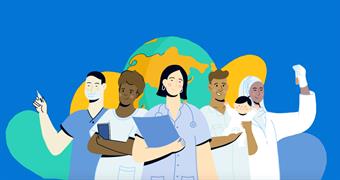
Second, we must build the health workforce.
The world is facing a shortfall of 18 million health workers by 2030.
That includes 9 million nurses and midwives, who are essential for delivering services for sexual and reproductive health.
To draw attention to this issue we have designated next year the Year of the Nurse and Midwife.
We’re calling on all countries to invest in health workers, not just to increase recruitment and training but also to focus on quality of care and the health needs of health care workers themselves. They are the bedrock of every health system.
Third, we must prioritize the vulnerable and marginalized.
Women and girls in fragile, conflict and violence-affected situations are the most vulnerable, and therefore need the most support.
A vital part of the response to every humanitarian disaster must be to protect girls and women from violence and exploitation, and to ensure they receive the sexual and reproductive health services they need.
And fourth, we must invest in human capital.
Protecting and promoting the health of girls and women is not just the health sector’s business. It’s everybody’s business.
Education is vitally important for empowering girls and unlocking their potential.
Achieving sexual and reproductive health goes beyond the health system providing essential services.
It goes beyond the education system providing age-appropriate comprehensive sexuality education.
It requires families, communities and societies, supported by national laws and policies, to agree on and invest in fundamental principles like gender equality, protection from violence, and the right to health of everyone, everywhere.
Expand access to services. Build the health workforce. Prioritize the vulnerable and marginalized. Invest in human capital.
Dear colleagues and friends,
WHO remains committed to supporting all countries to meet the commitments they have made in the Sustainable Development Goals.
Our commitment is to developing the evidence and guidance countries need to make the smartest investments in sexual and reproductive health and reproductive rights.
Above all, our commitment is to promoting health, keeping the world safe, and serving the vulnerable.
Thank you.