President Shunichi Miyazaki, Dean Makiko Osawa, distinguished guests, students and graduates, ladies and gentlemen,
It is a great pleasure, and an honour, for me to address a Japanese audience and, most especially, to speak to you from the Tokyo Women’s Medical University. I thank the government of Japan, its Ministry of Health, Labour and Welfare, and officials at this University for making this opportunity possible.
Since its foundation more than a century ago, this University has extended an opportunity to women, and symbolized a vision for their future. This has also been a vision for society. As the University’s current President and Dean both note, excellence in medical care and research contributes not only to better health, but also to the well-being of society. I fully agree.
The University’s founder, Yayoi Yoshioka, was one of the first women licensed to practice medicine in Japan. She viewed medicine as a noble profession for women, but also as a route for achieving a much more ambitious goal: to raise the position of women in Japanese society.
As she later noted, Japanese women had very little status in 1900, when the University was founded. At that time, men were the breadwinners in Japan, and women were the caregivers. Excellence for a woman was defined as being a good wife and a wise mother, with motherhood regarded as a duty.
The ambition behind the founding of this University was to transform an informal care-giving role into a professional one, granting women an exclusive opportunity to pursue a career, achieve professional excellence, and be rewarded for doing so.
In particular, Dr Yoshioka recognized the strong link between the financial independence of women and their status in society. In her view, a medical education for women could be transformational. It could lift up the position of women in the eyes of society and earn them a higher level of respect. This was daring, revolutionary thinking at the time, and remarkably far-sighted.
As we now know from decades of research and experience, the education of girls and women is indeed transformational. The financial independence of women is indeed closely linked to their social status. The social status of women is a major determinant of health for women, their families, and communities.
Unfortunately, the opportunities and vision for the future opened up for women by this University are still being denied for the majority of women living in the developing world.
In sub-Saharan Africa, for example, the composite picture of typical life for a rural woman looks like this. She has a baby on her back and several others in tow, a hoe in her hand, a heavy pot of water on her head, and firewood under her arm.
She is often the breadwinner, the caregiver, and the beast of burden. She may spend as many as four hours every day fetching water and fuel. She is overworked, undereducated, and locked into poverty.
Her life is one of hardship and drudgery, fraught with risks to health. She will have a number of children, closely spaced, rightly assuming that some will die because of malaria, measles, pneumonia, malnutrition, or the many other ills closely linked to poverty.
Her risk of dying during pregnancy and childbirth is nearly four hundred times greater than it is here in Japan.
This is the starkest statistic in public health: the difference in maternal mortality in rich countries compared with poor countries, where more than 99% of these deaths occur.
Barriers that stand in the way of better health for women typify two of the biggest challenges facing health development today: the need to build fundamental health system capacities, and the need to shape social and political factors that have become the ultimate determinants of health.
As we know today, the number of maternal deaths will not go down until more women have skilled attendants at birth and access to emergency obstetric care. This is a health systems issue, a matter of capacity and infrastructure, involving the proximity and quality of health services, transportation, staff, skills, supplies, and, of course, an ability to pay.
But improving the health of women is also a social issue. Last year, WHO issued its first comprehensive report on women and health. As that report noted, the factors that have the greatest impact on the health of women are not medical or technical. They are social and political, and the two go together.
The biggest barriers to better health for women arise from social attitudes and behaviours, and the policies that enforce these attitudes and behaviours. The health of women will not improve as long as women are regarded as second-class citizens in so many parts of the world.
Health will not improve as long as women are excluded from educational and employment opportunities, are paid less or not paid at all, are denied the right to own property, are victims of violence, have no control over household incomes, and have no freedom to spend money on health care, even it if means saving their own lives.
In contrast, empowering women is regarded by the development community as an effective way to combat poverty, hunger, and disease and to stimulate development that is truly sustainable. World Bank economists view the education of girls as bringing the highest return of any investment in development.
As abundant evidence shows, nations that recognize the worth of women and give them opportunities to realize their potential move forward faster on every front. This makes perfect sense.
Women represent half of the world’s human capital. They have economically productive as well as reproductive roles to play. They have great creativity and aspirations, whether for a professional career, some independent income, or simply a route out of grinding poverty for themselves and their families.
Ladies and gentlemen,
The World Health Organization was established in 1948 as a specialized agency of the United Nations. Our history is shorter than that of this University, but WHO was also established with a strong sense of social purpose.
The WHO Constitution set out a series of health-related principles considered basic to the happiness, harmonious relations, and security of all people. These principles regarded the enjoyment of the highest attainable standard of health as a fundamental human right.
They articulated a value system driven by the goals of equity and social justice and best pursued through the collective action of all nations. As stated, “Unequal development in different countries in the promotion of health and the control of disease, especially communicable disease, is a common danger.”
In other words, the common pursuit of better health could build societies that are more equal, more just, and more secure. I would argue that the relevance of this objective is even greater today than it was in 1948.
At that time, the most immediate need was to restore basic health services in a world badly damaged by war. Some of the Organization’s earliest activities were urgent responses to emergencies: the delivery of medicines and vaccines, the containment of outbreaks, and the provision of relief to refugees.
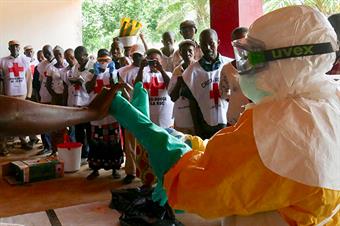
These functions continue today. In fact, the WHO response to outbreaks, and most especially dramatic and deadly ones like Ebola or SARS, is probably our most visible and well-known role today.
In the broadest sense, WHO was established to provide a mechanism through which all countries of the world could collaborate in the pursuit of better health. As our founders noted in the earliest days, “Political, social, and economic differences have no meaning when the health of people is at stake.”
International cooperation for health was seen as a way to pool resources and research knowledge, spread the benefits of medical progress more evenly, and improve efficiency in the delivery of these benefits.
By collecting expertise from all schools of thought, an international health agency could help reach consensus on controversial issues, establish universal protocols for diagnosis and treatment, and bring uniformity and consistency to public health and medical practice.
International cooperation also meant that the kind of health protection offered by individual well-off countries could be extended worldwide, again in the interest of equity and social justice.
Early on, WHO constructed a fabric of international guidelines, norms, and standards on the assumption that people everywhere deserve the same assurance that the air they breathe, the water they drink, the food they eat, and the medicines they take are safe.
WHO introduced quality standards for medicines and vaccines and safety standards for food, water, and urban air.
Today, the protection provided by these standards is largely invisible and usually taken for granted by citizens until something bad goes wrong. For example, when you hear in the news that air pollution in a city has reached dangerous levels, the WHO safety standard will be used as the reference.
While some of these activities might be considered basic housekeeping for public health, other WHO activities contributed to breakthroughs that redefined the practice of medicine and public health and unquestionably saved large numbers of lives. The examples are numerous.
Some have benefitted all countries. Like the eradication of smallpox, which was certified in 1979. The Framework Convention on Tobacco Control, which entered into force in 2005 and rapidly became the most widely accepted treaty in United Nations history.
The revised International Health Regulations, which set out procedures for responding to outbreaks and epidemics. And a simplified method for pain relief that can give nearly all patients with advanced cancer a dignified life and death.
But most activities responded to the distinct health needs of the developing world, needs that might otherwise have been neglected. Examples include model lists of essential medicines that help developing countries rationalize health expenditures and stretch resources further.
Negotiated prices for vaccines and medicines. Simplified diagnostic and treatment protocols that work well in poor settings, and not just in sophisticated hospitals.
A simple salt-and-sugar solution that is preventing more than a million childhood deaths from diarrhoea every year. And most recently, a new vaccine that promises to transform deadly epidemics in the meningitis belt of sub-Saharan Africa.
WHO also developed a new cocktail of drugs that cured leprosy, sent patients home, and closed the leprosaria. This is what your alumnus, Dr Mieko Kamiya, dreamed of from an isolated leprosarium on a small Japanese island.
The collection of health statistics and the monitoring of global trends is another core function of WHO. As the second half of the 20th century progressed, monitoring revealed that gaps in the health outcomes of different countries and populations, of particular concern when WHO was founded, were actually growing wider.
Advances in medicine and science were racing ahead at unprecedented speed, yet more and more people were being left behind. The best medical care was going to the people who needed it least. Underprivileged populations were dying in large numbers for want of access to inexpensive medicines and basic health care.
In 1978, WHO responded to these trends with a call for sweeping changes in the way health services were being organized and delivered. WHO gave public health its strongest social goal when the Declaration of Alma-Ata was signed at an international conference on primary health care.
That declaration responded to the gross inequality in the health status of wealthy and developing countries, and launched primary health care as a set of guiding principles for a more equitable and efficient organization of health services.
With its emphasis on community participation, primary health care honoured the resilience and ingenuity of the human spirit and made space for solutions created by communities, owned by them, and sustained by them.
The ambition was bold. It assumed that enlightened policy could raise the level of health in deprived populations and thus drive overall development. Almost immediately, the ambition fell on hard times.
The 1980s, the so-called “lost decade for development”, began with an oil crisis, a global economic recession, and the introduction, by development banks, of structural adjustment programmes that shifted national budgets away from the social services, including health.
As resources for health diminished, the aim of fundamentally reshaping health care looked less and less attainable.
The emergence of HIV/AIDS, the associated resurgence of tuberculosis, and an increase in malaria cases moved the focus of international public health away from broad-based programmes for building fundamental capacities and towards the urgent management of high-mortality emergencies.
The challenges facing public health today are far more complex than they were in 1948. But the bold ambition, the quest for greater equity and fairness in health, never lost its relevance.
The social values so evident in the WHO Constitution and so eloquently articulated in the Declaration of Alma-Ata were revitalized, in an even more ambitious form, at the dawn of the 21st century.
Ladies and gentlemen,
In 2000, the governments of 189 nations signed the Millennium Declaration and committed themselves to reaching its 8 development goals by 2015. These Millennium Development Goals represent the most ambitious attack on human misery in history.
They breathed new life into the values of equity and social justice, this time with a view towards ensuring that the benefits of globalization are more evenly distributed.
The reduction of poverty is the overarching objective, and the Goals tackle the root causes of poverty, including the poor health of mothers and children and the large number of deaths caused by HIV/AIDS, tuberculosis, malaria, and other infectious diseases.
Other Goals address poor nutrition, lack of education, filthy environments, lack of safe water and sanitation, and the low social status of women.
The beauty of the MDGs is that they are interactive and synergistic. If you reduce parasite infections in children, you improve nutrition. If you improve nutrition, you improve educational outcomes. If you improve educational outcomes, especially of girls, you improve the health of families and entire communities. In this way, the chain of poverty, ill health, and misery, passed from one generation to the next, is broken.
The MDGs have been good for public health. Achievements during the past decade tell us clearly that increased investment in health development is working.
The number of people in low- and middle-income countries receiving antiretroviral therapy for AIDS moved from under 200,000 in late 2002 to more than 5 million, an achievement unthinkable just a decade ago.
The number of deaths in young children dipped below 10 million for the first time in almost six decades, and today stands at 8.1 million, the lowest figure ever.
The yearly number of people newly ill with tuberculosis peaked and then began a slow but steady decline. For the first time in decades, the number of deaths from malaria has begun to decrease.
This is progress, impressive progress, but it is by no means a victory. All of these achievements have been rendered especially fragile by another set of events during the first decade of this century. In fact, that decade may very well go down in history as the time when nations came face-to-face with the perils of interacting in a world of radically increased interdependence.
Since the start of this century, the world has experienced multiple crises on multiple fronts: a fuel crisis, a food crisis, a financial crisis, and a climate that has begun to change.
These crises are revealing the dark side of living in a closely interdependent and interconnected world. As the past decade has shown, the consequences are highly contagious, quickly moving through the international systems that bind countries together.
The consequences can also be profoundly unfair. Developing countries have the greatest vulnerability to adverse events and the least resilience. They are often hit the hardest and take the longest to recover.
Globalization produces numerous benefits, but it has no rules that guarantee the fair distribution of these benefits. Equity is rarely an explicit policy objective in the international systems that govern finance, economies, commerce, and trade.
As a result, the world has become dangerously out of balance, also in matters of health. Differences, within and between countries, in income levels, opportunities, life expectancy, health outcomes, and access to care are greater today than at any time in recent history.
The difference in life expectancy between the richest and poorest countries now exceeds 40 years. Annual government spending on health ranges from less than $10 per person to well over $7,000.
A world that is greatly out of balance is neither stable nor secure. This is that “common danger” referred to in the WHO Constitution so many decades ago.
And there are other ominous trends, again linked to the world’s unprecedented interdependence. All around the world, health is being shaped by the same powerful forces.
Universal trends, like urbanization, population aging, and the marketing of unhealthy lifestyles, have sparked a sharp increase in chronic diseases, like heart disease, cancer, and diabetes. Long considered the close companions of affluent societies, these diseases now impose around 80% of their burden on low- and middle-income countries.
Mounting evidence shows that obesity and diabetes, strongly linked to unhealthy diets, have reached epidemic proportions in parts of Asia, where the loss of traditional diets has been especially rapid.
People in Asia are developing diabetes in greater numbers and at a younger age than in Europe and North America, and they are dying sooner. Diabetes is an especially costly disease: costly for societies, costly in terms of chronic care, and extremely costly in terms of hospital bills for well-known complications.
Some economists have described this rising prevalence of obesity and diabetes as a “side effect of progress”, a consequence of economic development.
But I would raise a question. Is this progress at all? What is the net gain when economic development sets health development backwards?
Ladies and gentlemen,
As I said, the challenges facing public health today are much greater than they were in 1948, when WHO was founded. The need for international collaboration for health is likewise greater today, as are the benefits.
As I conclude, let me, on behalf of many millions of people in the developing world, thank the Japanese government and its experts for the support given to WHO. This country is one of the largest contributors to WHO.
Japanese management and efficiency are world famous, but Japanese management of health care also deserves attention. In the post-war time when WHO was founded, Japanese health care underwent a transformation, overcoming challenges similar to those faced in developing countries today.
Through smart policies, backed by legislation, evidence-based methods, and strategies that engaged communities, health status and life expectancy in this country improved faster than in any other country, at any time in history.
Most remarkably, these improvements were evenly distributed throughout society, avoiding the extremes of wealth and dire poverty seen in so many other industrialized nations. These lessons have not been forgotten.
Let me thank Japanese leaders for consistently placing health issues, including the strengthening of health systems and the control of infectious diseases, on the agenda at G8 summits.
Let me also thank the Japan International Cooperation Agency for its unique approach to development that is people-centred, founded on grassroots community participation, and focused on developing capacity.
The best aid for development strengthens capacities, moves countries towards self-reliance, and thus reduces the need for aid.
Japanese people can be proud of this country’s contribution to better health worldwide. Through health development, this work is building societies that are more equal, more just, and more secure.
This has always been the highest goal of international cooperation for health.
Thank you.