Distinguished co-chairs, Gro and As Sy, my good friends, and members of the board,
My co-convener Annette,
Excellencies, dear colleagues and friends,
People often ask me what keeps me awake at night.
I don’t even think: pandemic flu.
We know that the next global influenza pandemic is simply a matter of when, not whether. That’s exactly what the report says.
As today’s report makes clear, the world is unprepared.
As you have heard, a global pandemic could kill up to 80 million people and erase 5 percent of the global economy.
The most concerning thing is that this is not a new message. This is a lesson that nature has been trying to teach us for decades – centuries – millennia.
But we have not been listening.
For far too long, we’ve operated, as Gro said, on a cycle of panic and neglect.
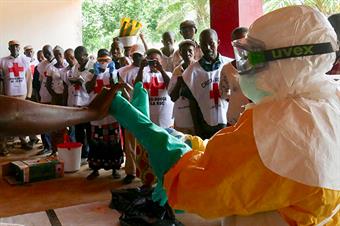
The current Ebola outbreak in the Democratic Republic of the Congo is a case in point.
So far, we have spent hundreds of millions of dollars responding to the outbreak in DRC – and counting.
By contrast, we have spent relatively modest amounts in Uganda and other neighbouring countries on preparedness.
Jane is here, the Minister of Health of Uganda. I’d like to use this opportunity to appreciate her leadership.
Those investments have paid off. For example, although several people with Ebola have crossed the border from DRC into Uganda, the government’s preparations, with support from WHO and other partners, have prevented the further spread of the virus.
The epidemic is teaching us a valuable lesson: investing in preparedness saves lives, and it saves money.
But this is for Ebola, and as you know Ebola is a lousy virus. It doesn’t show that we’re prepared for pandemic flu, which is airborne. Let’s not make a mistake.
We must heed these lessons and fix the roof before the rain comes.
Many countries have well-developed counter-terrorism plans and conduct regular exercises to stress-test their readiness.
But many are totally unprepared for an attack of a virus, which could potentially be far more deadly, and far more damaging to their economy and political and social stability. A virus can have more far-reaching consequences than a cyberattack, but you know which one receives more money and investment.
We are sleepwalking into catastrophe. But we don’t have to. It’s time to wake up and see the danger that is staring us in the face.
WHO is very proud to be a co-founder of the Global Preparedness and Monitoring Board, and we fully support its report.
Today’s report offers 7 concrete, urgent actions, with specific indicators, for making the world safer.
If implemented, these 7 actions will save lives, and save money.
For our part, WHO is committed to working with all countries to fulfil their obligations under the International Health Regulations.
But the IHR only works if countries hold up their end of the bargain. We can only keep each other safe if we work with each other in a spirit of solidarity.
This is not optional. Solidarity is binding.
And of course, our work on keeping the world safe goes hand-in-hand with our work on universal health coverage – health for all.
The best investment in preparedness is a resilient health system, based on strong primary health care.
As I always say, health systems and health security are “two sides of the same coin”. We are only as strong as the weakest link. One of the recommendations is that we have to invest in countries that are vulnerable and need the support of the international community.
In our interconnected world, no one is safe until we are all safe. The world is getting smaller. Something happening anywhere can be a crisis everywhere.
My brothers and sisters,
My plea to all countries is to listen to the alarm bell we are ringing today, before it is too late.
Another global pandemic is inevitable. We cannot control when or where. But we can be ready.
Thank you.