Mr President, honourable ministers, distinguished delegates, Dr Roses, ladies and gentlemen,
First and foremost, let me extend my condolences to the many people in this region who lost loved ones, homes, and livelihoods following the recent storms and hurricanes. Warnings were issued and heeded, and governments did a commendable job of moving populations out of harm’s way. Still, life is not back to normal for many millions of people.
In some areas, including parts of Cuba, medical facilities were extensively damaged, further delaying a return to routine health care. For several reasons, Haiti was most vulnerable, was hardest hit, and faces the steepest climb to recovery.
Let me recall a statement made by President Preval after Haiti was battered by four storms in three weeks. “It is time for the world to understand,” he said. “We are suffering too much in this country.”
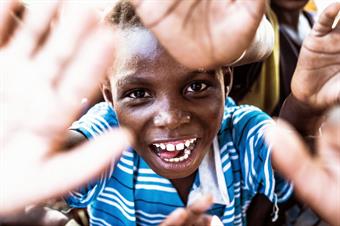
This is the face of natural disaster in vulnerable countries: immense human suffering, and an appeal to the world for help. We are all grateful to this Regional Office for its quick response to these and other natural disasters. But greater support from the international community is also needed, especially in Haiti.
Climate change is on your agenda. All the experts tell us: even if greenhouse gas emissions were to stop today, the climate will continue to change throughout this century. The damage has been done and the bill will come, largely at the expense of public health.
Climate change is, by its very nature, a global event. A growing need for international humanitarian assistance will come at a time when nearly all nations are stressed, to different degrees, by the costs of coping with climate change.
The damage caused by Hurricane Ike in Texas alone is estimated to be at least $20 billion. Just think about what this means, for affected countries, but also for the capacity of the international community to cope with more and more events of this nature.
Public health had no say in the policies responsible for climate change. Public health had no say in the policies that led to the crisis of soaring food prices. And yet it is the health sector that bears the brunt of the consequences.
Some things need to be said. The policies governing the international systems that link us all so closely together need to be more foresighted. They need to look beyond financial gains, benefits for trade, and economic growth for its own sake.
They need to be put to the true test. What impact do they have on poverty, misery, and ill health? Do they contribute to greater fairness in the distribution of benefits? Or are they leaving this world more and more out of balance, especially in matters of health?
These are hard questions. But public health has a duty to look for some answers.
Ladies and gentlemen,
In her annual report to this Committee, Dr Roses draws attention to the need to ground public health action in a clear understanding of the multiple forces that affect health. This solid grounding is the foundation for developing a vision of what is possible and then setting ambitious yet achievable goals.
This is a region that has crafted a long-term and foresighted health agenda, built on the spirit of Pan American solidarity. You can be rightly proud of this achievement. Your regional health plans are among the most important tools for promoting strategic planning. They support goal-oriented oversight, transparency, and accountability.
The health agenda for the Americas has a firm focus on the need to reduce large gaps in health outcomes, and rightly so. As Dr Roses notes, this region is the most unequal in the world. As we all know, these inequities have historical roots and result from policies that were not the choice of ministers of health. They were imposed.
While this may be the most unequal region, it is also the most committed to addressing these inequities and tackling their root causes. Doing so requires the right policies in multiple sectors other than health. More and more, it also requires the right policies at the international level.
For example, nutrition has a profound effect on health throughout the lifespan. The policies that govern food production and its global distribution and marketing ought to consider the impact on food choices, and how these choices affect health. But this is certainly not at all the case.
During this session, you will be looking at the crisis caused by the twin epidemics of obesity and diabetes. You will be discussing regional strategies and action plans for cervical cancer, adolescent and youth health, and neonatal health within the continuum of maternal, newborn, and child care.
All of these problems disproportionately affect poor and socially marginalized groups. In this region, obesity and diabetes are linked to poverty, and not to affluence. High rates of neonatal mortality have causes that are rooted in poverty and social disadvantage. The fertility rate of adolescents living in poverty is three times greater than that of their better-off counterparts.
High incidence of cervical cancer and high mortality are the result of failures in health systems – failures of prevention, screening, and early treatment in low-resource settings.
Solutions to all of these problems, including their prevention, depend on actions in multiple sectors other than health. They also depend absolutely on the capacity of health systems to serve socially deprived populations in ways that do not deepen poverty
As Dr Roses notes in her report, the state of health systems is the most important factor contributing to health progress in Latin America and the Caribbean. All of these regional health plans call for solutions within the context of primary health care.
In fact, the health problems you will be addressing during this session take us back to the basics, back to the values, principles and approaches of primary health care.
Ladies and gentlemen,
Thirty years ago, the Declaration of Alma-Ata articulated primary health care as a set of guiding values for health development, namely: equity, social justice, and universal coverage. It articulated a set of principles for the organization of health services, namely: local ownership, priority to vulnerable groups, a holistic view of health, and a definition of prevention that addresses the fundamental determinants of health.
Operational approaches flowed logically from these values and principles, namely: community participation, multisectoral action, prevention as well as cure, and technology choices that align with priority needs.
The Declaration of Alma-Ata launched the health for all movement, which was almost immediately misunderstood. It was a radical attack on the medical establishment. It was utopian. It was confused with an exclusive focus on first-level care. For some proponents of development, it looked cheap: poor care for poor people, a second-rate solution for the developing world.
Today, primary health care is no longer so deeply misunderstood. In fact, primary health care looks more and more like a smart way to get health development back on track.
Ladies and gentlemen,
The Millennium Declaration and its Goals breathed new life into the values of equity, social justice, and universal coverage, this time with a view towards ensuring that the benefits of globalization are more evenly distributed.
As clearly stated, doing so requires policies and measures at the global level which correspond to the needs of developing countries. This was a deliberate call to place the needs of the developing world first when global policies are formulated.
And what are these needs, especially for health? Stalled progress towards the health-related Millennium Development Goals forced a hard look at the consequences of decades of failure to invest in basic health systems, infrastructures, and staff. As we now know, powerful interventions and the money to purchase them will not buy better health outcomes in the absence of efficient – and fair – systems for delivery.
Last week in New York, commitment to the Millennium Development Goals was deepened and refined. The momentum continues to build. I am happy to report that, for malaria alone, $3 billion was committed to the fight against this disease.
I agree entirely with a statement made in one of your documents: these goals are probably the most important social initiative in the history of humanity.
As I have said, I believe that achievement of the health-related goals depends on a return to the values, principles, and approaches of primary health care.
We have some additional high-level support for this view.
Ladies and gentlemen,
At the end of August, the Commission on Social Determinants of Health issued its final report. The striking gaps in health outcomes are its main concern, and greater equity is the objective.
The report challenges the assumption that economic growth alone will reduce poverty and improve health. On present trends, increased economic prosperity tends to benefit populations that are already well-off, leaving others further and further behind.
As the report notes, economic growth will improve the health of the poor only when the right policies are in place. Studies in this region, in Latin America, strongly suggest that even a little redistribution of income, through progressive taxation and targeted social programmes, can go further in terms of poverty reduction than many years of solid economic growth.
The report places the responsibility for reducing health inequalities squarely on the shoulders of policy-makers. And it does so in sectors well beyond health. Social conditions are the most important determinants of health, and policies must shape these conditions.
Political decisions ultimately determine how economies are managed, how societies are structured, and whether vulnerable and deprived groups receive social protection. Gaps in health outcome are not matters of fate. They are markers of policy failure.
The report also has something to say about health systems. It recognizes that equity is strongly influenced by the way health systems are organized, financed, and managed. Not surprisingly, the Commission champions primary health care as a model for a system that acts on the underlying social, economic, and political causes of ill health. As stated, health systems do most to improve health when services are organized to achieve universal coverage.
When we think about the Commission’s findings, we must also think about a fundamental paradox. At the international level, health has risen to a high place on the development agenda. Yet within most countries, the health ministry usually has less clout and negotiating power than other members of cabinet.
Let us be frank. In most countries, an appeal to the value of health equity will not be sufficient to gain high-level political commitment. It is naive to think that ministers of finance, trade, transport, education and others will include health on their agendas for ethical or moral reasons alone.
The health sector must produce solid evidence, and political and economic arguments that make it smart for governments to include health in all policies. Leaders and managers in health, at all levels, must equip themselves with the skills and competencies to make the case.
Ministers of finance will not raise taxes on a consumer product, like tobacco, unless the health sector makes a very strong case. There is work to be done in this region, which has the lowest proportion of countries that have ratified the WHO Framework Convention on Tobacco Control.
Ladies and gentlemen,
Public health is increasingly faced with problems that arise from policies made outside the health sector, both nationally and internationally. At the international level, health enjoys a high profile as a poverty reduction strategy and a boost to overall development. But health remains neglected in many other policies.
Economic growth within a country will not automatically alleviate poverty or reduce the present great gaps in health outcomes. Health systems will not automatically gravitate towards greater fairness and efficiency. International trade and economic agreements will not automatically consider the impact on health. Globalization will not self-regulate in ways that favour fairness.
All of these changes require deliberate policy decisions. This world will not become a fair place for health all by itself.
It is not easy to make a value, such as health equity, count at the international policy level, especially when health competes against powerful economic interests. But it can be done.
The May resolution, at the last World Health Assembly, on Public Health, Innovation and Intellectual Property was a triumph. It demonstrates that international agreements that affect the global trading system can indeed be shaped in ways that favour health. I would like to pay tribute to all Member States for their hard work and commitment in reaching consensus on this important resolution.
It is not easy to make health equity a guiding principle for health systems, especially when health ministers are expected to operate financially self-sustaining services. But it can be done. And this region has proved the case.
In October, the World Health Report on primary health care will be issued to commemorate the anniversary of Alma-Ata. The report offers practical and technical guidance for reforms that can equip health systems to respond to health challenges of unprecedented complexity.
The report asks political leaders to pay close attention to rising social expectations for health care. As mounting evidence shows, people want care that is fair as well as efficient. People want care that incorporates many of the values, principles, and approaches articulated at Alma-Ata 30 years ago.
Dr Roses, I agree entirely. We need to ground public health action in a clear understanding of the multiple forces that affect health.
Primary health care is the best way to do so.
Thank you.