

Nick Ballon/Wellcome Trust
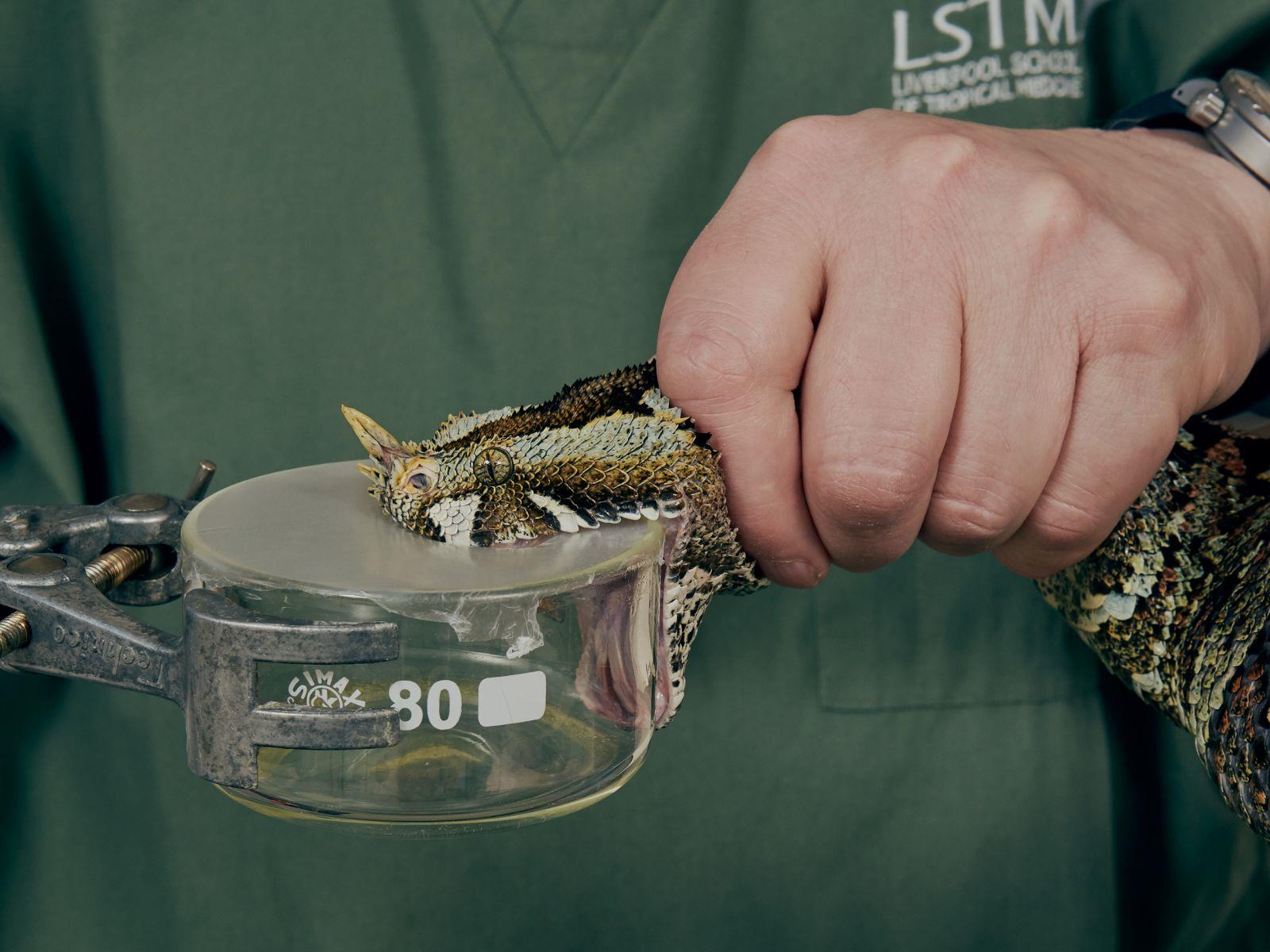
Extracting snake venom
Extracting snake venom
©
Credits
Improving treatment for snakebite patients
WHO supports countries and regions to:
- Build capacity for treatment:
Reducing the problem of snakebite envenoming begins by improving education about its risk and providing training to medical staff and health-care workers in affected countries.
WHO supports the development of standard treatment guidelines for medical professionals and health-care workers. WHO also participates in the creation of additional training resources for regions and countries adapted to service delivery environments and availability of local resources.
- Provide early access to safe, affordable and effective antivenoms:
Improving access to antivenoms is essential to minimize morbidity and mortality and is a major component of WHO’s strategy to prevent and control snakebite envenoming.
Antivenoms remain the only treatment available to prevent or reverse the effects of snakebite envenoming when administered early and in adequate therapeutic doses. They are included in WHO’s Model List of Essential Medicines.
- Strengthen diagnostics tests and tools:
Developing new point-of-care diagnostic tools has considerable potential to enhance surveillance of snakebite envenoming by enabling retrospective identification in pathology samples of venom immunotypes from various species of snakes.
Strengthened diagnostic tests and tools can improve the reporting of snakebite envenoming and assist in determining optimal antivenom needs for regions.
-
Raise awareness of snakebite rehabilitation:
Increasing awareness of snakebite envenoming as an important public health problem with organizations that work with disabled people in the developing world is essential to improving access and equity for victims. Snake bites can cause a variety of disabilities potentially leading to substantial loss of limb use or even amputation. In some countries victims become mired in poverty and may be socially ostracized.