
Norway
Partners in global health
UNICEF
©
Credits
Driving progress towards health and well-being for all
WHO and Norway have a longstanding partnership in global health to ensure that no one is left behind. Key priority areas of the partnership include sexual and reproductive health and rights, antimicrobial resistance, noncommunicable diseases, health in relation to climate change and pollution, and outbreak and crisis response.
Norwegian efforts in global health are spearheaded by political leadership at the highest level and backed up by global diplomacy and investment of Norwegian aid resources. Norway's humanitarian strategy takes an integrated approach using health and education as key priority areas. In April of 2018, the Prime Minister of Norway, Erna Solberg, who is also a Co-chair of the UN Secretary-General’s SDG Advocacy Group, wrote a joint letter asking WHO to lead the development of a Global Action Plan for Healthy Living and Well-being for All to help reach Sustainable Development Goal 3.
WHO stepped up to this challenge and with the SDG Action Plan in October of 2018 at the World Health Summit, where PM Solberg welcomed the plan, emphasizing the importance of investing in health: "A healthy and well-educated population is essential for social and economic development." Thanks to Norway's strong support The Global Action Plan to accelerate progress on the health-related Sustainable Development Goals was launched September 2019 at the UN General Assembly.
Norway has launched and invested in several health initiatives with other global health leaders including its long-standing co-investor status in Grand Challenges through the Saving Lives at Birth initiative, the Global Financing Facility in support of Every Woman Every Child, Gavi, the Vaccine Alliance for increasing access to immunization in poor countries and the Coalition for Epidemic Preparedness Innovation that ensures the world has the necessary vaccines for disease outbreaks. In 2019, WHO and the Norwegian Centre for E-health Research jointly hosted the first WHO Symposium on the Future of Digital Health Systems in the European Region.
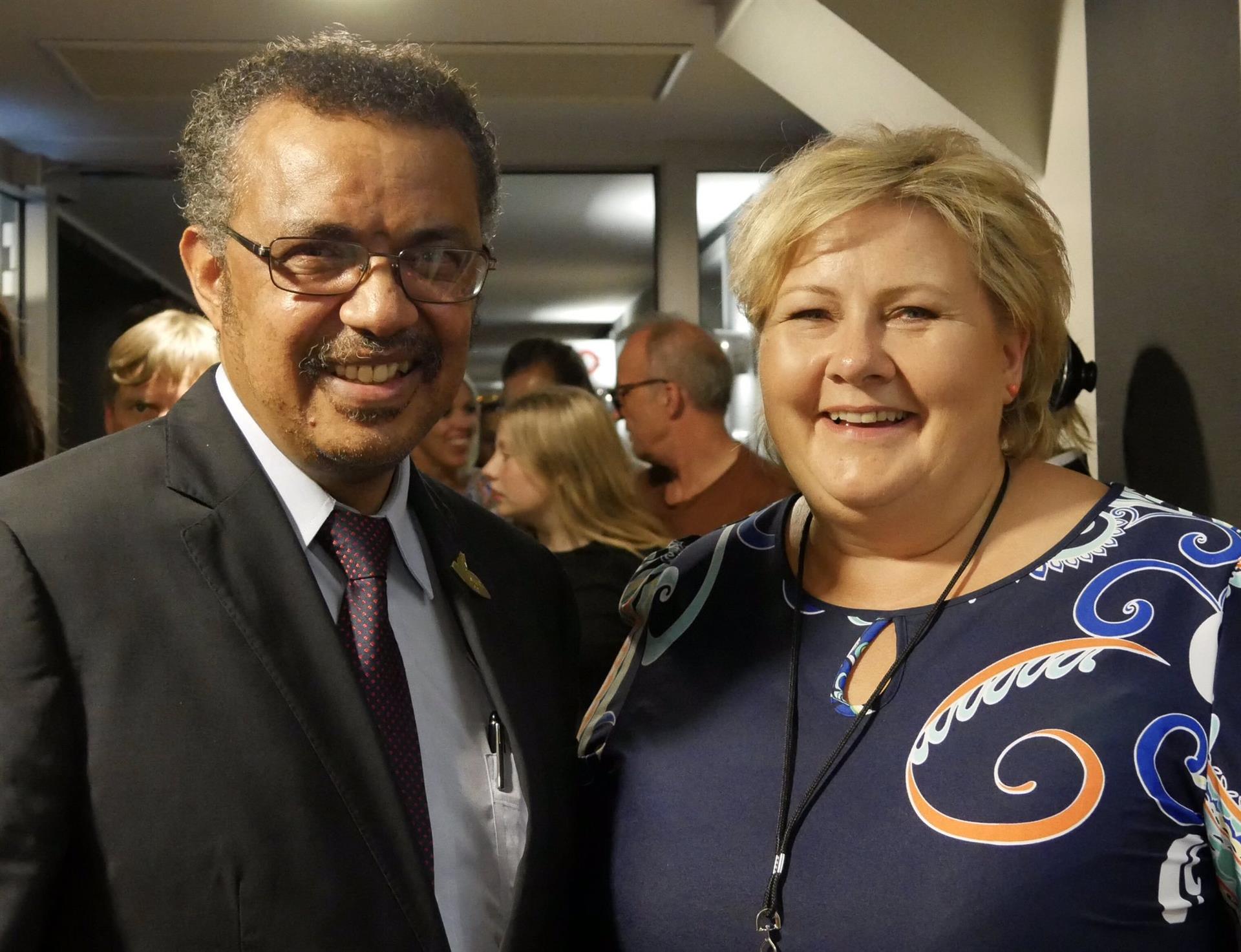
Dr Tedros met Prime Minister of Norway Erna Solberg on the eve of the 2017 G20 Summit where they discussed women and girls' empowerment through education and health advances.
Emergency support
Support from donors, such as #Norway, has been crucial to enabling the @WHO response to the 10th #Ebola outbreak in #DRC. Dr Michel Yao, who is leading the WHO on-the-ground response, met with Aksel Jakobsen, Deputy Development Min, @NorwayMFA, to share updates from the field. pic.twitter.com/xE2jbqaWjJ
— WHO African Region (@WHOAFRO) September 12, 2019
Research excellence
As a WHO collaborating centre on #ehealth and #telemedicine, @ehealthNORWAY underlines the importance of uncovering the deep mysteries that lies within the #ehealth field, short said: we need research!🧞♂️#digitalhealth #healthforall pic.twitter.com/e2tCyvINgS
— ehealthresearchNOR (@ehealthNORWAY) February 6, 2019
Committed partnership
-This deal will strengthen @WHO’s work in important areas such as #UHC, #SRH & global health #EmergencyResponse, says State Secretary @jensfh upon signing the new partnership deal with the WHO on Friday.
— Norway in Geneva (@NorwayInGeneva) November 26, 2018
Read more here 👉 https://t.co/0yCh1cG29p pic.twitter.com/D7HGOMlbAA
Walking the talk
Thank you for joining the Walk the Talk, Minister @BentHHoyre!
— Tedros Adhanom Ghebreyesus (@DrTedros) September 22, 2019
We're very grateful for your & @NorwayUN's 🇳🇴 support for #HealthForAll! Takk!https://t.co/ECLXgbipU6
Norway: A top flexible donor
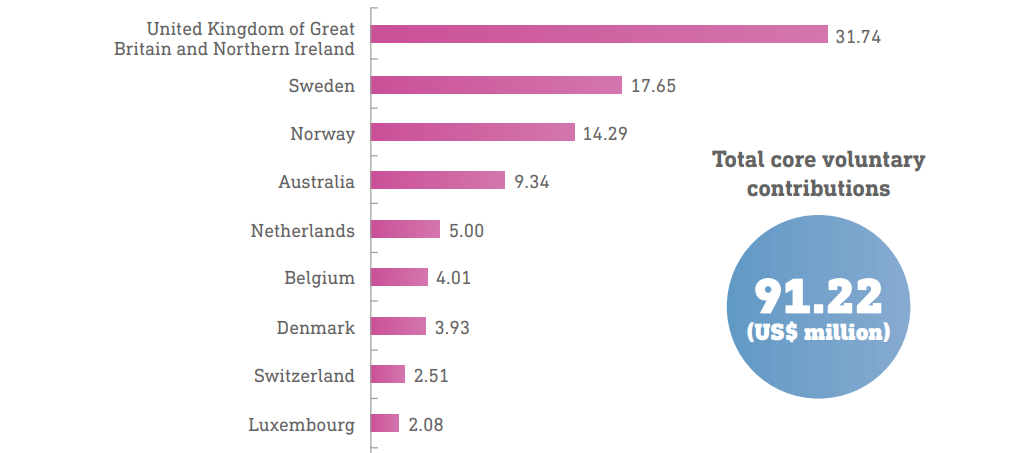
Graph: Contributors to the Core voluntary contributions account for 2018 (US$ million)
Between 2000 and 2016, Norway invested a total of NOK 53 billion in health initiatives globally. Norway provided NOK 5.12 billion (approximately USD 625 million) in health aid in 2017, an increase of NOK 417 million compared to the previous year. Norway renewed its commitment to sexual reproductive health and rights (including family planning) by pledging an additional USD 86.6 million globally in 2017–2020. As WHO's third top flexible funder in 2018/19, Norway recognizes the importance of unearmarked and predictable funding.
In 2018 Norwegian joint priorities with WHO included:
- Sexual and reproductive health including a focus on female genital mutilation
- Health emergencies
- Health and the environment
- Antimicrobial resistance
Emergency preparedness, outbreak and crisis response
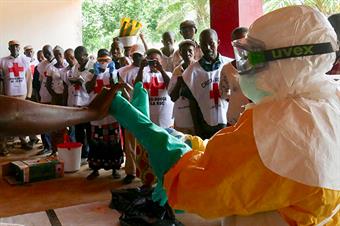
Norway is a strong supporter of WHO’s Health Emergencies programme, contributing US$ 24 million in the 2016-2017 biennium. Nearly US$ 12 million of this went to critical programming in Syria for outbreak and crisis response (video right). In 2018, Norway stepped in at a critical moment during the 9th outbreak of Ebola in the Democratic Republic of the Congo (DRC) to provide medical evacuations and a contribution of NOK 8 million, which supported WHO in containing the outbreak quickly and effectively. Norway continues to support the outbreak in 2019, contributing US$ 3.2 million to the effort, sending a team of specialist health personnel and three isolation units developed in Norway for the transport of patients with highly infectious diseases.
Norway also contributes to global health security by supporting WHO's Contingency Fund for Emergencies (CFE). Norway has given over US$ 2.39 million to the CFE in the current 2018-2019 period, which helped WHO respond to 30 disease outbreaks and health emergencies in 29 countries, including outbreaks of malaria and cholera in Nigeria and Ebola in DRC.
WHO collaborating centres in Norway
As of August 2019, Norway hosted eight WHO collaborating centres, which contribute research and scientific expertise on a wide range of topics including health promotion and education, digital health and telemedicine, occupational health and health systems strengthening.
The WHO Collaborating Centre for Drug Statistics Methodology develops and maintains the Anatomical Therapeutic Chemical (ATC) Classification system for medicinal products and their Defined Daily Doses (DDD). The centre also provides technical support, training courses and lectures to Member States. The WHO Collaborating Center for Reference and Research on Meningococci develops and implements tools, methodologies, practices, networks and partnerships for the prevention, detection, preparedness and intervention that assists Member States and the international community in detecting, assessing, responding to and coping with meningitis. Both centres are hosted by the Norwegian Institute of Public Health.
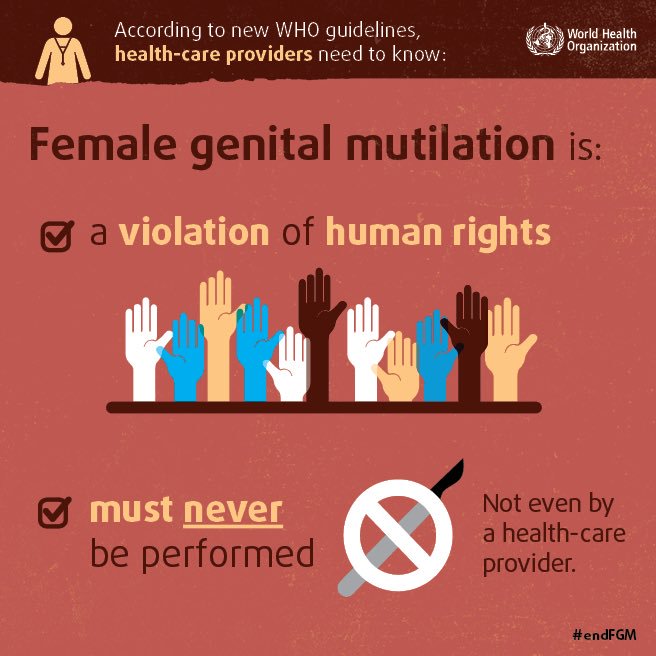
Ending female genital mutilation
Norway's collaboration and contribution to the Human Reproduction Programme, a partnership hosted at WHO, gives crucial support to women and men, including adolescents and those who are under-served and marginalized, for getting access to sexual and reproductive health information and services.
In 2018, funding from Norway supported the development of a WHO clinical handbook, Care of girls and women living with female genital mutilation. This document addresses the health care needs of the 200 million girls globally who have suffered from FGM and the more than 3 million girls who are at risk of FGM every year, a number that is projected to rise to 4.6 million by 2030 if prevention efforts are not accelerated.
Ambassador Hans Brattskar, Norway's Permanent Representative to the UN, has advocated for, "Accelerating the Eradication of FGM" at several United Nations events including the 15th Anniversary of the International Day of Zero Tolerance for Female Genital Mutilation, organized and supported by Norway, WHO and other partners.
With Norway's support WHO continues to advocate for this harmful practice to stop. In 2020 WHO will launch two products which will work towards ending FGM: (1) an innovative training package for midwives and nurses, who can play an important part in preventing FGM; the package, which includes a training manual, an animated video, and training aids, will be tested in a multi-country study in three high prevalence countries; and (2) an online cost calculator to estimate the cost savings to countries of investing in FGM prevention within and outside the health sector.
Stopping attacks on healthcare
Norway supported the Surveillance System for Attacks on Health Care, a global surveillance system that monitors all attacks in an effort to eradicate them, ensuring that essential life-saving health services are unhindered by any form of violence.
WHO works to eradicate these attacks by collecting evidence, advocating against them, and implementing best practices for the prevention of attacks against health. The Organization has called repeatedly for attacks to stop against health facilities, innocent health workers and patients.
Health, climate change and pollution
In 2018 Norway contributed NOK4 million to WHO through the Norwegian Development Program to Combat Marine Litter and Microplastics. WHO, in cooperation with UN Environment, has used this funding to begin mapping the health impacts of microplastics. Thanks to Norway, WHO recently released an analysis of research related to microplastics in drinking-water and called for a crackdown on plastic pollution.
In 2016-2017 Norway contributed over US$ 5 million to WHO to protect people's health from environmental threats like air pollution, responsible for an estimated 13 million deaths every year. With this funding WHO implemented programming in Montenegro, Tajikistan, Kyrgyzstan, Nepal, and Ghana among other places.
In Nepal WHO and the government worked together to launch the Urban Health Initiative (UHI) in Kathmandu, and supported Nepal in the implementation of nearly 2200 Water Safety Plans, ensuring that over 4 million people had access to safer water. In response to the 2017 floods in Nepal, WHO provided filters, water disinfecting tablets and training to community members on disinfecting water sources. This was instrumental in preventing disease outbreaks.
Working to eradicate polio
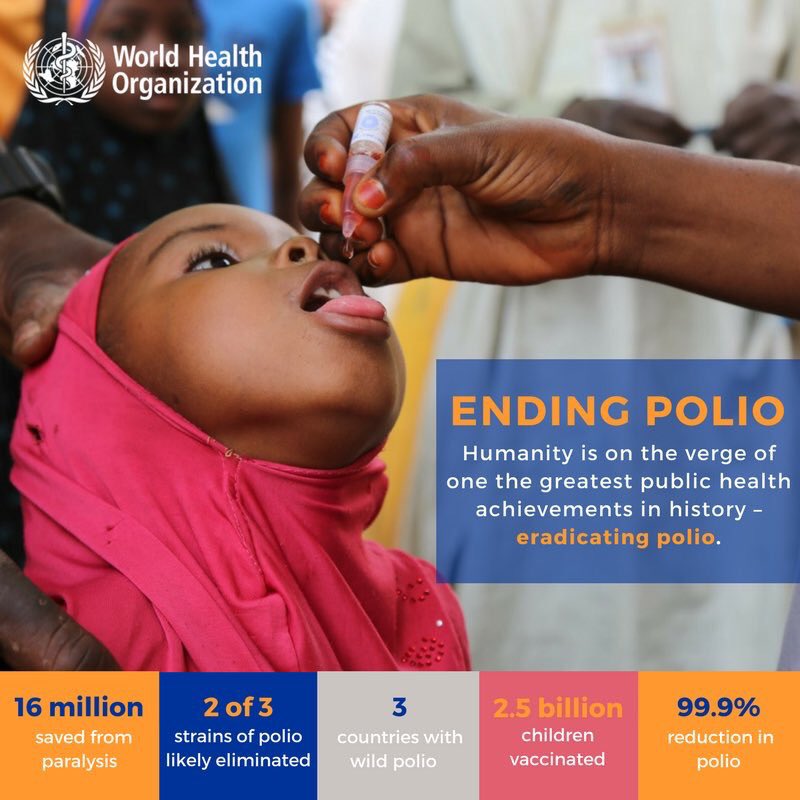
In 2018, the government of Norway continued to provide critical
contributions to the Global Polio
Eradication Initiative through WHO and GAVI, as part of its multi-year commitment pledged in
2013 at the Vaccine Summit. Norway’s total contribution to the GPEI is US$ 291
million.
The 2018 funds to WHO were
channeled to outbreak countries and key at-risk countries, where vaccinators and health workers
traveled far and wide to reach the most
vulnerable populations. Key results in 2019
included certification of the global eradication of wild poliovirus type 3, as well as the development of the GPEI Gender Equality Strategy, 2019-2023.
The polio
network routinely conducts surveillance for other diseases of public health
importance, including measles, yellow fever, neonatal tetanus and avian
influenza.
With
local knowledge of communities, health systems and government structures, and a greater focus on
gender-responsive health delivery, the polio network’s technical capacity in disease
surveillance and planning of large-scale operations often helps sustain
international and national relief efforts.
Neglected tropical diseases
Norway is a core contributor to TDR, the Special Programme for Research and Training in Tropical Diseases that is co-hosted by WHO, UNICEF, UNDP and the World Bank. TDR aims to reduce the burden of infectious diseases of poverty through research and innovation. In 2018 Norway contributed over US$ 357,270.
The funding supported TDR’s core activities, which focus on strengthening research capacity, research for implementation, and global engagement through an integrated approach.
Results from TDR's research and clinical studies recently led to the approval of a landmark treatment for river blindness. Around 200 million people are at risk for the disease that causes severe itching, disfiguring skin conditions and visual impairment, including blindness. More than 99% of infected people live in 31 African countries. TDR was instrumental in the evaluation of moxidectin for river blindness over nearly two decades of research and collaboration.