
Netherlands
Partner in global health
WHO/N. Garnage
©
Credits
Seeking an end to health inequalities
The Netherlands is a long-time supporter of health and human rights around the world. The Dutch government and civil society driven initiatives, like SheDecides, defends global access to the full breadth of sexual and reproductive health services, including for vulnerable populations and for people in crisis situations.
The Dutch are dedicated to the delivery of mental health and psychosocial care services in humanitarian settings, through a major multiyear initiative with WHO and partners. In October 2019, the Netherlands will host the second Global Ministerial Mental Health Summit in Amsterdam, focusing on mental health and psychosocial support in emergencies.
The Netherlands strengthen WHO’s ability to respond immediately to disease outbreaks and humanitarian crises with health consequences through the Contingency Fund for Emergencies.
The Dutch government advances initiatives across a broad scope of issues in global health including health and the environment, HIV and tuberculosis.
The Dutch also support WHO technical expertise through secondments and help boost young people’s public health careers via WHO’s Junior Professional Officer (JPO) Programme.
As WHO’s 5th top flexible funder for the 2018 mid-term, the Dutch recognize the important role of unearmarked and predictable funding amid emerging global health challenges, such as infectious disease outbreaks, climate change health impacts, the rise of drug resistance and an alarming increase in non-communicable diseases.
Health leadership
Thank you very much Minister @SigridKaag on your commitment to, and support for, #MentalHealth. @WHO welcomes the leadership of the Netherlands 🇳🇱 and looks forward to work together towards improving mental health services for everyone, everywhere. https://t.co/SpEBy4ziE1
— Tedros Adhanom Ghebreyesus (@DrTedros) July 24, 2019
Championing women and girls
Meeting @DrTedros this morning: because lives of women & girls always matter, also in crises, #Netherlands 🇳🇱and @WHO join forces to deliver #SRHR in crisis situations : USD 5.5 mln for life-saving services during pregnancy and delivery and for #HIV prevention pic.twitter.com/Aa553Ti18V
— Monique van Daalen (@MoniquevDaalen) January 15, 2018
Partnership
Thank you to the government and people of the #Netherlands 🇳🇱 – through your funding support @WHO can carry out vital global work such as #mentalhealth and #SRHR in crisis situations @DutchMFA @nathalieolij @MoniquevDaalen @NLinGeneva @SigridKaag pic.twitter.com/Zkf3smOJXy
— Jane Ellison (@JaneEllison) September 2, 2019
Walk the Talk
Thank you @NLinGeneva for your fantastic support for today’s Walk the Talk: The #HealthForAll Challenge. The Netherlands is a great partner. Looking forward to eating an orange with you! 🇳🇱 https://t.co/wdMPbLUJjL
— Tedros Adhanom Ghebreyesus (@DrTedros) May 20, 2018
The Netherlands is a top flexible funder
WHO is proud to partner with the Netherlands, which contributed US$ 30.9 million for the 2018 mid-term, making them the 5th most flexible WHO Member State. Flexible funding allows WHO to assign funds when and where they are needed to ensure that all health priorities are met.
In the 2018 mid-term Dutch funds contributed to the following areas:
- Reproductive, maternal, newborn, child and adolescent health
- HIV and hepatitis
- Health and the environment
- Antimicrobial resistance
- Access to medicines and health technologies and strengthening regulatory capacity
- Country health emergency preparedness and the International Health Regulations (2005)
WHO, the Netherlands Ministry of Foreign Affairs and the Ministry of Health, Welfare and Sport renewed a long-standing partnership agreement from 2019-2023 that helps fund crucial activities and fill funding gaps in the areas of primary healthcare, antimicrobial resistance and pharmaceuticals and facilitates cooperation with a number of top Dutch institutions.
For the 2016-2017 programme budget, the Netherlands contributed US$ 57.39 million to WHO, three-quarters of which was voluntary.
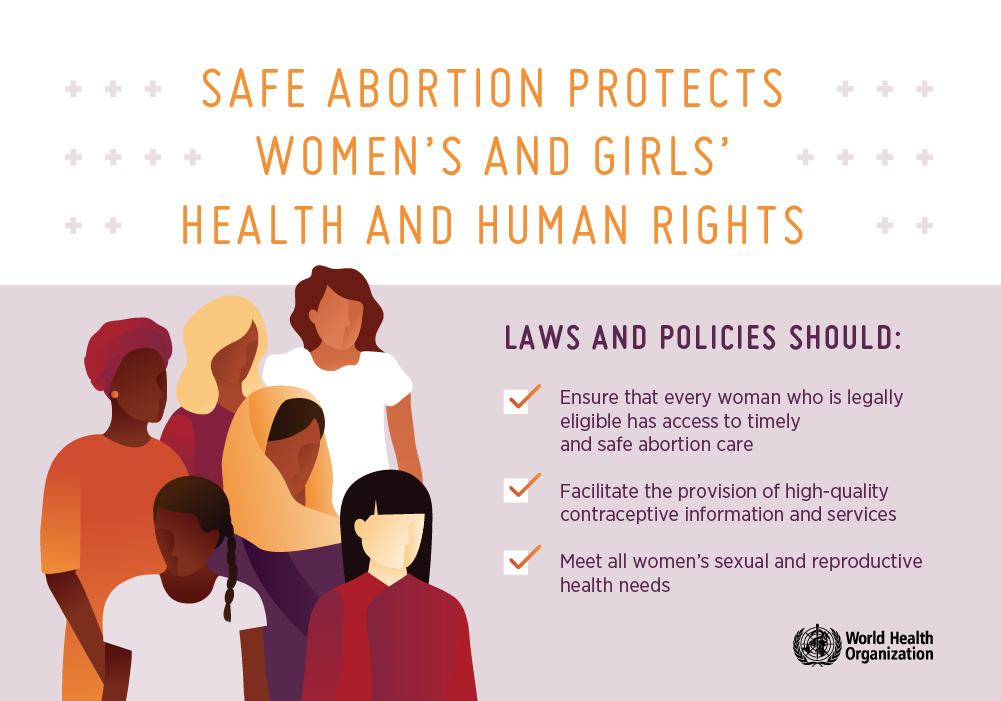
Attaining the highest possible level of sexual and reproductive health
The Netherlands has been a key contributor to WHO’s Human Reproduction Programme (HRP) since its inception in 1988. Since then, it has provided significant financial support and technical expertise in the field of sexual and reproductive health. The Netherlands has twice served as Chair for the programme and contributed US$ 22.6 million from 2014-2017, making it the largest donor among Member States for that period.
The Dutch support was instrumental to the success of the HRP programme. In 2018, an HRP study demonstrated that carbetocin - a drug used to prevent postpartum haemorrhage – was as effective as the currently recommended oxytocin, which requires refrigeration. It's estimated that eliminating the need for refrigeration could save the lives of thousands of women living in countries and settings where it is difficult to store drugs in the right conditions.
Another landmark study on postpartum contraception demonstrated that the systematic provision of postpartum family planning services almost doubles the use of contraception at 12 months, an important finding that underscores the importance of postpartum family planning.
Agile emergency response
From 2015-2018, the Netherlands contributed US$ 2.2 million to WHO’s Contingency Fund for Emergencies (CFE), which gives WHO the resources to respond immediately to disease outbreaks and humanitarian crises with health consequences.
The Netherlands has also been a longtime supporter of WHO’s Department of Country Health Emergency Preparedness and International Health Regulations (2005) (CPI), which coordinates the support to and monitoring of countries’ critical capacities for health emergency preparedness and provides advanced technical support to countries.
Addressing the sexual and reproductive health (SRH) needs of people affected by humanitarian crises is of global importance. The Netherlands has committed €5 million from 2018-2019 towards helping more women and girls access quality sexual and reproductive health services in the Democratic Republic of the Congo, Yemen and Bangladesh through the Global Health Cluster.
Debate World Health Association Geneva. Emphasizing quality services and continued access to SRGR. Also announced Dutch intent to launch initiative on mental health in crisis settings, for refugees and IDPs alike. Mental health a forgotten issue #wha71 @women on the run @WHO pic.twitter.com/oDCdqOA2P8
— Sigrid Kaag (@SigridKaag) May 21, 2018
WHO collaborating centres in the Netherlands
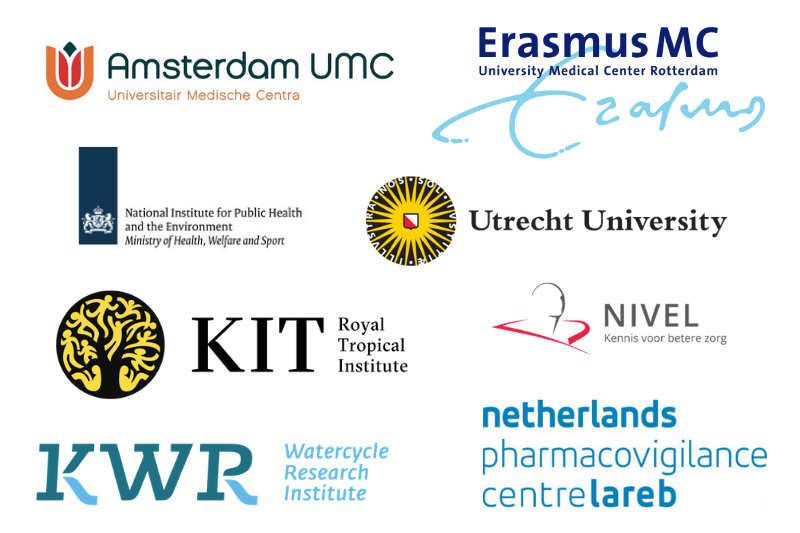
The Netherlands contributes scientific expertise to WHO through its WHO collaborating centres, which produce research on a wide range of topics including occupational health, tobacco regulation, water quality and infectious diseases. Nine of the 17 centres are hosted by the National Institute for Public Health and the Environment (RIVM) in Bilthoven.
For over 40 years, the WHO Collaborating Centre for Risk Assessment of Pathogens in Food and Water at RIVM has provided WHO with scientific advice on risk assessments for food- and water-related pathogens and antimicrobial resistance in addition to assisting WHO’s normative work. The centre also supports WHO in strengthening country capacity in implementing national food- and water-borne surveillance systems through providing technical knowledge and skills.
The Academic Medical Centre at the University of Amsterdam hosts the WHO Collaborating Centre for Quality and Equity in Primary Health Care Systems, which provides WHO with methodological support to assess performance, including quality, in primary health care and to document evidence to inform policies on integrated health services delivery. For 2017-2018, the Centre focused on supporting the WHO European Centre on Primary Health Care in Almaty to develop and validate a tool to assess primary health care systems in the European Region. The tool was applied in central Asia and southeast European countries.
Antimicrobial resistance (AMR)
The Netherlands and WHO are working together to advance the fight against antimicrobial resistance. The political, financial and technical support provided by the Netherlands has been instrumental in advancing implementation of WHO's Global action plan on antimicrobial resistance. Dutch support helped WHO to:
- ensure that AMR remains high on the global health agenda through high-level political engagement;
- start to monitor national antimicrobial consumption at the global level;
- implement global and regional AMR surveillance to collect, analyze and report on data on AMR internationally; and
- improve AMR awareness and promote behavior change through the World Antibiotic Awareness Week global campaign.
At the @WHO #EB144 NL stressed the fact that despite the initiatives and good words, levels of antimicrobial resistance have not decreased. We feel committed to work on acceleration of Member states' implementation of action plans because we are running out of time.. #AMR @minVWS pic.twitter.com/avmsiIG4uN
— NL Mission in Geneva (@NLinGeneva) January 31, 2019
Dementia: a public health priority
During its presidency of the Council of the European Union in 2016, the Netherlands issued a joint statement with the governments of Slovakia and Malta, emphasizing dementia as a national and international priority. Since then, partnership between the Netherlands and WHO has helped advance several dementia initiatives.
The Netherlands is a key player in supporting implementation of WHO’s Global action plan on the public health response to dementia 2017-2025, which highlights the need for comprehensive national dementia plans, among other topics. In May 2018, WHO, with support from the Netherlands and other partners, launched Towards a dementia plan: a WHO guide that aims to assist Member States in preparing, developing and implementing dementia plans.
WHO established the Global Dementia Observatory (GDO) to provide key dementia information on policies, service delivery and information and to research across the action plan’s seven action areas. The Netherlands played a key role in this initiative by providing technical expertise to develop and test the GDO. As of March 2019, 76 WHO Member States either have submitted or are collecting GDO data, with efforts ongoing across all the regions. With support from the Netherlands and other partners, WHO is expanding the GDO to develop dementia knowledge hubs across all seven strategic action areas to strengthen policies and service planning for health/social care systems for dementia.
The Netherlands has also supported the development of iSupport, WHO’s online support platform for carers of people living with dementia. Adaptations of iSupport are ongoing in 8 countries in collaboration with WHO and the Trimbos Institute.
Safe water for all
The Netherlands accelerated progress towards reaching environmental health-related SDGs through its partnership in implementing WHO’s water-related activities and monitoring work. In the 2018 mid-term the Dutch supported WHO's Health and Environment programme with a contribution of US$ 3.1 million.
A critical report, supported by the Dutch and released by GLASS in 2019, gives new information to reach the SDGs, "National Systems to Support Drinking-Water, Sanitation and Hygiene: Global Status Report." Dutch support also helped make possible the publication of the JMP’s 2018 Global report on drinking water, sanitation and hygiene in schools which provides data on the status of WASH in schools globally to inform efforts to extend basic WASH services.
From 2014-2017, the Netherlands donated US$ 30.6 million to the UN-Water Global Analysis and Assessment of Drinking-Water (GLAAS), the International Scheme to Evaluate Household Water Treatment Technologies (HWTS) and the WHO/UNICEF Joint Monitoring Programme for Water Supply, Sanitation and Hygiene (JMP).
Access to medicines
The Netherlands has also contributed to the promotion of policies and international collaboration for improving access to medicines, including controlled medicines for pain and palliative care. This included the organization of the Expert Committee on Drug Dependence, which in 2018 reviewed for the first time cannabis and cannabis-related substances.
An important contribution was made to the area of medical devices, through support to the organization of the 4th Global Forum on Medical Devices in December 2018.
WHO has carried out important work to improve the affordability of medicines, including the publishing of a report on the pricing of cancer medicines.
The Netherlands also supports WHO’s work through expertise on access to medicines by supporting a Junior Professional Officer (JPO) and a secondment dedicated to this area of work. WHO values the continuing collaboration with Utrecht University and other collaborative centers in the Netherlands related to pharmaceutical policy.
Healthy cities
Deputy Mayor of #Utrecht, Victor Everhardt, describes how the city has "gotten rid of cars and brought back the water", leading to more space for pedestrians & cyclists and initiatives like using electric boats in canals to distribute goods in the city. #belfasthealthycities18 pic.twitter.com/bFwyq4xppk
— WHO/Europe (@WHO_Europe) October 3, 2018
Commitment to mental health
The #Netherlands will host the 2nd Global Ministerial #MentalHealth Summit in Amsterdam on 10 October 2019, focusing on mental health and psychosocial support in emergencies #TimeToAct #beatNCDs #mhGAP pic.twitter.com/9VMjtryC5U
— Svetlana Axelrod (@DrAxelrod_WHO) October 11, 2018
#BeatNCDs
The Centre for Healthy Living in the #Netherlands serves as the national hub for integrated expertise on health promotion. It is an example of how a national government has taken up its stewardship role for health promotion. https://t.co/WyKnvhOuik #HSBeatNCDs #BeatNCDs pic.twitter.com/L9ThuEMi3V
— WHO/Europe (@WHO_Europe) April 17, 2018
Youth engagement
Practice what you preach! There is a strong team of interns supporting the different missions in Geneva. We are proud to have a @YouthDelegateNL for #WHA72 and two health interns present at #EB144. We hope this number keeps on growing too see more meaningful #youthengagement @WHO pic.twitter.com/An9ItuJ5p4
— NL Mission in Geneva (@NLinGeneva) January 30, 2019