.tmb-1920v.jpg?sfvrsn=a1088621_3)
Australia
Partner in global health
WHO/Yoshi Shimizu
©
Credits
Leaders in the Western Pacific and in WHO
WHO and Australia have a longstanding partnership spanning almost 70 years. During this time, the sharing of expertise across a wide range of health issues has helped make the Indo-Pacific region and beyond healthier and safer.
Australia’s achievements in health include high life expectancy, a well-established universal healthcare system, strong regulatory capacity, demonstrated resilience to health security threats and global leadership in many areas of public health, such as tobacco control and more recently, cervical cancer elimination.
Australia is an active WHO Member State and current member of WHO’s Executive Board, contributing to regional and global health through its leadership on a range of priority health issues, collaborating with partners and exchanging expertise to promote best practices and supporting WHO to be a strong and effective organization.
WHO appreciates the technical, human resources and financial support provided by Australia. During the 2016-2017 biennium, the Australian government was the third largest core voluntary contributor.
Investments in health are not just investments in a healthier future; they’re a down payment on a fairer, safer and more prosperous world. Health is at the heart of the 2030 Agenda for Sustainable Development and the 17 Sustainable Development Goals (SDGs). Although SDG 3 specifically targets good health and wellbeing, health is integral to all goals and all goals are influenced by health.
358f1ebbb3f2465baf38fd66c54e1e95.tmb-1920v.jpg?sfvrsn=ae57518a_2)
Shared goals
Just launched! The first-ever 🇦🇺Australia-@WHOWPRO Country Cooperation Strategy! https://t.co/GftAWo00dZ pic.twitter.com/2iYbT6urfe
— World Health Organization Western Pacific (@WHOWPRO) October 9, 2017
Mental health is a human right
Proud of Australia’s human rights-based approach to mental health – celebrating #HumanRightsDay with launch of @WHO #QualityRights tools pic.twitter.com/jSNhH6n3An
— Sally Mansfield (@AustraliaUN_GVA) December 8, 2017
Protecting remote populations
How far would you go to protect everyone from #polio? Watch & learn how a team from Madang Provincial Health Authority in #PapuaNewGuinea travelled 15hrs by land then took a helicopter to reach the Hagahai people—one of the most isolated groups in PNG 🇵🇬—with support from @WHO pic.twitter.com/psnIeaLW3W
— World Health Organization Western Pacific (@WHOWPRO) December 5, 2018
Saving lives
Mosquitoes that should free #Vanuatu from #dengue, #chikungunya & #zica mortal diseases are released. #Wolbachia do your work & #SaveLives in 🇻🇺. #Proud of this 🇦🇺-led initiative! 👏👍@dfat @MonashUni @pacmedcentre @ForumSEC @spc_cps @WHO @UN @gatesfoundation pic.twitter.com/LxdGiiG0v7
— Jenny Da Rin (@AusHCVanuatu) July 4, 2018
Australia is a top flexible donor
WHO is proud to partner with Australia, which contributed a total of US$ 81.6 million to WHO’s 2016-2017 programme budget. Of this funding, more than two thirds were in the form of voluntary contributions. US$ 19.0 million of the voluntary contributions were flexible contributions, making Australia WHO’s third most flexible funder. Flexible voluntary contributions are crucial, enabling WHO to respond quickly to the evolving global health environment. WHO thanks the Australian people for their support throughout the years.
For the 2016-2017 biennium Australian funds contributed to the following areas:
- Polio eradication
- Health and the environment
- Health systems, information and evidence
- Malaria
- Infectious hazard management
Focusing on health security to keep the Western Pacific safe
In the Asia-Pacific region, which comprises WHO’s South-East Asia and Western Pacific regions, health security is continually threatened by outbreaks and public health emergencies caused by emerging infectious diseases, the impacts of natural hazards and unsafe food and water.
While Australia does not share any land borders, rapid air travel and trade mean that outbreaks of new and re-emerging diseases in one country can become global concerns in a matter of hours. A key player in regional and global health security, Australia has provided valuable support for WHO’s work on health security and emergency preparedness and response, including the contributions to the WHO Health Emergencies Programme, the Contingency Fund for Emergencies, and additional technical assistance for WHO regional and selected country offices.
The Australian Government has committed A$ 300 million to the Indo-Pacific Health Security Initiative, announced in October 2017. The Initiative contributes to the prevention of, preparedness for and response to infectious disease threats with the potential to cause social and economic harms on a national, regional or global scale.
Peter Versegi, Australian Ambassador for Regional Health Security, on Australia's partnership with WHO
Supporting a coordinated and agile response to the polio outbreak in Papua New Guinea
After being declared polio-free in 2000, Papua New Guinea suffered from an outbreak of a vaccine-derived poliovirus type 1 in June 2018. After notifying WHO, as required under the International Health Regulations, a national emergency was declared by the Government and the National Emergency Operations Centre for Polio Response was activated.
The effective coordination of key partners including the Australian Department of Health, the Australian Department of Foreign Affairs, WHO and others helped ensure an agile response and fast mobilization of resources to ensure children living in some of the hardest to reach parts of the country could be vaccinated.
In addition to providing financial support to the response through the Global Polio Eradication Initiative, Australia has also played a critical role in testing polio samples. For every case of acute flaccid paralysis, stool specimens have been collected at the provincial level in PNG and shipped to the Central Public Health Laboratory (CPHL) Surveillance Unit, the WHO-accredited National Reference Laboratory in Port Moresby. The CPHL ensures that the stool samples are properly labelled, packed and shipped to the Victorian Infectious Diseases Reference Laboratory, a WHO Polio Regional Reference Laboratory located at the Doherty Institute in Melbourne. More than 400 stool specimens have been received at the Doherty Institute from acute flaccid paralysis cases and contacts of cases since the polio outbreak was declared.
Australia has long been a supporter of polio at the country-level and in the international arena, helping advance the polio eradication agenda through the Commonwealth Leaders Forum, the G20 and other high-level fora.
WHO collaborating centres: Australian experts serving the world
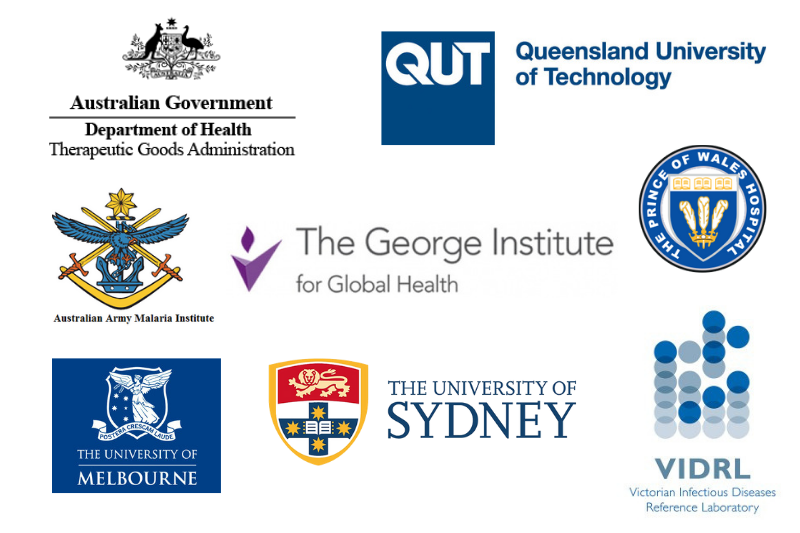
The people of Australia lend their scientific expertise through the 48 WHO collaborating centres that work directly with WHO on a range of technical priorities. Some of Australia’s top institutions are represented, such as the Australian Institute of Health and Welfare, The George Institute for Global Health, the Therapeutic Goods Administration, Prince of Wales Hospital and others.
The WHO Collaborating Centre for Strengthening Rehabilitation Capacity in Health Systems, hosted by The University of Sydney, is supporting WHO’s work in developing a community-based rehabilitation (CBR) workforce in Pacific Island countries where access to rehabilitation services are scarce. The centre works with partners to promote and enhance CBR across the Pacific by developing educational materials relevant to the local context, conducting trainings and supporting people with disabilities and their families.
Since 1993, the WHO Collaborating Centre for Women’s Health at the University of Melbourne has contributed to research in a range of health areas pertaining to women such as sexual and reproductive health, violence, disability and obstetric care. In 2015, the centre completed a review of implementation of WHO’s guidelines on responding to intimate partner violence and sexual violence against women to more thoroughly address challenges specific to women with disabilities, who are 2 to 3 times more likely to be victims of physical and sexual abuse than women without a disability.
The WHO Collaborating Centre for Diagnostics and Laboratory Support for HIV/AIDS and Other Blood-borne Infections at the National Serology Reference Laboratory assists WHO in assuring the quality of testing conducted for HIV, viral hepatitis, malaria, Human T-cell lymphotropic virus and other pathogens through capacity building of quality systems for testing of bloodborne pathogens; maintaining clinical specimen repositories and assisting with dossier assessment for WHO prequalification.
Combatting emergencies in and beyond the Indo-Pacific
In today’s interconnected world health emergencies can affect anyone, anywhere. WHO’s Contingency Fund for Emergencies (CFE) rapidly makes available small amounts of funding for WHO’s initial response activities, which help prevent avoidable deaths, illness and injury, as well as losses to the economy.
In 2018, the Australian Government announced its contribution of US$ 4 million to the Fund’s life-saving work. Whilst used to support some of WHO’s largest responses, including the 2018 Ebola outbreak in the Democratic Republic of the Congo, the CFE has also enabled a rapid and efficient response for outbreaks and emergencies taking place on Australia’s doorstep. Some examples include:
- response to Tropical Cyclone Gita in the Pacific;
- earthquake recovery in Papua New Guinea;
- support for flooding aftermath in the Lao People’s Democratic Republic; and
- containment of the measles outbreak in the Philippines.
The CFE has demonstrated that a small investment can pay life-saving dividends and dramatically reduce the direct costs of controlling outbreaks and responding to emergencies.
Spoke to Amb Sally Mansfield to thank #Australia for the new contribution to @WHO's Contingency Fund for Emergencies. Your support helps us respond within hours to major health emergencies, including DRC #Ebola outbreak https://t.co/OhQlEiaomX @AustraliaUN_GVA @AustraliaUN pic.twitter.com/7kTAKAuEaP
— Peter Salama (@PeteSalama) May 30, 2018
Health and the environment
The Department of Foreign Affairs and Trade (DFAT) has contributed A$ 5 million to WHO from 2018-2022 for work on drinking-water safety and WASH in health care facilities with a focus on 4 countries, Bhutan, Indonesia, Philippines, and Viet Nam, along with global work. This builds on a previous DFAT investment of A$ 15 million to WHO for its work on safe drinking water (2008-2017), which led to support for 15 countries in the South-East Asia and Western Pacific Regions for the development of water safety. These were implemented across 882 water systems in the 15 countries, supporting more than 35 million people.
In 2016-2017, Australia contributed US$ 340,000 to the WHO/UNICEF Joint Monitoring Programme for Water Supply, Sanitation and Hygiene (JMP) and pledged US$ 359,000 for 2018-2021. These donations support the production of reliable estimates of national, regional and global progress on WASH to inform decision-making by government, donor and civil society organizations.
With the help of Australian experts and contributions, WHO published the WHO water, sanitation and hygiene strategy 2018-2025, guidelines for developing drinking-water quality regulations with a focus on countries with limited resources and a report on drinking water sanitation and hygiene in schools.
#EndTB
Important briefing and discussion this morning on how to #endTB - with @antonioguterres @UN_PGA @UNEnvoyonTB @WHO @StopTB and civil society - in preparation for #UNGA high level meeting on TB in September pic.twitter.com/zormk8tZkN
— Gillian Bird (@AustraliaUN) June 4, 2018
Life-saving research
The Victorian Infectious Disease Reference Laboratory at @TheDohertyInst in #Australia confirmed the 4 #polio cases from 3 provinces in #PapuaNewGuinea.
— World Health Organization Western Pacific (@WHOWPRO) August 14, 2018
All are genetically linked, which indicates they are part of the same outbreak.
Read more here: 👉🏿 https://t.co/osr3SEp8PT pic.twitter.com/TWZ6oFsj8O
Eliminating diseases
🥳🎊🎺
— World Health Organization Western Pacific (@WHOWPRO) October 31, 2018
🏆Congratulations #Singapore for wiping out #measles!
🏆Congratulations #Australia, #BruneiDarussalam and #Macao SAR (#China) for wiping out #rubella!
Read the full press release here: https://t.co/cqfEEmwMvn#VaccinesWork! pic.twitter.com/grJQXcx8vr
Thank you, Australia
Thank you #Australia 🇦🇺for renewing your commitment to #health through the the @WHO @DFAT partnership agreement – your generosity will help people live longer, healthier lives! #WHOimpact pic.twitter.com/NoYhhNBnBD
— World Health Organization Western Pacific (@WHOWPRO) June 19, 2018